
California DCC Priorities Signal What Could Move In 2026
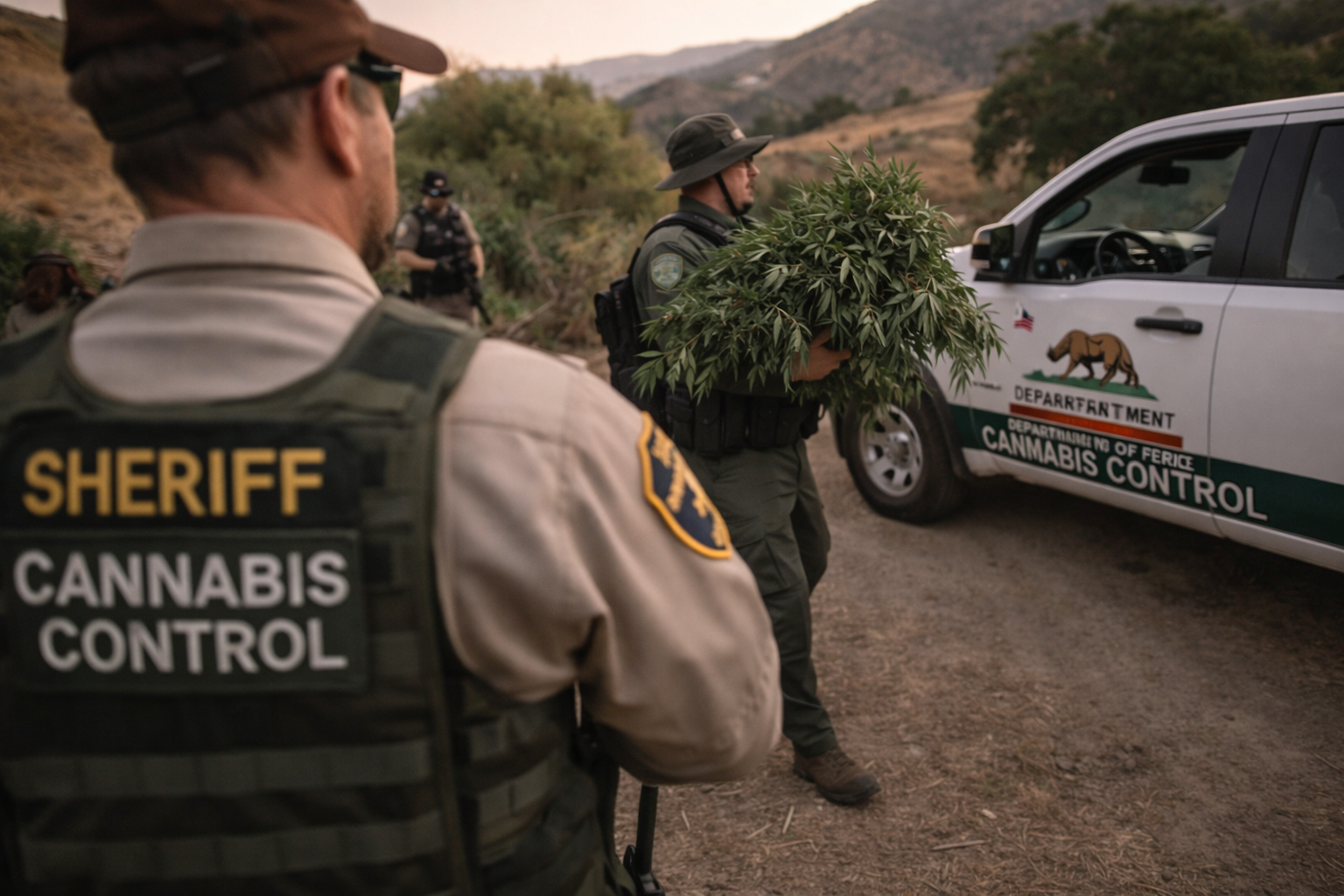
California cannabis control officers conducting an enforcement action to disrupt illegal sales
California cannabis compliance planning in 2026 is still about one thing: getting more of the state’s demand into the licensed channel. California’s Department of Cannabis Control director, Clint Kellum, described priorities aimed at stabilizing the legal market, expanding licensed participation, and shrinking the illegal channel. For operators, this reads like a roadmap of what leadership is trying to move and what is more likely to stay stuck.
Quick facts
• Clint Kellum was appointed Director of the California Department of Cannabis Control on November 26, 2025
• Proposition 64 set tax pressure and gave local jurisdictions broad power to opt out of retail
• The DCC says it shifted about $70 million, about 40 percent of its budget, from licensing fees to the cannabis tax fund to avoid a licensing fee increase
• The DCC has discussed streamlining cultivation track and trace requirements and developing a combined activities license to reduce friction
• California reports more than $1.2 billion in illicit cannabis seized and destroyed since 2022 through UCETF, including $609 million in 2025
If California timing affects your growth plan, Start with our quick Cannashield intake form. so you can map exposure and plan for multiple outcomes
The Three Levers That Matter In California
Kellum’s message comes down to three levers: access, affordability, and enforcement coordination. Access is local retail. Affordability is taxes, fees, and compliance labor that make it hard for licensed operators to compete. Enforcement coordination is the state and local effort to disrupt illegal cultivation, manufacturing, distribution, and retail.
The DCC cannot rewrite tax policy or force a city to allow storefronts. That limit matters because it pushes operators toward what is controllable: tighter operations, cleaner documentation, and planning for local outcomes instead of assuming uniform statewide access.
Local Access And Cannabis Deserts
Kellum has called out cannabis deserts, places where demand exists but legal access does not. When a jurisdiction opts out, consumers shift channels. The DCC has leaned into educating local governments and sharing best practices, including how to run licensing processes and how lack of access can correlate with illicit market growth.
Universal operator lesson: market access is not just licensing. It is a local operating environment. In California and in emerging markets, your timeline and your risk level often hinge on city politics, permitting design, and enforcement posture more than state rules.
If local access uncertainty is affecting how you plan or negotiate, Complete our Cannashield questionnaire to pressure test your exposure before you lock in leases or expansion costs.
Cost Pressure And Compliance Friction
Kellum highlighted cost signals that matter to operators. The interview points to a late 2025 move that halted a planned excise tax increase and locked the rate through 2028. It also describes a department budget shift away from licensing fees, framed as cost avoidance.
The other cost is time. The DCC has talked about reducing complexity, including ways to make cultivation tracking less burdensome while maintaining integrity. It also referenced efforts toward a combined activities license so businesses operating across multiple activities do not carry as much paperwork and movement friction.
Universal operator lesson: every step that reduces low value compliance labor increases your ability to compete on price without cutting safety corners.
Enforcement Coordination And What It Means For 2026
Enforcement is still part of the roadmap, even if it is not the only answer. The state has highlighted UCETF as a coordination effort, reporting more than $1.2 billion in illicit cannabis seized and destroyed since 2022 and describing multi agency operations across many counties. The public message is that coordinated enforcement supports the regulated market by disrupting illegal supply chains.
For licensed operators, the practical takeaway is readiness. More coordination usually means more scrutiny on documentation and supply chain legitimacy. If your inventory controls, vendor diligence, and security procedures are sloppy, you feel the pressure first.
If you want a California focused checklist that aligns licensing, compliance, and enforcement readiness, use the Cannashield intake form to request it so your team can standardize documentation before renewals
Conclusion
California leadership is signaling what it thinks will move the legal market: expand local access where possible, avoid new cost shocks, reduce compliance friction, and coordinate enforcement against the illegal channel. That combination is the only realistic path to growing licensed participation while the unlicensed market remains massive.
Treat this as a planning memo. Align your 2026 calendar around renewals and local permitting. Keep your documentation clean. Build a pricing model that assumes uncertainty. The operators who win in California tend to be the ones who prepare early and stay disciplined when everyone else is reacting late.
What To Do This Week
• List every city and county you operate in and confirm their current retail posture
• Audit your track and trace workflow for time drains and documentation gaps
• Build a one page vendor diligence checklist for inbound product and services
• Update your renewal calendar to include local permits, state renewals, and insurance touchpoints
• Review security procedures and incident reporting so your team is consistent
• Stress test your pricing with a conservative assumption on taxes and compliance costs
FAQ
Who is the new DCC director and why does it matter?
Clint Kellum is the current DCC director, and his priorities shape how the agency focuses resources and pressure points.Can the DCC change taxes or force cities to allow cannabis retail?
No. Tax policy and local land use authority sit outside the DCC, which is why access and affordability often move through legislation and local decisions.What are cannabis deserts?
Areas where consumers have demand but there is limited or no legal retail access, which can strengthen the unlicensed channel.Why does enforcement coordination matter for licensed operators?
More coordination can increase scrutiny on documentation and supply chain legitimacy, so readiness becomes a competitive advantage.What is the most practical operator takeaway from these priorities?
Build a system for renewals, documentation, and local market access planning instead of reacting to headlines.What is the universal lesson for other states?
Legal markets grow when access improves, costs feel survivable, and enforcement is coordinated enough to reduce unlicensed competition.