
What It Means When a Cannabis Operator Runs for Congress
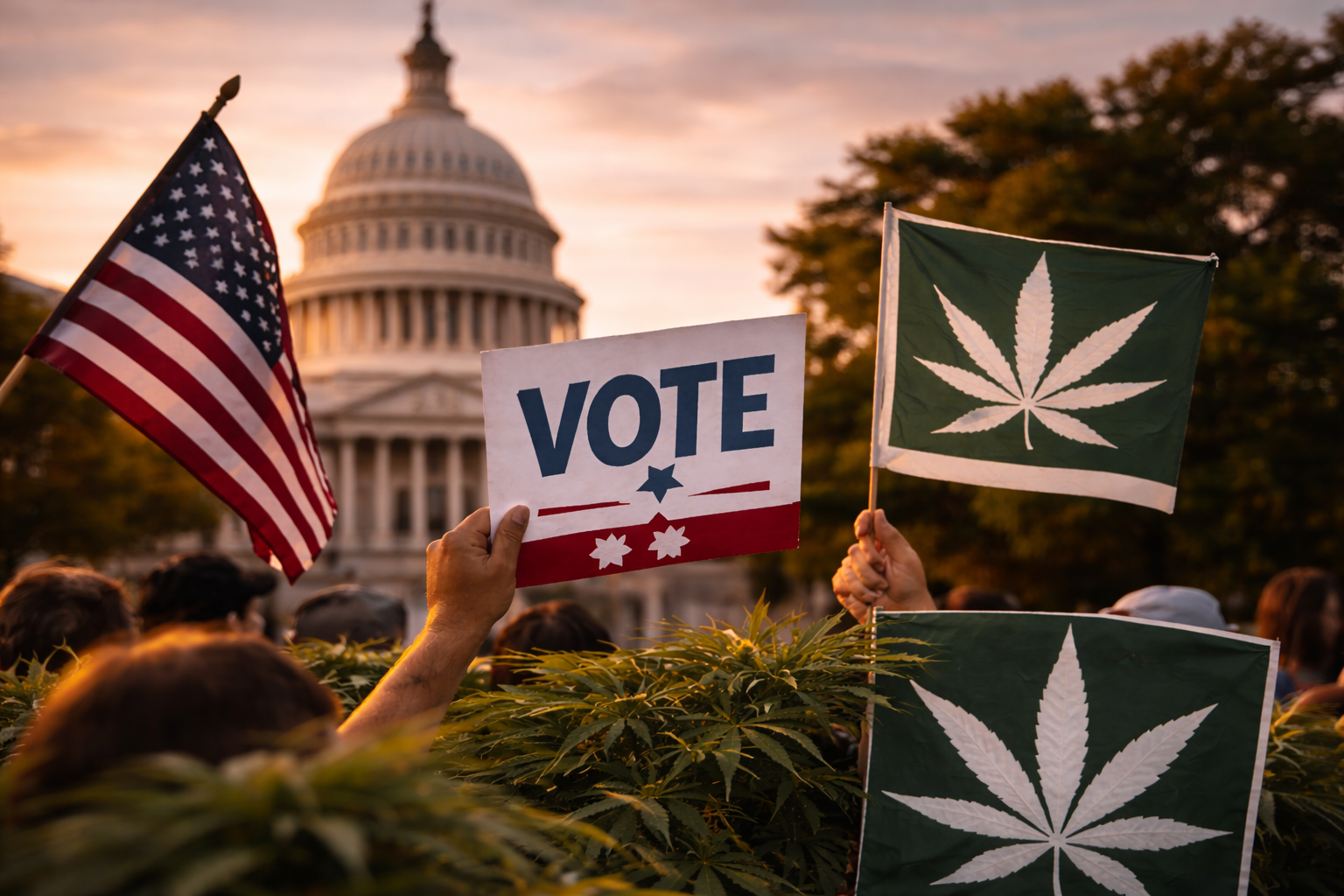
Supporters holding pro legalization signs near the U.S. Capitol as a cannabis business owner campaigns for Congress.
For years, the cannabis industry has tried to influence federal policy from the outside. Trade groups lobby. Advocates organize. Businesses wait for lawmakers to catch up. Now, something different is happening.
A cannabis business owner and longtime advocate is running for Congress with legalization and reform as a core issue. That may sound symbolic at first, but it represents a meaningful shift. Instead of asking for a seat at the table, the industry is trying to place someone directly inside the room where federal decisions are made.
This moment matters not because one campaign guarantees victory, but because it signals a new phase of political maturity for the cannabis sector.
If your business depends on federal reform or long term regulatory clarity, now is the time to think beyond headlines and prepare strategically. Start with our quick Cannashield intake form to align your risk and compliance planning with where policy is heading.
Why Direct Representation Changes the Conversation
Lobbying has limits. While industry groups can influence policy discussions, they often lack the lived experience that shapes practical outcomes. A business owner who has navigated licensing, banking restrictions, insurance hurdles, and compliance complexity brings a different perspective.
Direct representation means:
• Firsthand knowledge of operational challenges
• Understanding of how federal rules impact real businesses
• Ability to translate industry needs into legislation
• Credibility with operators and workers
• A bridge between policy and practice
This is different from advocacy alone. It is participation in the lawmaking process itself.
If you want to understand how political change could affect your compliance or insurance needs, Complete our Cannashield questionnaire for a tailored readiness review.
What This Signals About the Industry’s Evolution
The cannabis industry is no longer just fighting for acceptance. It is asserting its place as a legitimate economic sector that deserves representation alongside agriculture, healthcare, and manufacturing.
This shift signals several things.
First, the industry is confident enough to step into the political arena openly.
Second, legalization is no longer a fringe issue. It is a mainstream economic and regulatory topic.
Third, businesses are recognizing that policy outcomes shape markets as much as consumer demand.
As cannabis becomes embedded in state economies, the need for informed federal voices increases.
Why This Matters at the Federal Level
Federal cannabis policy still lags behind state reality. Despite widespread legalization, businesses operate under conflicting rules that affect banking, taxation, insurance, research, and interstate activity.
A lawmaker with direct industry experience can highlight issues such as:
• The cost of regulatory fragmentation
• The impact of limited banking access
• The burden of inconsistent enforcement
• Barriers to capital and insurance
• Challenges faced by compliant operators
These insights help shift discussions from abstract policy to practical outcomes.
If your business has been affected by federal state disconnects, Fill out our Cannashield intake form to review how political changes could reshape your risk landscape.
Representation Is About More Than Legalization
While legalization is often the headline, representation goes deeper. Industry voices in Congress can influence how legalization is implemented, not just whether it happens.
Key areas where representation matters include:
• Banking and financial services reform
• Insurance market participation
• Tax structure fairness
• Regulatory clarity for hemp and CBD
• Small business protections
• Workforce and safety standards
Poorly written reform can create new problems. Informed representation helps avoid that.
What Operators Should Take Away From This
Whether or not this specific campaign succeeds, the trend is important. The cannabis industry is no longer waiting passively for reform.
Operators should take this as a sign to:
• Pay closer attention to federal policy
• Engage more actively in civic processes
• Support informed representation
• Prepare for higher regulatory expectations
• Strengthen internal compliance and documentation
Political engagement and operational readiness now go hand in hand.
Why This Could Accelerate Long Term Reform
Lawmakers are influenced by peers as much as constituents. Having someone in Congress who understands cannabis from the inside can normalize conversations that were once avoided.
Over time, this can:
• Reduce stigma in policymaking
• Speed up practical reforms
• Improve coordination across agencies
• Encourage balanced regulation
• Attract more serious investment
Change at the federal level rarely happens overnight. It happens through sustained presence and informed participation.
Conclusion
A cannabis business owner running for Congress represents more than a campaign. It reflects an industry that is stepping into its role as a permanent part of the American economy and political landscape.
Legalization debates are evolving into governance discussions. Representation is moving from advocacy to participation. For operators, this signals that federal reform will increasingly be shaped by people who understand the industry from the inside.
At Cannashield, we help cannabis businesses navigate this evolution with insurance solutions, compliance guidance, and risk strategies designed for a more mature and politically engaged industry.
Complete our full intake form here to protect your business and prepare for the next chapter of federal cannabis policy.