
New York Liquor Stores Could Sell Low Dose Cannabis Drinks Under Proposed Bill
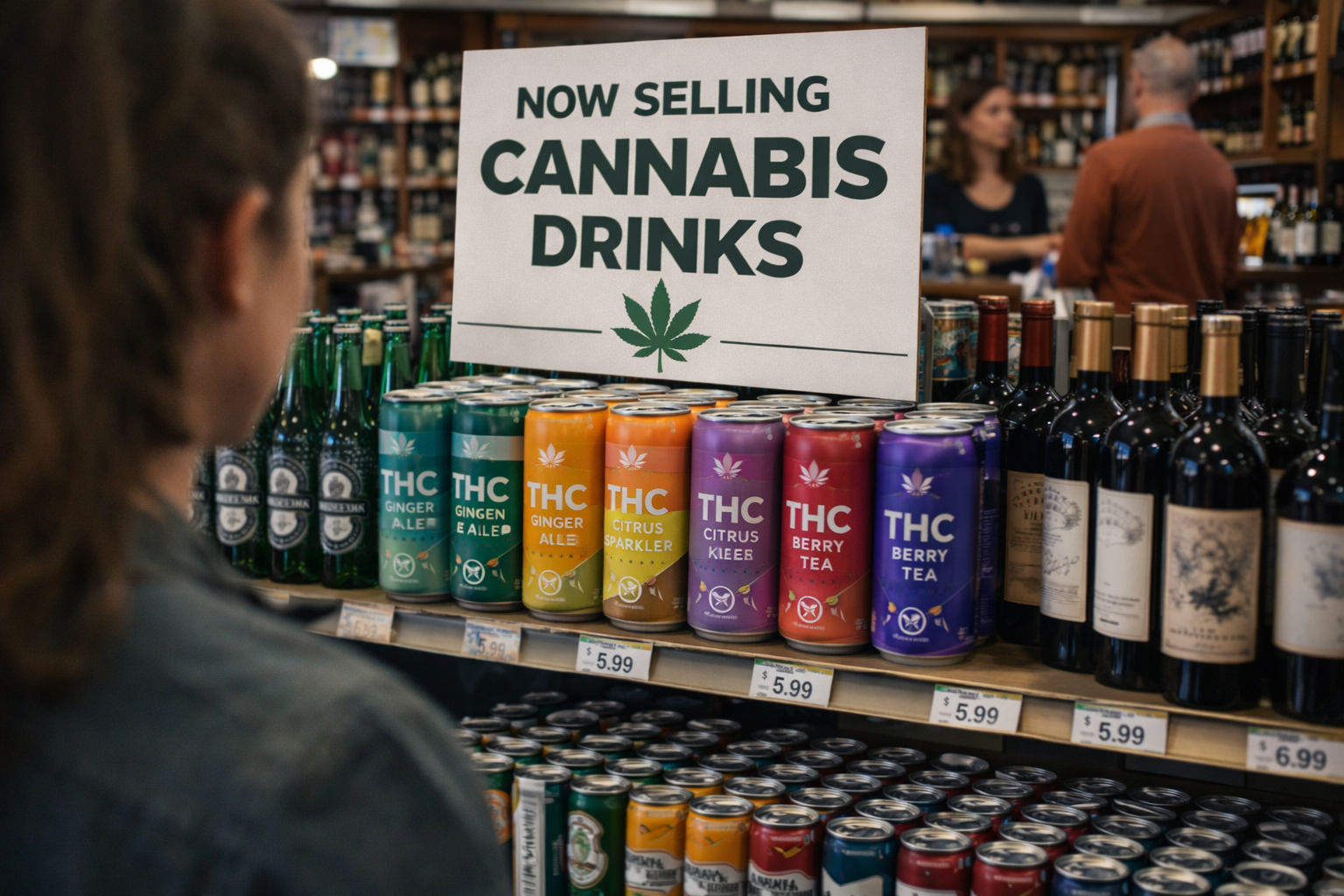
Cannabis infused beverage cans and bottles on a liquor store shelf with a 5 mg THC limit sign
New York lawmakers are floating a policy shift that could reshape how cannabis drinks reach consumers: letting licensed liquor and wine stores apply to sell low dose cannabis beverages capped at 5 milligrams of total THC per single use container. If you run retail, manufacturing, distribution, compliance, or investing in New York, this is a high intent signal about cross channel distribution and who may control the “grab and go” beverage lane next.
Quick facts
• Proposal: create a low potency cannabis beverage retail permit for off premises liquor and wine stores
• Product scope: single use cannabis beverages with no more than 5 milligrams of total THC, manufactured by New York adult use licensees
• Regulator structure: permit issued by the State Liquor Authority with coordination from the Office of Cannabis Management
• Retail controls: beverages must be stored in a separate, distinct area with required signage
• Records and tracking: permittees must maintain inventory records using a software system determined by the Office of Cannabis Management
• Taxes proposed: 9 percent tax on distributor to permittee transfers, plus a 13 percent tax on retail sales to consumers
• Revenue allocation proposal: portions of the retail tax would support State Liquor Authority implementation, Office of Cannabis Management equity support and enforcement, local municipalities, and the state cannabis revenue fund
• Timing concept: effective 180 days after enactment, with agencies allowed to prep rules in advance
If New York distribution changes affect your growth plan, Start with our quick Cannashield intake form so you can map exposure and plan for multiple outcomes.
What The Proposal Would Actually Change
Under the bills, liquor and wine stores would not suddenly become full cannabis retailers. The proposal is narrow: it creates a permit that only covers low potency cannabis beverages, defined as single use containers with no more than 5 milligrams of total THC.
That narrowness is the strategy. Lawmakers can frame this as an incremental step focused on low dose products that fit existing age controlled retail environments, while keeping traditional cannabis flower and higher dose product categories inside the current cannabis retail framework.
Universal operator lesson: when a state expands distribution in a limited category, it is testing a new channel without reopening the whole rulebook.
Why This Is A Market Structure Story, Not A Novelty Drink Story
This bill is really about who gets the “convenience lane.” Beverages are impulse friendly, lower commitment for new consumers, and easy for mainstream retailers to merchandise. If liquor stores get access to cannabis drinks, that creates a parallel distribution lane that can shift consumer routines.
Dispensary operators worry about that for a simple reason: every new channel competes for attention, foot traffic, and basket size, even if it starts with a single category. New York reporting on the proposal reflects that tension, with some dispensary voices raising concerns about disruption to the existing ecosystem.
Universal operator lesson: state licensing matters, but channel design decides where demand actually flows.
Tax Design And Where The Money Would Go
The tax structure is not just a revenue grab. It is a lever for market behavior.
The proposal would impose a 9 percent tax on sales or transfers of low potency cannabis beverages by a distributor to a permit holding liquor or wine store. It would also impose a 13 percent tax on retail sales to consumers.
The distribution formula is also explicit. The bill directs slices of the retail tax to the State Liquor Authority for implementation and enforcement costs, to the Office of Cannabis Management for equity oriented loans and grants and technical assistance, to enforcement against illicit sales, to local municipalities where sales occur, and to the broader cannabis revenue fund.
Operator takeaway: if the state is building a dedicated tax and allocation system for this category, it is treating beverages as a distinct lane with its own policy goals, not a side quest.
Compliance Requirements That Retailers Cannot Ignore
The bills also show what enforcement would likely focus on.
The permit would run concurrently with the underlying alcohol retail license, and if the alcohol license is revoked, suspended, or cancelled, the permit would follow it. Products must be stored in a separate and distinct area from alcohol with required signage. Permittees must maintain inventory records using a software system determined by the Office of Cannabis Management, and the State Liquor Authority and Office of Cannabis Management are directed to coordinate inspection and enforcement through a memorandum of understanding.
There is also a strict 21 and older sales requirement, with an affirmative defense concept tied to valid government issued photo ID.
If you need to pressure test your age checks, product documentation, and inventory controls before regulators do, Complete our Cannashield questionnaire and request a retail compliance sweep checklist.
What Operators Should Do With This Signal In 2026
If you are a dispensary operator, treat this as a competitive planning event. Tighten your beverage strategy, but more importantly, tighten your differentiation. Beverages in your store should win on selection, education, consistency, and compliant merchandising that builds trust.
If you are a beverage manufacturer, this is a potential distribution unlock, but it comes with operational discipline. You would need to be ready for higher order frequency, more retail accounts, and tighter scrutiny around labeling, serving guidance, and chain of custody documentation.
If you are a distributor, this is an opportunity to become the bridge between adult use licensees and a new class of retail accounts, but only if your processes are clean. Inventory and invoicing discipline becomes your moat.
Universal operator lesson: when channels expand, the winners are not the loudest. They are the most organized.
If you want a policy watchlist template and a cross channel distribution readiness checklist your team can update weekly, use the Cannashield intake form to request it.
Conclusion
New York’s low dose cannabis drinks proposal is a clear sign that regulated retail pathways are still evolving, even in a mature adult use market. If the bills move forward, the change would not be about “allowing drinks.” It would be about adding a new channel, setting new compliance expectations, and testing how distribution rules shape consumer behavior. The smart move is simple: plan for both outcomes, tighten your documentation, and build a strategy that stays strong even if the channel map shifts.
What To Do This Week
• Add S9220 and A10191 to your policy watchlist and assign one owner to track movement weekly
• Audit your beverage SKUs for serving clarity, THC per container accuracy, and compliant label language
• Review age verification procedures and retrain staff on strict ID standards
• Tighten inventory recordkeeping and confirm your system can support regulator review
• Model a channel shift scenario where beverages are available in liquor stores and revise your retail plan
• Create a one page distributor readiness checklist for invoices, chain of custody, and returns
FAQ
What would liquor stores be allowed to sell under the proposal
Only low potency cannabis beverages capped at 5 milligrams of total THC per single use container.Would liquor stores be able to sell other cannabis products
The proposal is limited to low potency cannabis beverages and does not create broad cannabis retail permissions.Who would regulate the permits and enforcement
The State Liquor Authority would issue permits, with enforcement coordination involving the Office of Cannabis Management.What taxes are proposed for these beverages
A 9 percent tax on distributor transfers to permittees and a 13 percent tax on retail sales to consumers.Where would the retail tax revenue go
The bill directs portions to the State Liquor Authority, Office of Cannabis Management equity support and enforcement, local municipalities, and the cannabis revenue fund.What is the universal operator lesson
Channel rules can change competition faster than state legalization headlines, so operators should plan scenarios and keep compliance systems tight.