
Oklahoma’s Medical Cannabis Program Faces a Disruptive Political Signal
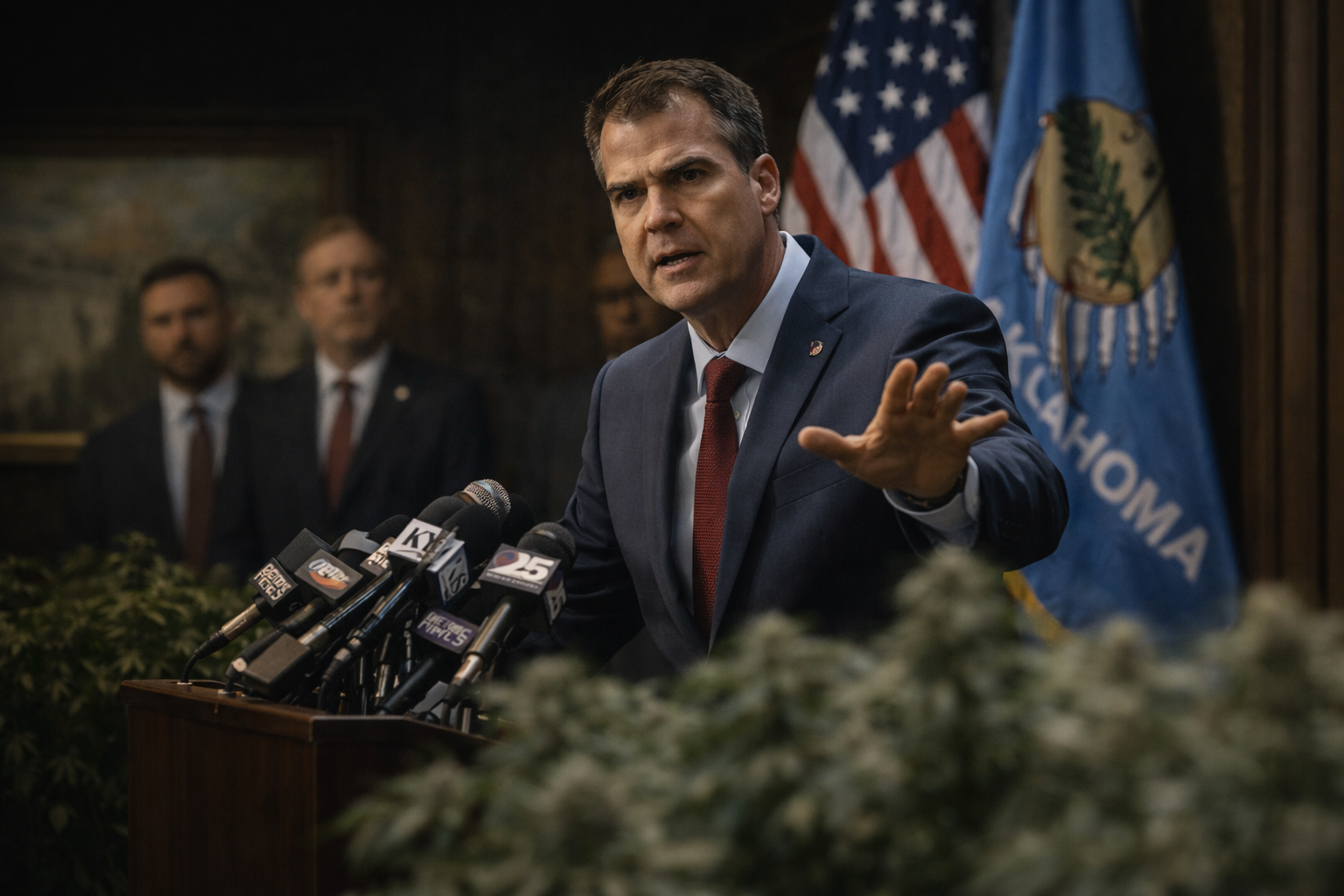
Oklahoma governor speaking at a press conference about ending the state medical cannabis program.
Oklahoma’s governor has publicly called for ending the state’s legal medical cannabis program and sending the question to voters. Regardless of whether such a proposal ultimately passes, the signal itself is serious. Oklahoma is one of the largest and most active medical cannabis markets in the country, and even the suggestion of a rollback introduces immediate uncertainty.
For operators, landlords, lenders, vendors, and service providers, this kind of headline changes behavior fast. Investment decisions pause. Expansion plans are reconsidered. Compliance posture tightens. Markets do not wait for final votes to react.
This is why political signals matter just as much as enacted laws.
If your business operates in Oklahoma or relies on the state’s cannabis economy, now is a critical moment to review risk exposure. Start with our quick Cannashield intake form to ensure insurance and compliance planning are aligned with a shifting environment.
Why Oklahoma Is Not a Small Market Story
Oklahoma’s medical cannabis program is not marginal. It supports thousands of licensed businesses and generates hundreds of millions in annual economic activity. The program has shaped real estate markets, employment, and supply chains across the state.
Because of its size and openness, Oklahoma has also attracted national attention. Operators from other states watch it closely as an example of how access and participation can scale quickly.
That makes any effort to dismantle or roll back the program especially disruptive. Even if the outcome is uncertain, the discussion alone has ripple effects.
If your operation depends on market stability or financing, Complete our Cannashield questionnaire to assess how political risk affects coverage and planning.
The Immediate Impact Is Confidence, Not Law
When a governor frames a proposal as a potential shutdown, the first casualty is confidence.
Common immediate reactions include:
• Investors delaying capital commitments
• Lenders tightening underwriting standards
• Landlords questioning long term leases
• Vendors reevaluating credit terms
• Operators freezing expansion plans
These reactions happen before any ballot language is finalized. Markets respond to risk signals, not just outcomes.
Compliance Posture Tightens Overnight
Political scrutiny often leads to increased enforcement attention. Agencies may feel pressure to demonstrate oversight, even if no law has changed yet.
For operators, this can mean:
• More inspections
• Closer review of licensing and records
• Increased scrutiny of advertising and operations
• Less tolerance for technical errors
Businesses that are already compliant manage this better than those operating loosely.
If your compliance systems have not been reviewed recently, Complete our Cannashield questionnaire to strengthen readiness before scrutiny increases.
Why Even a Failed Vote Has Consequences
Some may assume that if voters reject a shutdown effort, everything returns to normal. In reality, the effects linger.
Failed initiatives can still result in:
• Legislative tweaks or tighter rules
• Increased enforcement budgets
• Higher insurance and lending costs
• Slower growth due to perceived risk
Once political uncertainty enters a market, it does not disappear overnight.
Operators Must Plan for Political Risk
Cannabis businesses operate at the intersection of regulation and politics. Political risk is not abstract. It affects daily operations.
Smart operators account for this by:
• Maintaining strong compliance documentation
• Diversifying exposure where possible
• Building cash reserves for uncertainty
• Reviewing contracts for change of law clauses
• Ensuring insurance coverage reflects regulatory risk
Planning for volatility is part of operating in cannabis.
If political signals are affecting how you plan or finance operations, Complete our Cannashield questionnaire to align risk strategy with reality.
Why Oklahoma’s Situation Is Watched Nationally
Oklahoma’s market has often been cited in debates about access and regulation. Any attempt to reverse course will be used as a reference point elsewhere.
Other states may ask:
• How resilient are open medical programs
• What political pushback looks like after rapid growth
• How markets respond to rollback threats
This makes Oklahoma’s situation more than a local issue. It is a test case for market durability.
Landlords and Lenders Are Especially Sensitive
Real estate owners and financial partners are often the first to react to political risk. Long term leases and loan terms depend on regulatory continuity.
When uncertainty rises:
• Lease negotiations become harder
• Renewal terms tighten
• Financing costs increase
• New projects slow
Operators who communicate clearly with partners tend to fare better.
What This Means for Day to Day Operations
In practical terms, businesses should operate as if scrutiny will increase.
That includes:
• Keeping records current and organized
• Training staff on compliance basics
• Reviewing insurance limits and exclusions
• Monitoring regulatory communications closely
Preparation reduces disruption if conditions worsen.
Conclusion
The Oklahoma governor’s call to end the state’s medical cannabis program is a powerful political signal, regardless of the final outcome. For a large and active market, even the possibility of rollback creates immediate uncertainty that affects confidence, financing, and compliance posture.
For cannabis operators, this moment underscores a core truth. Political risk is operational risk.
At Cannashield, we help cannabis businesses navigate these moments with insurance solutions, compliance guidance, and risk strategies built for uncertainty.
Complete our full intake form here to protect your business and stay resilient when political signals shake the market.