

Washington cannabis bills are moving early and this is where the real rules get written
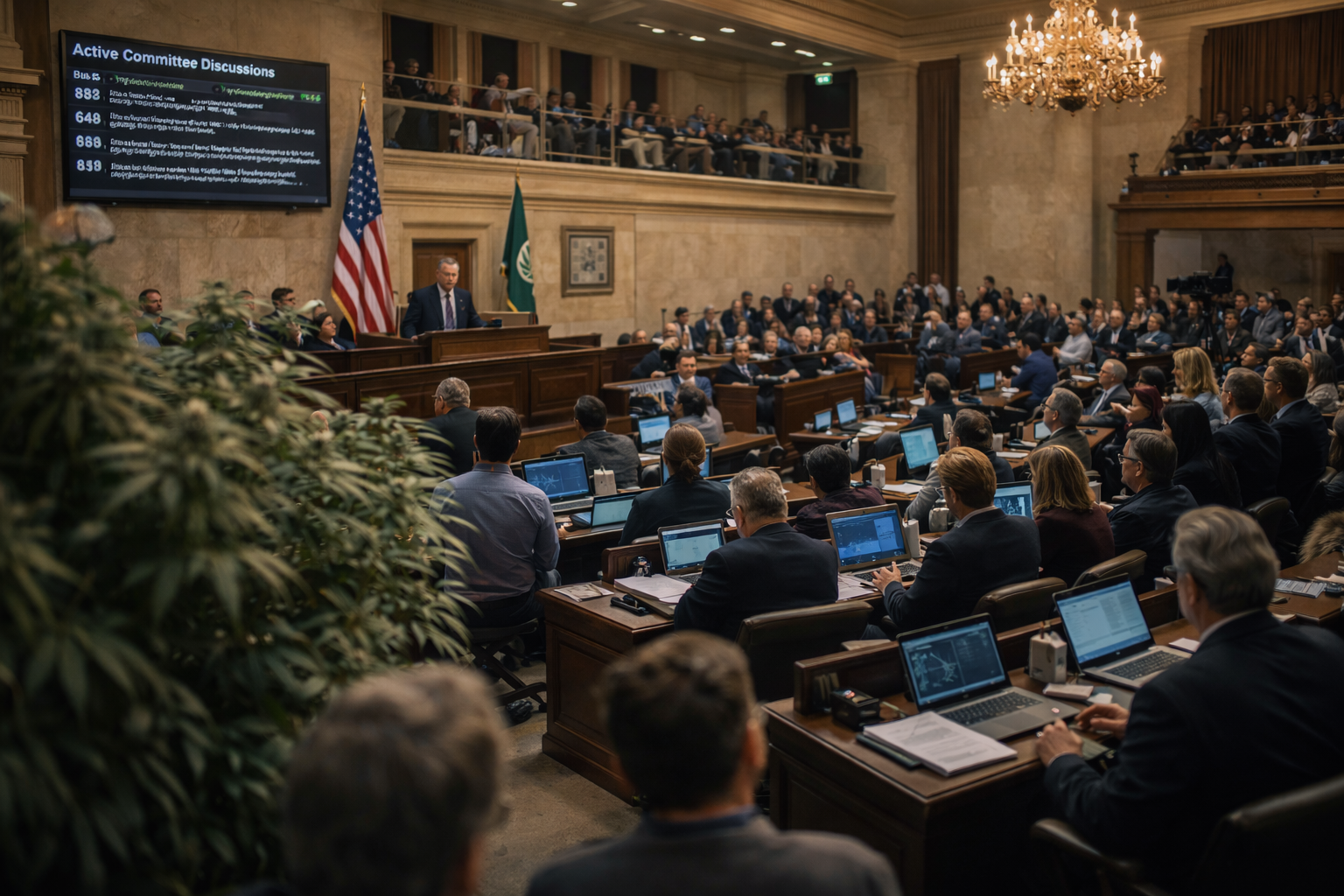
Washington lawmakers reviewing cannabis legislation during a committee hearing focused on licensing and event permitting updates.
Most people only notice cannabis policy after it becomes a headline. A new law passes, a regulator issues guidance, operators scramble, and everyone acts surprised.
But the real shift happens earlier, in committee rooms, during session deadlines, when bills get amended, combined, watered down, or quietly pushed forward. That is exactly what is happening now in Washington State Legislature. Multiple cannabis proposals are actively moving through committees, including bills that touch licensing, production economics, packaging rules, and the permitting structure for hospitality style events.
For operators, these updates are not political theater. They are early indicators of where rules are tightening or loosening before national outlets ever pick it up. If you run a multi state strategy, this is how you spot trendlines early and position ahead of the curve instead of reacting late.
Quick readiness check: if you want to map how legislative changes can hit your compliance, operations, and risk posture, Start with our quick Cannashield intake form
Why committee movement matters more than the final vote
Think of committee movement like a market signal. Bills that get scheduled for hearings and executive sessions are the ones leadership believes have a real path. And once a bill reaches an executive session, the conversation shifts from “is this a good idea” to “what language can pass.”
That is where the real impact happens for operators:
Definitions get tightened, which changes who is regulated
Fees, limits, and enforcement authority get clarified
Timelines and compliance deadlines get set
New permit categories get created or removed
By the time a bill is “news,” the guts of it are often already decided.
A clear theme: modernize compliance without opening loopholes
One proposal moving in the Senate focuses on packaging, safety, recycling, and traceability. The business point here is not just sustainability. It is operational modernization.
When regulators start talking about resealable multi use edible packaging, concentrate package sizing aligned with purchase limits, digital batch level traceability, and recycling rules for vapor devices and batteries, they are aiming at two things at once:
Reduce waste and friction for compliant operators
Preserve enforcement tools that prevent diversion and youth access
If you are an operator, this is a reminder that “compliance” is not static. Packaging and tracking requirements evolve, and when they do, your SOPs, vendor relationships, inventory systems, and training need to evolve with them.
Market stabilization is being debated through licensing economics
Another bill moving in the Senate goes directly at oversupply pressure by linking producer tier size to minimum revenue performance. Operator translation: lawmakers are exploring mechanisms to reduce canopy scale when sales do not justify it.
Even if the final version changes, the signal is loud. Washington is willing to consider structural levers that affect:
Renewal planning for producers
Facility footprint decisions
Wholesale supply pressure and pricing dynamics
How aggressively the state tries to stabilize the legal market
For cultivators and manufacturers, this is not theory. It is a reminder that licensing rules can become economic policy. When oversupply gets painful enough, states start experimenting with new ways to limit excess production without calling it a cap.
If you want a simple checklist to spot where licensing changes could impact margins, renewals, or operational planning, Complete our Cannashield questionnaire
Home grow keeps returning because consumer pressure does not disappear
Home grow proposals come up year after year in many states, and Washington is no different. The business impact is rarely immediate, but it matters long term.
When lawmakers continue to debate home cultivation, it usually signals two realities:
Consumer expectations are shifting toward broader access
Regulators are being forced to balance legal market protection with personal freedom arguments
Operators should treat this like a “directional” indicator. If a state keeps revisiting home grow, it is often part of a broader pressure to expand access in other ways, including hospitality concepts, consumption spaces, or new retail models.
Event permitting is the real story for experience based cannabis
One of the most important items in the House is a proposal focused on regulated cannabis hospitality events. This is not just about “fun.” It is about creating a legal pathway for social consumption that is controlled, permitted, and enforceable.
The structure being discussed is built around an event organizer license and an event permit system, with clear rules on:
Age verification and access control
Where consumption can occur, including visibility rules
What products can be sold and consumed on site
Security responsibilities and local approvals
Limits on event frequency and duration
Separation between sales areas and consumption areas
If your business touches events, experiences, hospitality, marketing activations, or tourism adjacent concepts, this is where the market could open up. It also shows where compliance will get stricter, not looser. The states that allow hospitality usually require tighter controls because the public visibility is higher.
This is also a service provider signal. If event permitting becomes real, demand rises for compliant security plans, trained staff, access systems, insurance readiness, and documented operational procedures.
Taxes are back in the conversation too
On top of licensing and events, Washington lawmakers are also debating cannabis excise tax design. That is another big indicator because tax changes ripple through everything: pricing strategy, product formats, consumer behavior, and competitive pressure from informal markets.
When a state revisits excise tax structure, it usually means lawmakers are searching for a better balance between revenue and market stability. Operators should watch it closely because tax design is one of the fastest ways to shape demand without changing licensing at all.
Conclusion
Washington’s session activity is a reminder that cannabis policy shifts are often visible before they are popular. Bills moving through committees right now touch the parts of the industry that decide day to day reality: packaging and tracking compliance, production economics tied to licensing tiers, home grow pressure, excise tax design, and the permitting framework for hospitality style events.
For operators, the takeaway is simple. If you want fewer surprises, track state sessions like you track market trends. The rules change first in committees, not in headlines.
At Cannashield, we help cannabis operators stay ahead of policy shifts with practical compliance and risk planning that matches real world operations. If you want a readiness check, Complete our full intake form here