

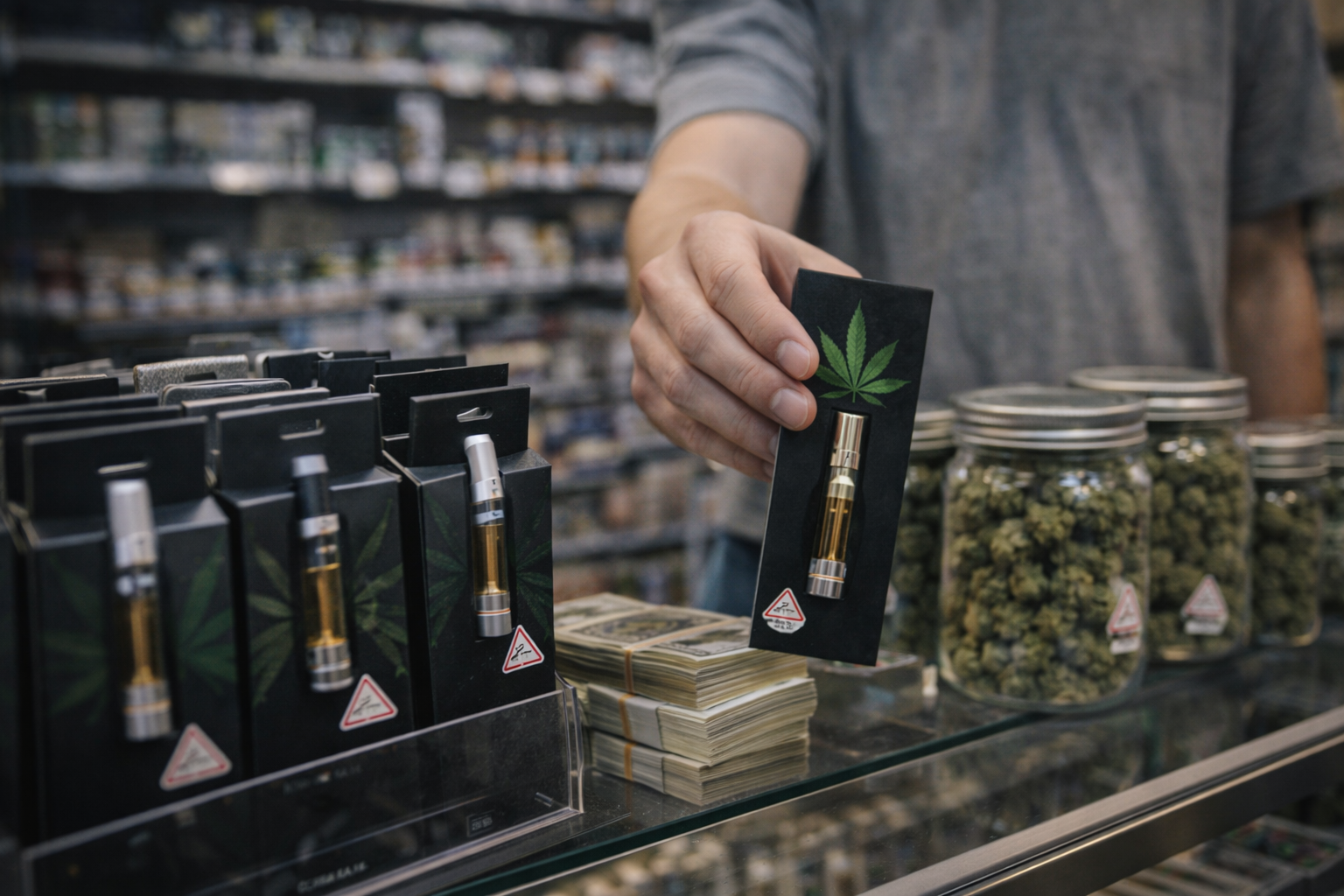
Dispensary checkout counter with cannabis vape cartridges and flower jars showing shift toward vape sales
California cannabis vape sales are now outpacing flower in the licensed market, and that is more than a trend piece for the group chat. It is a real retail and supply chain shift driven heavily by Gen Z buying habits, which changes what sells, what gets stocked, and what producers prioritize next.
Quick facts
• State reported sales data shows vapes first moved ahead of flower in mid 2025 and have stayed at or near the top since
• Recent month spending was reported as more than 10 percent higher on vapes than flower, and far higher than edibles
• Gen Z spend mix in Headset data: 38 percent vapes, 32.5 percent flower
• Millennials spend mix in Headset data: 40.1 percent flower, 25.7 percent vapes
• California state market reporting has also highlighted a longer trend away from flower toward value added categories like vape and pre rolls
If this shift is affecting your merchandising and risk planning, Start with our quick Cannashield intake form so you can map exposure and plan for multiple outcomes
Why Vapes Took The Lead In California
Gen Z has a different default. They value convenience, discretion, and consistency, and vapes check those boxes. They are portable, quick, and easier to use without the learning curve of rolling or managing flower storage. That demand pull matters because California is a mature market, which means consumer preference changes show up fast on the sales leaderboard.
There is also a pricing reality. In mature markets, price compression pushes retailers to focus on categories that maintain steadier demand and repeat purchase behavior. Vapes can win there, especially when customers treat them like a routine item rather than a special occasion purchase.
Universal operator lesson: mature markets do not stop growing, they change what growth looks like. Category leaders shift when the next consumer cohort becomes the volume driver.
What Retailers Should Do Now
This is not a moment to dump flower inventory and go all in on cartridges. It is a moment to rebalance with discipline.
Start with category architecture. Vapes need clear segmentation by hardware type, oil type, and effect position, because that is how customers shop them. The retailers who win build a menu that is easy to understand and consistent week to week, not a random wall of SKUs.
Next, tighten the essentials that keep the vape category profitable. Hardware sourcing, testing confidence, and returns control are the real levers. If your hardware varies too much, your customer experience becomes inconsistent. If your testing chain is sloppy, your risk jumps. If your returns process is loose, you leak margin quietly.
Finally, revisit staff training. When a category becomes the top seller, your staff becomes the education layer, and education needs to stay claims safe and consistent.
What Producers And Manufacturers Should Prioritize
When vapes lead, extraction and oil quality become front and center. Producers that can deliver consistent inputs and predictable specifications are the ones that hold shelf space. That means tighter batch discipline, tighter upstream quality controls, and a better handle on what retailers need for reliable restocks.
It also changes how you think about production planning. Flower is still important, but more flower will get pulled into oil demand when the vape share rises. The operators who plan for this early avoid the classic trap of overproducing the wrong mix and then discounting to move it.
If your vape category is growing and you want to pressure test your lab, hardware, and product documentation controls Complete our Cannashield questionnaire to identify gaps before they turn into a costly surprise.
Universal operator lesson: when value added products lead, the winners are the teams with clean supply chain documentation and repeatable manufacturing, not just good marketing.
The Risk Side Of The Shift
Vapes are not just a sales story. They are a compliance story.
More vape volume means more scrutiny on testing, labeling clarity, and hardware consistency. It also means recalls and lab credibility issues can hit harder, because the category touches a large share of customers. If you rely on one lab or one hardware vendor, your single point of failure becomes a business risk, not just an operations issue.
This is also why you should be careful with trend chasing. The goal is not to stock every new item that shows up. The goal is to stock what you can document, support, and restock reliably.
How To Turn This Trend Into A 90 Day Plan
Treat the vape shift like a controlled rollout inside your own business.
Step one: build a vape SKU scorecard with three columns. Demand, margin, and compliance confidence. Anything that fails compliance confidence does not belong on your shelf, even if it sells.
Step two: reduce complexity. Tighten the number of hardware formats you carry and standardize packaging where possible. Less variation means fewer errors, fewer returns, and faster restocks.
Step three: build your vendor backup plan. Two hardware sources and two lab options is not overkill in a market where categories can flip quickly.
If you want a copy and paste retail category shift checklist that covers vapes, flower, pricing discipline, and documentation, use our Cannashield intake form to request it.
Conclusion
California’s vape lead is a real market signal, not a social media trend. It shows how a mature market evolves when Gen Z becomes a larger share of legal demand. The operators who win the next phase will be the ones who treat vapes as a system, with disciplined SKU strategy, reliable vendors, and documentation that holds up when scrutiny rises.
What To Do This Week
• Pull last month sales by category and compare vapes versus flower basket contribution
• Build a top 20 vape SKU list and score each one for margin and documentation quality
• Standardize hardware formats to reduce returns and customer complaints
• Audit COA storage and batch traceability so you can respond fast if a vendor issue hits
• Tighten staff scripts for vape education so language stays consistent and claims safe
• Create a backup supplier plan for hardware and a backup lab plan for testing resilience
FAQ
Why are vapes beating flower in California right now
Because Gen Z preferences are shifting demand toward portable and convenient formats, and that cohort is a growing share of buyers.Does this mean flower is dying
No. Flower remains a major category, but it is no longer automatically the top seller in every month in a mature market.What is the biggest operational change retailers need to make
Vendor discipline. Hardware quality, testing confidence, and returns control matter more when vapes are a leading category.What is the biggest change for producers
Consistent oil inputs and repeatable manufacturing become the competitive edge, because retailers need reliability more than novelty.What is the compliance risk with a fast growing vape category
More volume means more attention on testing credibility, labeling accuracy, and supply chain documentation.What is the universal operator lesson for other states
When markets mature, category leadership can change quickly. Build a system that can rebalance inventory without breaking operations.