
Occupational Asthma Rising Among Cannabis Workers, Multi-State Study Finds
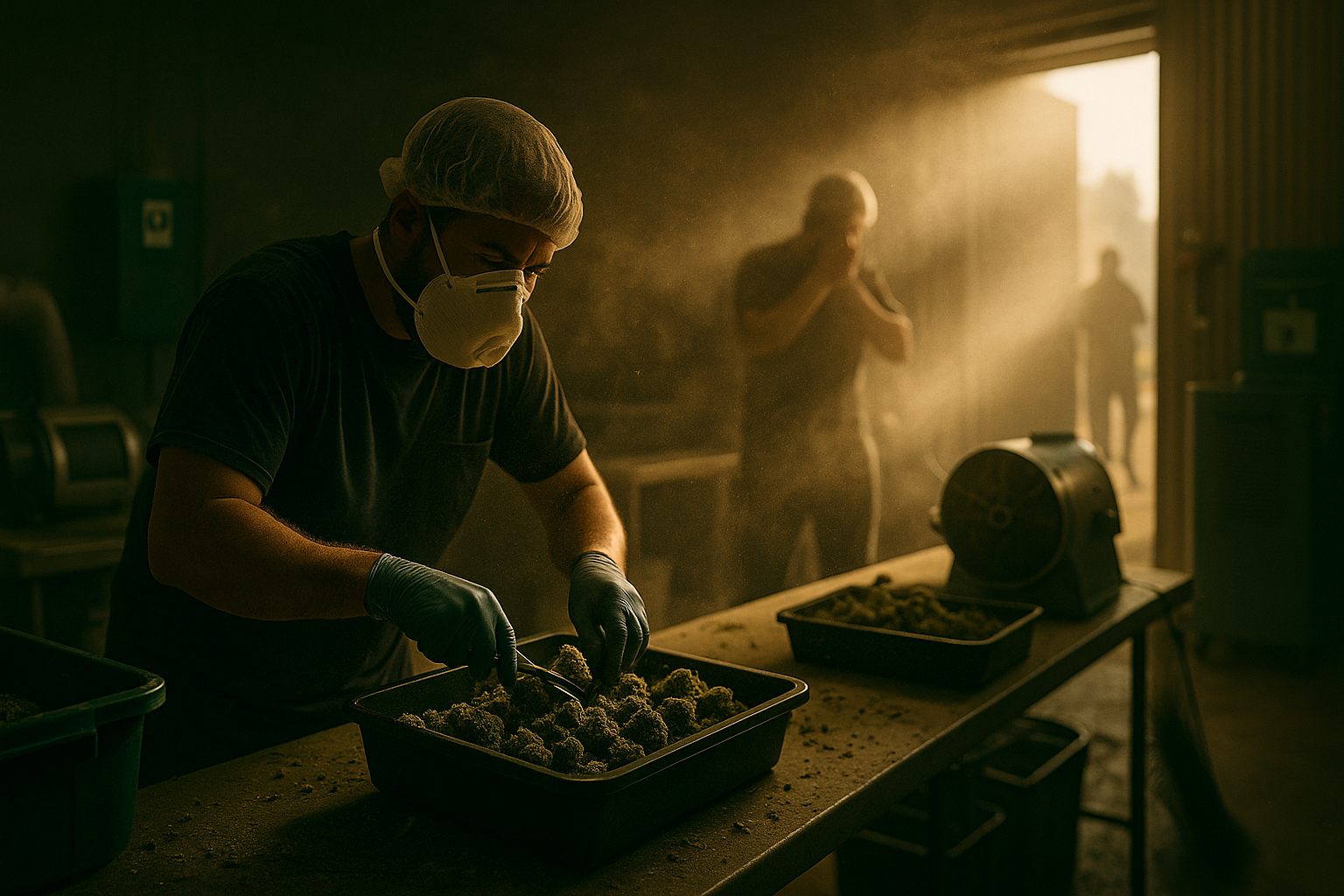
Masked cannabis worker trimming buds amid airborne dust in a processing room, symbolizing rising occupational asthma risks in cultivation and post-harvest environments.
A new multi-state research study has uncovered a growing workplace hazard inside the legal cannabis industry: cultivation, trimming, and packaging workers are developing job-related asthma at alarming rates, with several documented fatalities.
As the cannabis sector matures—and production scales from small craft operations into high-volume facilities—worker safety is becoming a serious concern. Airborne plant dust, mold spores, and fine particulate matter inside grow and processing environments are creating conditions that many operators are not yet prepared to manage.
If your cannabis business operates cultivation, trimming, or packaging facilities, now is the time to review your compliance and insurance protections. Start with our quick Cannashield intake form to assess your risk exposure.
A Silent Health Crisis Inside Cannabis Facilities
The study found that workers across multiple states experienced asthma symptoms, respiratory irritation, and sensitization after regular exposure to dust and debris generated during cultivation and post-harvest operations. In the most severe documented cases, workers suffered fatal asthma attacks linked directly to on-site exposure.
Cannabis dust behaves like other agricultural allergens, but the industry’s rapid expansion—and inconsistent safety standards—have created blind spots. Many facilities lack adequate ventilation, respiratory protection protocols, or air-quality monitoring systems. The result is a workplace environment where respiratory hazards build quietly until symptoms become severe.
For operators, this is more than a health risk—it’s a compliance, insurance, and liability risk that can escalate quickly.
Want to know whether your workplace protections meet emerging safety expectations? Complete our Cannashield questionnaire for a personalized compliance review.
Why Cannabis Workers Are at Higher Risk
Unlike traditional agriculture, cannabis is processed in tightly controlled indoor environments. The combination of humidity, plant pollen, airborne bud dust, kief particles, and potential mold creates a perfect storm for respiratory issues.
The study highlights several contributing factors:
1. Airborne Cannabis Dust and Pollen
Trimming and packaging agitate flower in a way that releases fine particles into the air. These can trigger allergic reactions, respiratory distress, and asthma in sensitized workers.
2. Mold and Microbial Contaminants
High humidity in cultivation rooms increases the likelihood of mold. Even trace levels can be dangerous over time.
3. Repetitive, Close-Contact Work
Trimmers spend hours in one position, inhaling dust without realizing the long-term exposure risk.
4. Inadequate Workplace Safety Standards
Because cannabis is still federally illegal, OSHA has not created cannabis-specific standards—leaving state agencies and operators to guess at best practices.
The combination of rapid industry growth and slow occupational-safety development is putting frontline workers at risk—often without them knowing until symptoms appear.
The Industry’s Responsibility: Prevention, Not Reaction
The study’s authors emphasize that occupational asthma is preventable—but only if operators take it seriously. Implementing basic safety measures can drastically reduce risk, including:
Proper ventilation and air filtration
Mandatory respiratory protection (N95s or powered air-purifying respirators)
Routine air-quality monitoring
Regular deep cleaning to control dust accumulation
Training programs that teach workers to recognize symptoms early
Documented workplace safety protocols
These steps don’t just protect employees—they protect businesses from expensive workers’ compensation claims, lawsuits, product contamination risks, and regulatory penalties.
Strong worker-safety systems also reduce insurance costs and liability exposure. Fill out our Cannashield intake form to strengthen your workplace risk strategy.
The Bigger Picture: Cannabis Is Becoming a Mature Industry
As cannabis transitions from an emerging market into a regulated, multi-billion-dollar industry, worker safety will become a major area of scrutiny. States like Colorado and Washington have already begun investigating workplace incidents—including fatalities—tied to asthma attacks in cannabis facilities.
Federal agencies may eventually follow, especially as the industry pushes toward national legalization. When that happens, operators who already have documented safety protocols, insurance protection, training logs, and respiratory-hazard controls will be ahead of the curve.
For cannabis businesses, this moment is about being proactive—not waiting for regulators to come knocking.
Conclusion
The new multi-state study is a reminder that cannabis is still an agricultural and industrial operation at its core. With that comes real workplace risks that operators must treat seriously. Occupational asthma and respiratory illness are preventable—but only with deliberate investment in ventilation, PPE, training, and compliance systems that match the realities of modern cannabis production.
Cannabis companies that prioritize worker safety early will protect their people, their reputation, and their long-term operational stability. The ones who ignore these warnings will face escalating liability, higher insurance costs, and potential legal consequences.
At Cannashield, we help cultivators, manufacturers, and post-harvest operators build protective systems that reduce risk, strengthen compliance, and improve workforce safety.
Complete our full intake form here to safeguard your team and your business before federal and state regulators raise the bar even higher.
Read the full article here →