

Farm Bill Amendment Could Delay Hemp THC Ban And Reshape 2026 Planning
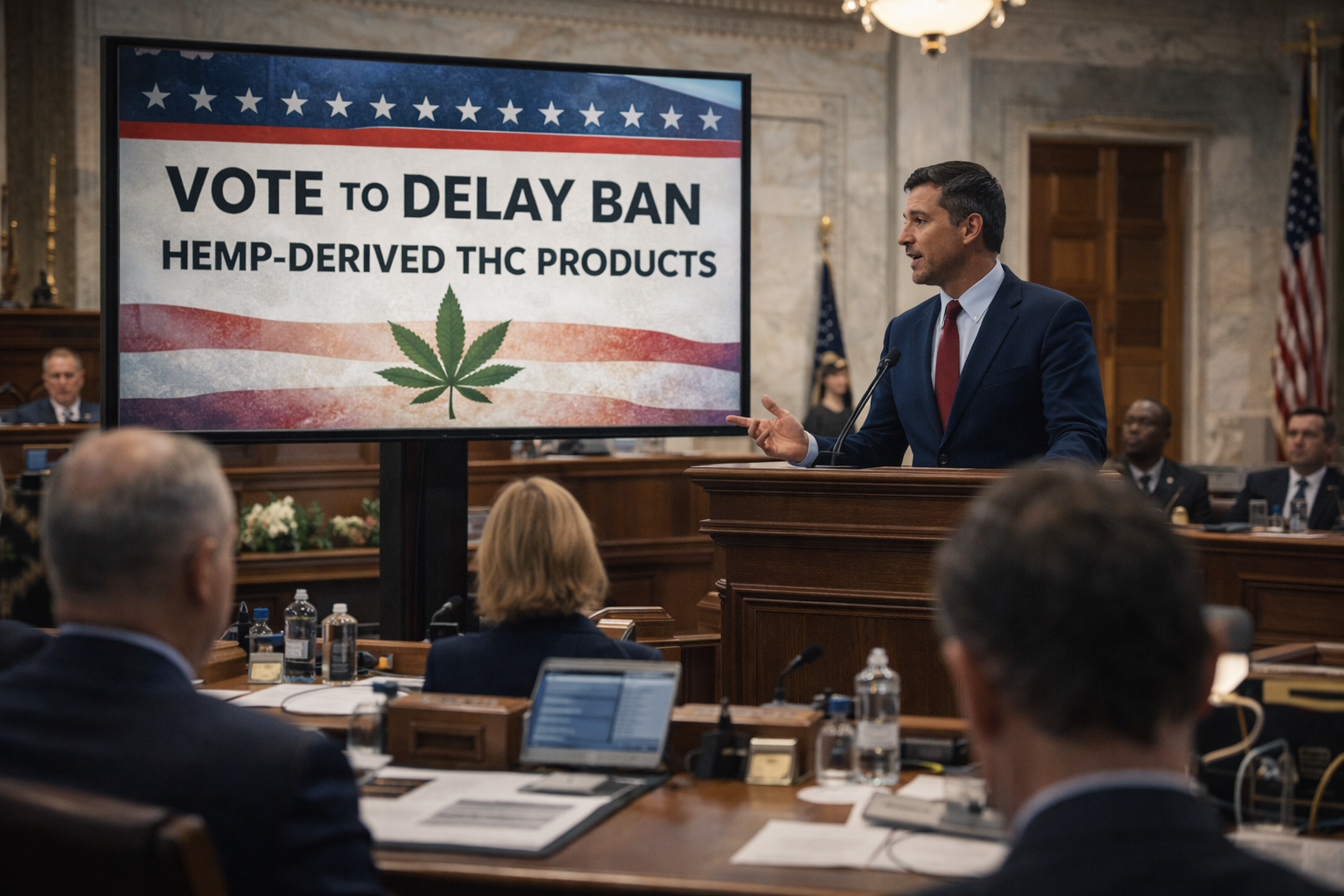
Congressional hearing scene on delaying enforcement of intoxicating hemp derived THC product ban
Federal lawmakers are preparing to debate a Farm Bill amendment that could delay enforcement of the federal hemp THC product crackdown that would otherwise hit later this year. For operators selling hemp derived THC drinks, gummies, and similar products, this is a high intent policy signal because timing alone can decide whether you are running normal production or scrambling through a supply chain reset.
Quick facts
• The House Committee on Agriculture scheduled a markup of H.R. 7567, the Farm, Food, and National Security Act of 2026.
• An amendment offered by Rep. Jim Baird would extend the implementation window tied to hemp production provisions by changing the timeline from 365 days to 2 years.
• The amendment description says it would delay the redefining of hemp tied to section 781 of an appropriations law.
• Industry stakeholders say the pending redefinition could upend much of the current hemp derived THC product market and is expected to take effect in November under current law.
If federal timing affects your product roadmap, Start with our quick Cannashield intake form so you can map exposure and plan for multiple outcomes.
Why This Delay Matters More Than It Sounds
A delay is not the same as permission. But in fast moving categories, extra time can be the difference between an orderly transition and a sudden stop.
The pending federal change at the center of this debate is a tighter definition of what counts as federally legal hemp and what does not. Reporting explains that the change would move away from a delta 9 only approach and apply limits using total THC, while also capturing delta 8 and other intoxicating isomers and restricting certain synthesized cannabinoid products. It also describes a per container cap that would effectively wipe out many intoxicating hemp derived items sold today.
For operators, that is not a technicality. It is a market structure event. It can reshape which products remain viable, which channels can sell them, and how quickly consumers shift toward fully regulated cannabis markets where adult use sales are already established.
Universal operator lesson: when the federal government tightens definitions, compliance becomes a product feature, not a back office task.
What The Farm Bill Amendment Would Actually Do
The amendment offered by Rep. Baird is short and blunt. It inserts a new section that would change the implementation timing by replacing “365 days” with “2 years” in the relevant provision. In plain English, it adds another year of runway before the new hemp definition and related restrictions fully bite.
The amendment is listed in the House Agriculture Committee markup package for H.R. 7567. That is important because it shows this is being treated as a live policy conversation in the Farm Bill context, not only a press cycle headline.
There is also a procedural reality operators should not ignore. Reporting notes there are questions about whether the amendment is germane, which could affect whether it even gets a clean vote during markup.
Universal operator lesson: build your plan on scenarios, not on one amendment passing cleanly.
If uncertainty is affecting how you plan or negotiate, Complete our Cannashield questionnaire to pressure test your exposure across products, suppliers, and retail channels.
What This Could Mean For Operators And Retailers
If the delay passed, it could preserve revenue streams for a longer transition period, but it would also extend uncertainty. That means the smartest operators use any extra time to de risk, not to coast.
For producers, the immediate priorities are inventory and formulation risk. Products that rely on high total THC per container, or rely on cannabinoid inputs that regulators may target, become the first place to review. The goal is not panic reformulation. The goal is understanding which SKUs are most exposed if definitions tighten and enforcement ramps.
For retailers, the risk is channel disruption and inspection risk. Even if federal enforcement is delayed, states and cities may still tighten their own rules on intoxicating hemp products, especially around youth access, packaging that looks like candy, and unclear testing practices. A delay can buy time, but it does not remove local scrutiny.
For the regulated cannabis side of the market, a strict hemp crackdown can shift consumer demand toward licensed cannabis retailers, especially in states where hemp derived THC has been filling an access gap. That is why this debate matters even to operators who do not sell hemp derived products.
Universal operator lesson: when one channel gets squeezed, demand does not disappear, it reroutes.
How To Plan The Next 90 Days Like A Pro
Treat this as a transition readiness sprint.
Start with a product exposure map. Identify which SKUs would be most vulnerable if federal definitions tighten and per container limits become enforceable. Then build a replacement path, either through lower potency formats, non intoxicating cannabinoid lines, or regulated cannabis pathways where allowed.
Next, tighten documentation. Keep testing results organized, keep vendor invoices and ingredient specs accessible, and train staff on what they can say and what they should not say. In category crackdowns, documentation is what separates “we run a real business” from “we are getting lumped in.”
Finally, build a policy watchlist. The important question is not whether the amendment exists. The question is whether the delay survives process, what the final timing becomes, and what state level rules do in parallel.
If you want a policy watchlist template and a compliance transition checklist your team can run weekly, use the Cannashield intake form to request it.
Conclusion
A Farm Bill amendment to delay the hemp THC crackdown is a signal that lawmakers recognize the disruption risk of a hard timeline. But operators should treat the delay as a temporary bridge, not as a guarantee. The winners in 2026 will be the teams that use any extra time to tighten products, documentation, and channel strategy so they can survive either outcome.
What To Do This Week
• List your top selling hemp derived THC SKUs and rank them by exposure to stricter federal definitions
• Confirm your testing, COA storage, and vendor documentation are inspection ready
• Build two scenarios for Q4 inventory, one where enforcement stays on schedule and one where it is delayed
• Audit packaging and age gate practices to reduce youth access risk
• Identify alternative products and channels if a key SKU becomes non viable
• Assign an owner to track the markup and amendment status weekly
FAQ
What is being delayed
An amendment would extend the implementation window tied to a federal hemp redefinition by changing 365 days to 2 years.Does a delay mean intoxicating hemp products are approved
No. A delay only affects timing and does not settle long term federal or state regulatory design.Why does timing matter so much
Because inventory, contracts, and production cycles are planned months ahead, and a hard deadline can disrupt supply chains quickly.Could the amendment fail even if it has support
Yes. Reporting notes there may be procedural questions about whether it is germane in committee.How might this affect regulated cannabis markets
If hemp derived intoxicating products become harder to sell, some consumer demand could shift toward licensed cannabis channels in states where they exist.What is the universal operator lesson
Build scenario plans and tighten documentation so you can pivot quickly when definitions or enforcement timelines change.