
FDA Hemp Guidance Is About to Redraw the Lines for Cannabinoid Products
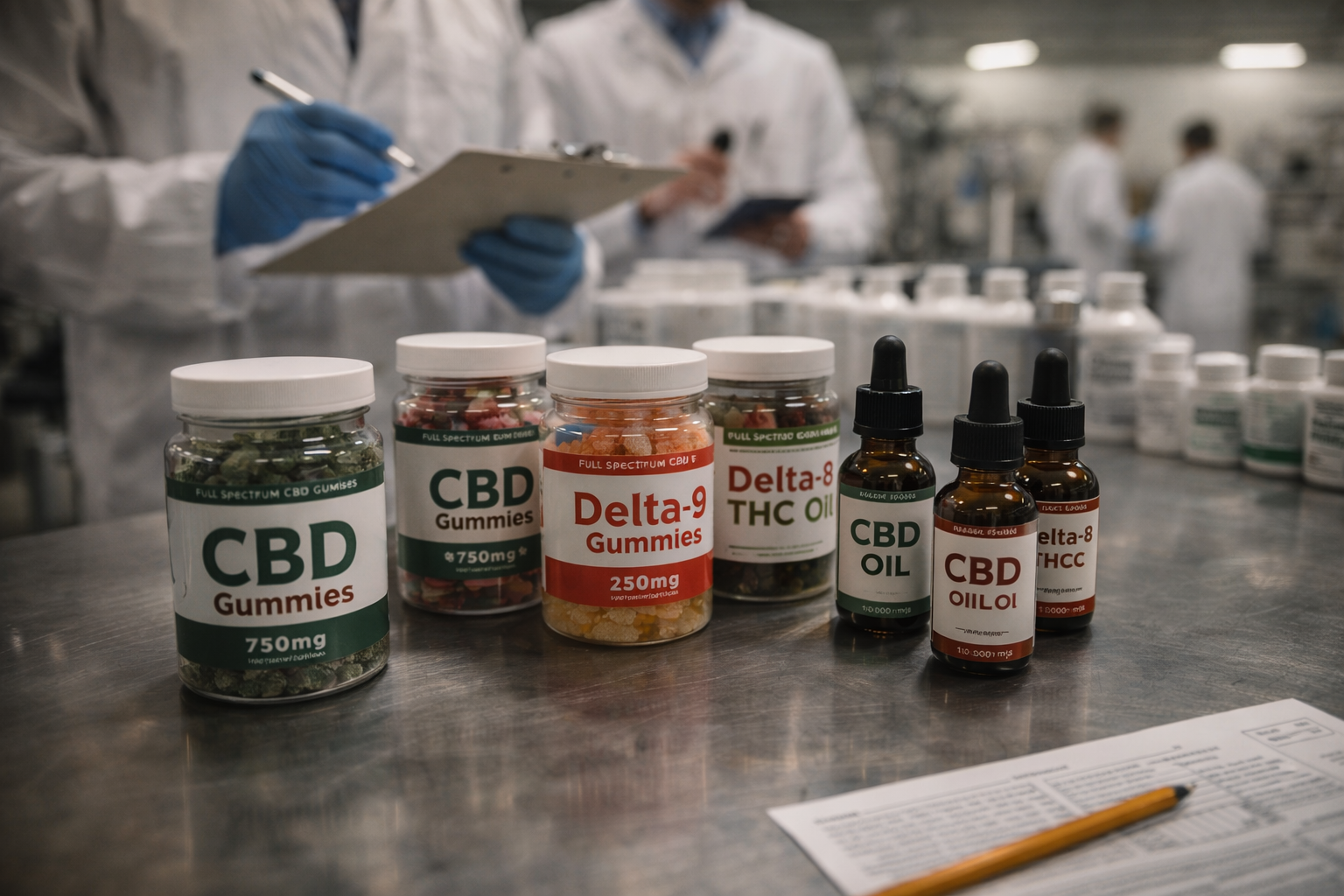
CBD and delta-9 gummies and oils on a lab table during regulatory inspection.
The FDA is approaching a formal deadline to publish regulatory guidance on cannabinoid classifications and what qualifies as a legal container for hemp products under federal law. This is not a routine update. It is one of those regulatory moments that quietly reshapes an entire category.
For years, consumable hemp products have operated in legal gray zones. Gummies, oils, beverages, and other ingestible products reached consumers while regulators debated how existing law should apply. That ambiguity is now narrowing. Once the FDA clarifies classification and container standards, enforcement and compliance expectations will change quickly.
For operators, the key takeaway is simple. The rules that allowed flexibility are likely to tighten, and businesses need to be ready.
If your company manufactures, distributes, or sells hemp derived consumables, now is the time to review compliance exposure. Start with our quick Cannashield intake form.
Why Cannabinoid Classification Matters So Much
Classification determines how products are regulated. It affects which agency has authority, what standards apply, and how enforcement is carried out.
Clear classification will influence:
• Whether products are treated as dietary supplements, foods, or something else
• What claims can be made on labels
• What testing standards apply
• How products are marketed and sold
When definitions are vague, enforcement is inconsistent. When definitions are clear, expectations rise.
If unclear classification currently benefits your product line, Complete our Cannashield questionnaire to assess risk before that advantage disappears.
The Container Question Is a Compliance Trigger
What qualifies as a legal container may sound technical, but it is one of the most important parts of this guidance.
Container definitions influence:
• Serving size interpretation
• Dosage assumptions
• Child resistant packaging standards
• Retail placement rules
• Product liability exposure
A tighter container definition can force changes across manufacturing, packaging, and inventory. Products that once appeared compliant may need redesign.
Why Enforcement Usually Follows FDA Guidance
Once the FDA publishes guidance, agencies have a reference point. That often leads to faster and more consistent enforcement.
Operators should expect:
• Increased inspections
• Requests for documentation
• Retail level compliance checks
• Coordination between federal and state regulators
This does not necessarily mean bans. It means standards. Businesses that cannot meet them may be pushed out.
If your compliance systems have not been stress tested recently, Complete our Cannashield questionnaire.
How This Changes the Competitive Landscape
Hemp consumables grew quickly because they operated under lighter rules than regulated cannabis. Clear FDA guidance narrows that gap.
Possible outcomes include:
• Higher compliance costs for hemp operators
• Reduced number of products on shelves
• Consolidation among manufacturers
• Shift of consumer demand toward licensed cannabis channels
This is less about eliminating hemp products and more about forcing discipline.
Product Design Will Become a Legal Decision
After guidance is released, product design is no longer just a branding choice. It becomes a regulatory one.
Operators may need to:
• Reformulate products
• Adjust container sizes
• Rewrite labels and disclosures
• Update testing protocols
• Retrain staff and partners
Companies that plan ahead can adapt smoothly. Those that wait may face disruption.
If your inventory or packaging decisions would be costly to reverse, Complete our Cannashield questionnaire.
Why Cannabis Operators Should Also Pay Attention
This guidance affects more than hemp. States often align their own rules with federal interpretation. What the FDA says can influence how state regulators treat gray market products.
For licensed cannabis operators, this could mean:
• Reduced competition from lightly regulated products
• Clearer consumer expectations
• Stronger enforcement consistency
That reshapes market dynamics even if cannabis rules themselves do not change.
Preparation Beats Reaction
Waiting for final guidance creates risk. Smart operators prepare scenarios.
Preparation steps include:
• Auditing current products against likely standards
• Reviewing labeling and packaging workflows
• Strengthening documentation
• Evaluating insurance coverage for regulatory action
Preparation preserves flexibility and credibility.
Why This Moment Matters
This FDA guidance represents a shift from ambiguity to definition. Markets behave differently when rules are clear.
Businesses that relied on flexibility will feel pressure. Businesses built for compliance will gain stability.
Conclusion
The FDA’s upcoming guidance on cannabinoid classification and legal containers will shape how hemp consumables are designed, sold, and enforced. This is not a minor update. It is a line drawing moment.
Operators who prepare early will adapt. Those who wait may find themselves reacting under pressure.
At Cannashield, we help hemp and cannabis businesses navigate regulatory transitions with insurance solutions, compliance guidance, and risk strategies built for changing standards.
Complete our full intake form here.