
Federal Policy Shift Opens the Door to Clearer CBD and Hemp Regulation
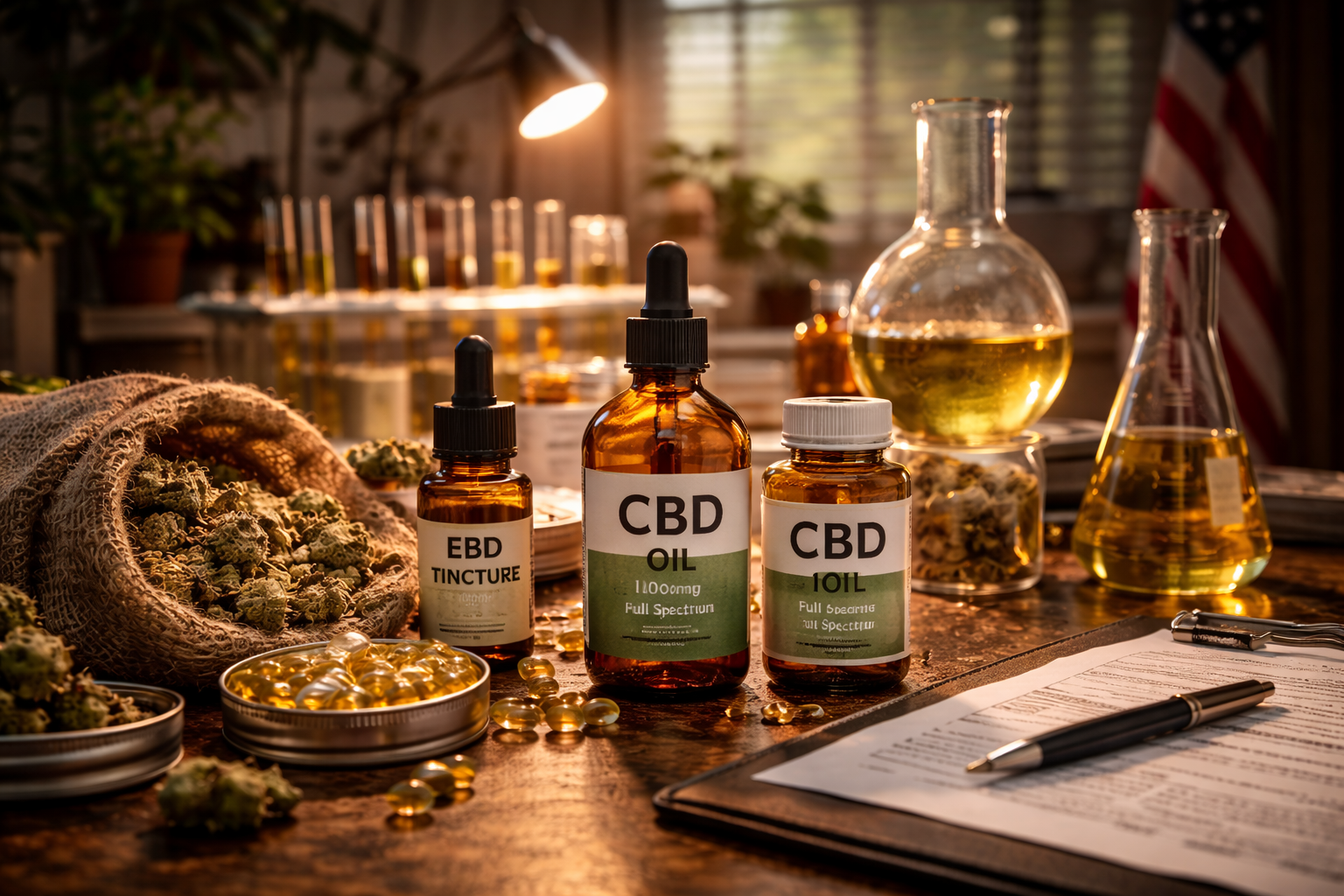
CBD oil, hemp-derived tinctures, and capsules displayed in a laboratory alongside compliance documents, reflecting new federal oversight of hemp products.
The recent federal move to reclassify cannabis has done more than shift marijuana policy. It has also created momentum around clearer regulation of hemp-derived cannabinoids, including CBD. While much of the public focus has been on marijuana rescheduling, the implications for hemp and CBD businesses may be just as significant.
For years, CBD and other hemp-derived products have existed in a gray area. Companies operated under a mix of federal guidance, state rules, and informal enforcement practices. The new policy direction signals that federal agencies are ready to establish clearer frameworks around product standards, labeling, and oversight.
For operators in the hemp and wellness space, this moment represents both opportunity and responsibility.
If your business produces, distributes, or sells CBD or hemp-derived products, now is the right time to review compliance and insurance readiness. Start with our quick Cannashield intake form to prepare for a more structured regulatory environment.
Why Federal Clarity Around CBD Matters
CBD has grown into a major consumer category, appearing in tinctures, capsules, topicals, beverages, and wellness products nationwide. Despite that growth, federal oversight has lagged behind market reality.
The recent policy shift emphasizes the need for:
• Clear product definitions
• Consistent labeling standards
• Uniform testing requirements
• Transparent manufacturing practices
• Coordinated federal and state oversight
This shift reflects recognition that hemp-derived cannabinoids are no longer niche products. They are part of a national marketplace that requires consistent rules to protect consumers and legitimate businesses.
If your products rely on CBD or other hemp-derived cannabinoids, Complete our Cannashield questionnaire to assess how upcoming regulatory changes may affect your operations.
What New CBD Oversight Could Look Like
While full details are still emerging, industry observers expect federal agencies to focus on several core areas.
Product standards
Clear guidance on acceptable formulations, ingredient sourcing, and cannabinoid content could reduce confusion across markets.
Labeling and marketing
Companies may be required to adopt more standardized labeling, including clearer disclosures and restrictions on unsupported claims.
Manufacturing practices
Greater emphasis on quality control, documentation, and consistency could align hemp production more closely with other regulated wellness products.
Testing and verification
Expanded testing requirements may become the norm to ensure product safety and accuracy.
These changes aim to protect consumers while leveling the playing field for compliant operators.
How This Impacts Hemp and CBD Businesses
For businesses already investing in quality and compliance, clearer regulation can be a positive development.
Benefits may include:
• Increased consumer trust
• Reduced competition from non compliant products
• Greater consistency across state markets
• Clearer expectations from insurers and partners
• Improved access to mainstream distribution channels
However, businesses that have relied on loose standards or inconsistent documentation may face challenges. Compliance costs could rise, and some product lines may require reformulation or relabeling.
This is why preparation matters now, not later.
If your business needs help navigating compliance upgrades or insurance adjustments, Fill out our Cannashield intake form to build a proactive plan.
Insurance and Risk Management Will Play a Larger Role
As federal oversight increases, insurers will pay closer attention to how hemp and CBD businesses operate.
Insurance carriers often evaluate:
• Manufacturing processes
• Quality assurance programs
• Testing protocols
• Label accuracy
• Compliance history
• Documentation practices
Clear federal frameworks help insurers assess risk more consistently. That can eventually improve coverage availability, but it also raises expectations.
Businesses that can demonstrate strong compliance and risk controls will be better positioned to secure and maintain coverage.
A Shift From Gray Area to Regulated Market
For many years, the hemp and CBD sector has operated in a space defined by uncertainty. Some companies thrived by moving fast, while others struggled to interpret evolving rules.
The current federal direction suggests a transition away from ambiguity and toward formal regulation. This shift mirrors what happened in other wellness and supplement industries as they matured.
Regulation is not the enemy of growth. When done thoughtfully, it can:
• Protect consumers
• Support credible businesses
• Encourage long term investment
• Reduce enforcement surprises
• Create stable market conditions
The key is readiness.
What Businesses Should Do Now
Hemp and CBD operators should view this moment as a signal to strengthen their foundation.
Recommended steps include:
• Reviewing product formulations and labels
• Auditing testing and quality control practices
• Organizing compliance documentation
• Evaluating insurance coverage for regulatory change
• Monitoring federal and state guidance closely
• Planning for possible updates to manufacturing standards
These steps reduce disruption as new rules take shape.
Conclusion
The federal policy shift following cannabis rescheduling is creating momentum toward clearer regulation of CBD and hemp-derived cannabinoids. For businesses in this space, the message is clear. The era of gray area operations is giving way to a more structured and accountable framework.
Companies that invest now in compliance, documentation, and risk management will be better positioned to thrive as federal oversight increases.
At Cannashield, we help hemp and cannabis businesses adapt to regulatory change with insurance solutions, compliance guidance, and risk strategies designed for evolving markets.
Complete our full intake form here to protect your business and stay prepared as cannabis markets continue to respond to federal policy changes.