
New Federal Law Restricting Hemp-Derived THC Will Reshape the Industry by Late 2026
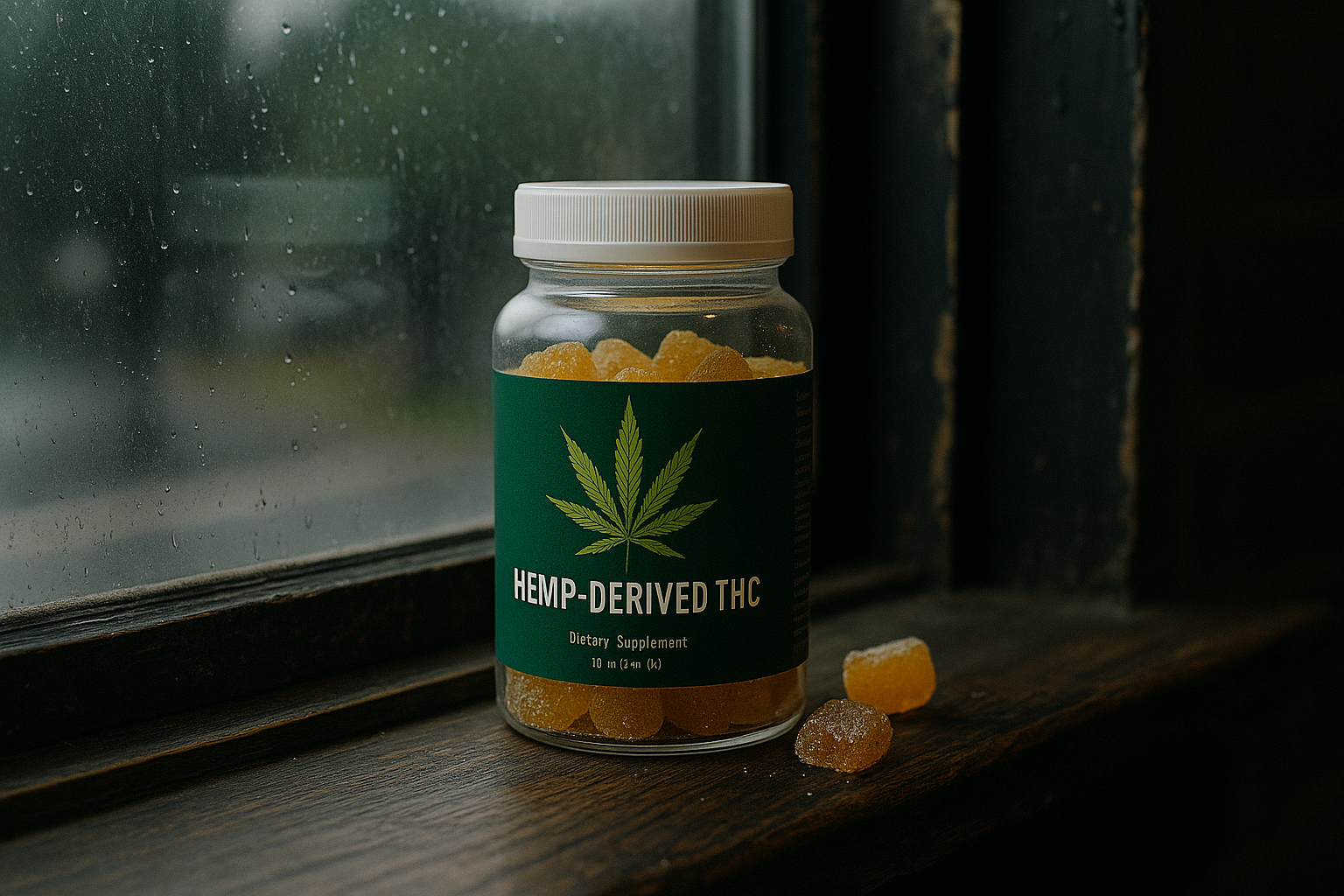
Jar labeled ‘Hemp-Derived THC’ on a windowsill beside gummies, symbolizing the upcoming federal ban on intoxicating hemp products effective November 2026.
A major shift is coming to the hemp sector. A newly passed federal law — included in the government-funding bill — will impose a 0.4 mg THC-per-container limit on hemp products and ban certain cannabinoids created through synthesis outside the plant. When the rule takes effect in November 2026, it will effectively eliminate most intoxicating hemp-derived THC products from the U.S. market.
This change impacts gummies, drinks, tinctures, vapes, and many wellness products that rely on hemp-derived THC. For some companies, this isn’t a small adjustment — it is a complete business-model reset.
If your business depends on hemp-derived THC revenue, now is the time to prepare for federal transition. Start with our quick Cannashield intake form to assess risk, compliance gaps, and pivot strategies before the deadline arrives.
Understanding the New THC Limit
The federal law sets a strict THC allowance:
No more than 0.4 milligrams of THC per entire container.
Not per serving.
Not per dose.
Per container.
To put this into perspective:
Most hemp-derived gummies contain 2–10 mg THC each
Hemp-THC beverages often range from 2–5 mg per can
Tinctures frequently contain dozens of milligrams total
Vapes and concentrates contain levels far beyond the limit
All of these will fall outside federal compliance once the rule takes effect.
The intent of the rule is clear: move any intoxicating cannabinoid product into state-regulated cannabis systems — not hemp.
If you need clarity on which products will remain legal, Complete our Cannashield questionnaire for a product-by-product compliance review.
Ban on Certain Synthetic or Converted Cannabinoids
In addition to the THC limit, the law also restricts cannabinoids produced outside the plant, meaning compounds derived by conversion — such as:
Delta-8 THC
Delta-10 THC
THC-O
THCP
Hydrogenated cannabinoids
Other molecules created through chemical modification
For years, these cannabinoids supported a booming hemp marketplace that filled the gap in states without adult-use legalization. That era is coming to an end.
This is not a partial restriction. It is a full regulatory reset.
Impact on Hemp Wellness and Consumer Products
While the law targets intoxicating cannabinoids, it also poses challenges for wellness-focused brands that use full-spectrum or broad-spectrum formulations. Many functional wellness products may need to be:
Reformulated
Re-tested
Re-labeled
Re-positioned in the market
Even trace THC levels may require verification to remain compliant.
Brands relying on hemp-derived THC as a differentiator face the most disruption. Entire product lines may need to be discontinued or replaced with non-intoxicating alternatives like CBD, CBG, CBN, or herbal/adaptogenic blends.
If your wellness or hemp brand must reformulate or pivot, Fill out our Cannashield intake form to build a compliant transition plan and protect your product roadmap.
A Multi-Billion-Dollar Market Facing Rapid Change
The intoxicating hemp sector has become a major part of the U.S. retail landscape:
Sold in grocery stores, bars, convenience shops, vape stores, and online
Appealing to adults seeking gentler alternatives to alcoholic drinks
Supporting farms, processors, co-packers, and retailers
Providing revenue to rural and emerging markets
The new federal rule threatens a significant portion of this market. Analysts estimate billions of dollars in annual revenue could be affected — especially for beverage and edible companies that rely on low-dose hemp THC.
Many small operators built their businesses on this category. The law forces them to re-examine their entire strategy.
How Hemp Companies Can Prepare for the 2026 Deadline
Even though the law takes effect in November 2026, successful companies are preparing now. The transition window is an opportunity to rebuild strategically rather than react under pressure.
1. Audit All Product Lines
Identify products that exceed the new THC threshold or use converted cannabinoids.
2. Invest in Compliance and Testing
Expect tighter lab requirements, documentation demands, and federal oversight.
3. Strengthen Insurance Protection
Companies may face liability claims, contract disputes, or inventory write-offs. Proper insurance is essential.
4. Pivot to Non-Intoxicating Hemp Products
CBD, CBG, CBN, and botanical wellness formulations will remain compliant paths.
5. Explore Entry Into State-Regulated Cannabis Markets
Some brands may transition into regulated THC systems to preserve potency and brand identity.
6. Communicate Early With Distributors and Retailers
Transparency builds trust and protects shelf space during reformulation.
To ensure your business survives and adapts smoothly, Complete the Cannashield intake form for a custom compliance, insurance, and pivot plan.
The Bigger Picture: A Federal Reset
This law does not eliminate hemp — it eliminates intoxicating hemp loopholes. The federal government is aligning the hemp industry with its original intent: non-intoxicating, agricultural, and wellness-oriented.
For many operators, this will be a challenging pivot. But for those who adapt early, it opens the door to new product categories, cleaner compliance structures, and long-term consumer trust.
The companies that succeed will be the ones that treat this moment not as a roadblock — but as a reset.
Conclusion
The new federal law imposing a 0.4 mg THC-per-container limit and banning synthetic or converted cannabinoids marks a major shift in how the hemp industry will operate moving forward. With the rule taking effect in late 2026, businesses must begin preparing now to reformulate, rebrand, and restructure.
At Cannashield, we help hemp operators navigate regulatory transitions with comprehensive compliance solutions, insurance strategies, and risk management designed for a post-2026 industry.
Complete our full intake form here to protect your business and build a strategic plan for the next era of hemp.