
Federal Funding Deal Moves to Restrict Hemp-THC Beverages to 0.4 mg THC
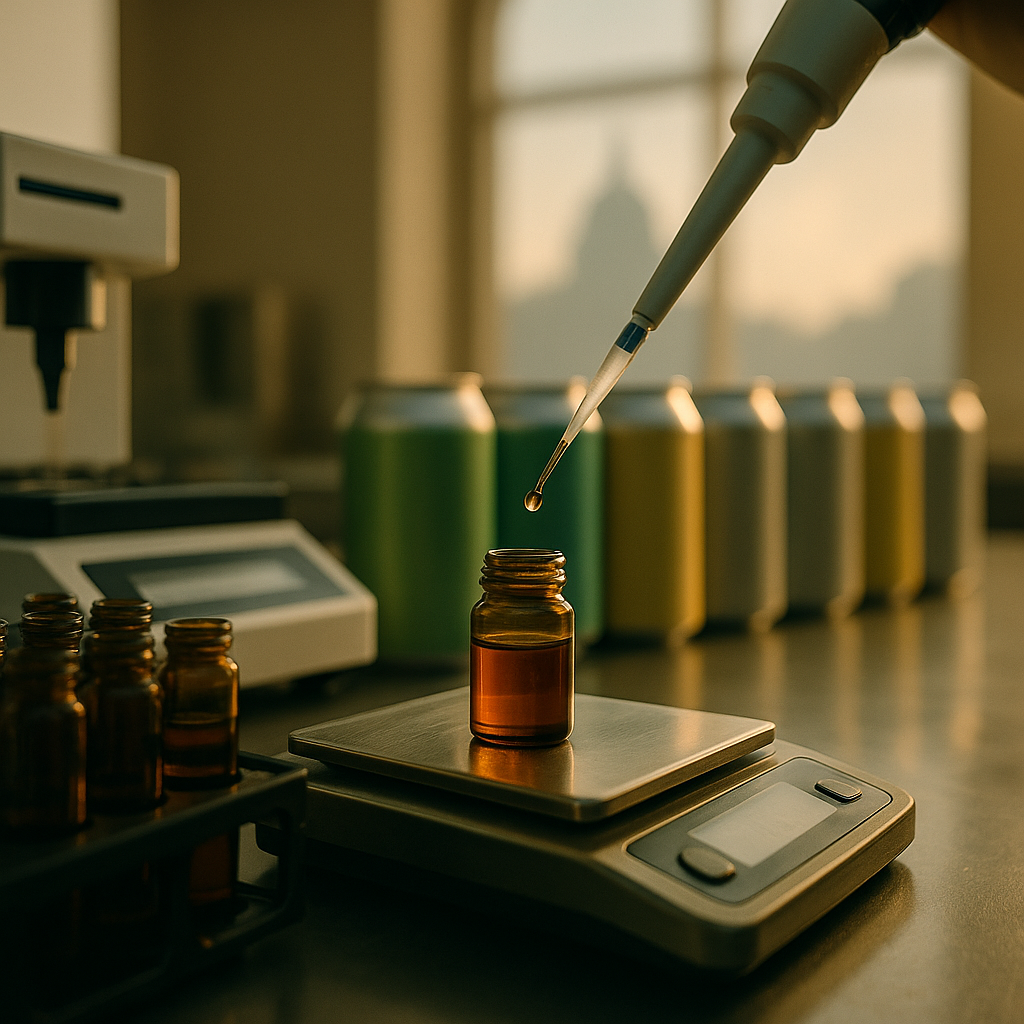
A lab pipette drops cannabis extract into an amber vial on a digital scale, with colorful beverage cans blurred in the background, illustrating a federal funding deal that restricts hemp-THC drinks to 0.4 mg THC or less.
A new government-funding deal has thrown the fast-growing cannabis beverage industry into uncertainty. Hidden inside the agreement is a provision that would restrict hemp-derived, low-dose THC drinks to 0.4 milligrams of THC or less per serving — a limit so low it would effectively eliminate most products currently on the market.
For brands that have spent the past two years scaling production, building distribution networks, and introducing mainstream consumers to cannabis-infused beverages, this change could dramatically reshape the landscape overnight.
If your business depends on hemp-THC beverages or infused products, now’s the time to reassess compliance and risk exposure. Start with our quick Cannashield intake form to protect your operation before the federal cap takes effect.
A Rapidly Growing Category Suddenly Under Threat
Hemp-derived THC beverages have become one of the brightest growth segments in the cannabis-adjacent economy. Positioned as alcohol-free, low-dose, social alternatives, these drinks found their way into bars, restaurants, retail stores, and grocery coolers across the country.
Their rise was fueled by three things:
The 2018 Farm Bill’s loophole allowing hemp-derived Delta-9 THC in low concentrations
A booming “sober-curious” movement
Consumers seeking relaxation without the calories or side effects of alcohol
Brands scaled quickly, secured national distribution, and invested heavily in marketing. Some states reported that hemp-THC beverages were outselling seltzers, RTD cocktails, and even craft beer.
But with the new federal limit of 0.4 mg THC per serving, the category as we know it could disappear. Most beverages today contain 2–10 mg of THC, levels consumers have come to expect — and levels that fall far outside this proposed cap.
If you produce or distribute beverages above the new federal threshold, Complete our Cannashield questionnaire to understand your risk and explore strategic pivots.
Why Congress Is Targeting Hemp-THC Drinks
Federal lawmakers have expressed growing concern over intoxicating hemp products — particularly beverages and edibles that can be easily purchased outside licensed cannabis systems. Unlike regulated marijuana dispensaries, retailers selling hemp-THC products often operate without:
Age verification
Testing standards
Potency disclosures
Packaging restrictions
Serving limitations
Lawmakers argue that stronger guardrails are necessary after multiple reports of under-age access, mislabeled potency, and inconsistent dosing across brands.
The beverage category drew specific attention because of its widespread distribution and ability to imitate alcohol consumption in public settings — despite operating fully outside state cannabis laws.
The new 0.4 mg THC limit appears to be Congress’s attempt to control the category without banning it entirely. But make no mistake: 0.4 mg is essentially a functional prohibition, as the amount is far below any perceptible psychoactive effect.
How the Cap Impacts Hemp-THC Beverage Companies
The new federal threshold forces brands into immediate operational decision-making:
1. Reformulate or Shut Down
Most companies will need to reduce THC levels by over 90% to stay compliant — a move that will render beverages too weak for consumer expectation.
2. Rebuild Distribution
Retailers carrying 2–10 mg THC beverages will lose sellable inventory and may drop the category entirely.
3. Navigate Increased Liability
Inventory destruction, contract losses, and labeling changes may trigger insurance and legal exposure.
4. Compete With a Stronger Regulated Market
State-licensed cannabis beverages (which often carry 5–10 mg per serving) may gain market share while hemp drinks are weakened by federal limits.
5. Prepare for Enforcement
Federal language typically leads to state-level enforcement waves — meaning compliance expectations will tighten fast.
This shift requires structured risk planning. Fill out our Cannashield intake form to strengthen your insurance, compliance, and operational strategy before the new rules go live.
The Bigger Picture: A Federal Reset for Hemp-THC
Leaders across the hemp industry warn that this funding-bill provision is part of a broader push to close intoxicating-hemp loopholes once and for all. Other sections of the spending deal — and companion proposals in Congress — target synthetic cannabinoids, hemp derivatives, and intoxicating ingestibles.
For many, the hemp-THC beverage boom was always temporary. The federal government simply moved slower than the market innovated. Now, lawmakers are signaling a clear message:
If a product gets people high, it belongs under the regulated cannabis system — not convenience stores or online retail.
The challenge is that federally legal cannabis does not yet exist, leaving hemp operators squeezed between consumer demand and federal enforcement.
Conclusion
The federal government’s decision to cap hemp-derived THC drinks at 0.4 mg per serving represents the most significant blow yet to the booming infused-beverage market. What looked like a long-term growth category now faces steep reformulation demands, shrinking margins, and uncertain regulatory pathways.
For beverage manufacturers, distributors, and retailers, this is the moment to take action — not wait for the deadline. Businesses that move quickly to strengthen compliance, secure insurance coverage, and adjust product strategies will weather this reset. Those who delay risk losing entire product lines overnight.
At Cannashield, we help hemp and cannabis operators navigate sudden regulatory shifts with tailored risk, insurance, and compliance strategies built for evolving federal landscapes.
Complete our full intake form here to get ahead of federal THC limits and protect your business through this transition.
Read the full article here →