
Glen Cove Bans Public Cannabis Smoking as Local Pushback Grows
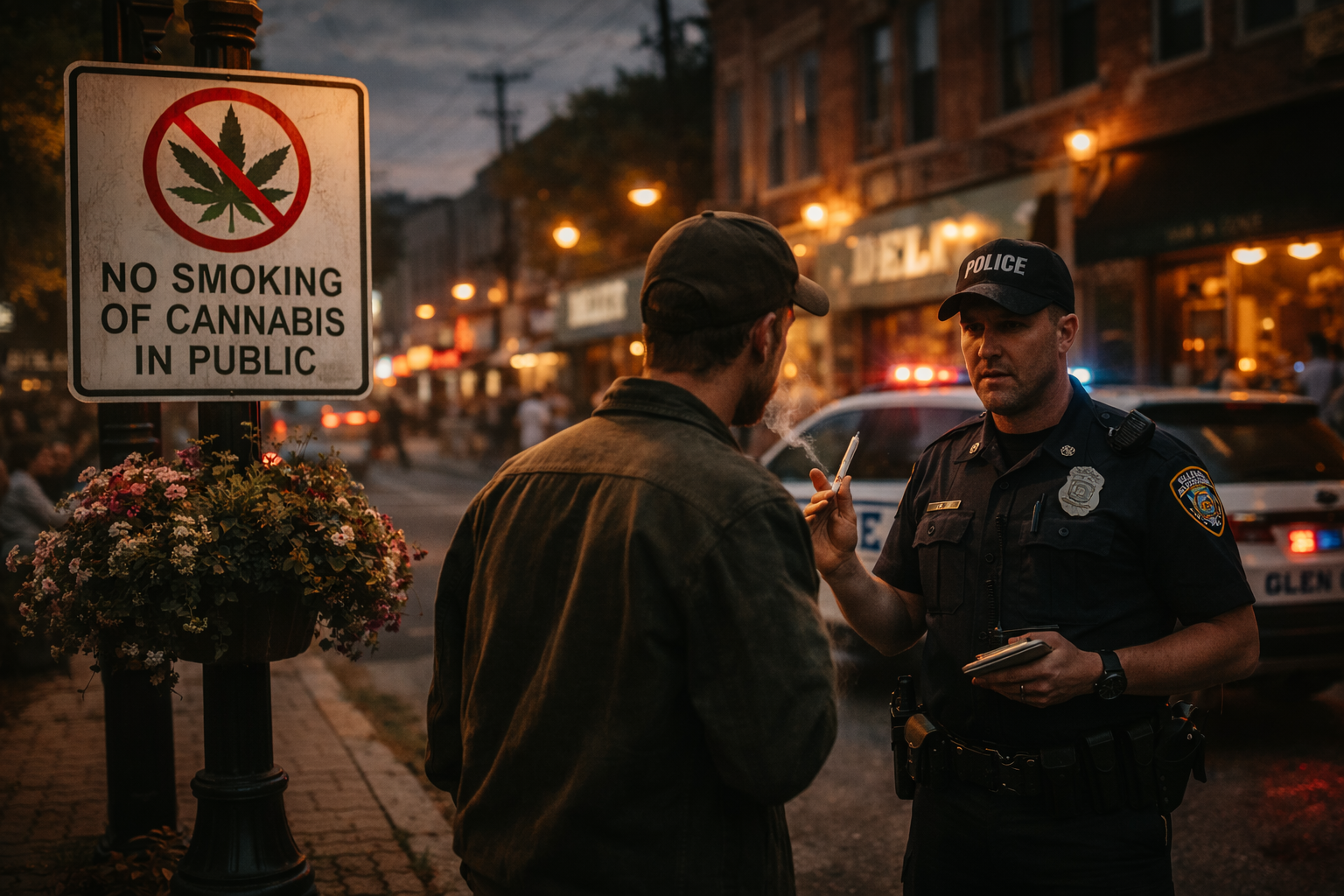
Police officer enforcing a public cannabis smoking ban in Glen Cove, New York, representing increased local regulation of cannabis use in public spaces.
As cannabis becomes more visible across legalized states, local governments are increasingly stepping in to define how and where it can be used. Glen Cove, a city on Long Island in New York, has enacted a ban on public cannabis smoking, responding to resident concerns about quality of life, public spaces, and usage norms.
The decision highlights a growing reality for the cannabis industry. State legalization does not always translate to local acceptance. Cities and towns continue to shape their own rules, and those decisions can directly affect operators, consumers, and compliance expectations.
If your business operates in New York or relies on delivery or retail access, now is a good time to review how local ordinances could affect your risk exposure. Start with our quick Cannashield intake form to understand how municipal rules impact your operations.
What the Glen Cove Ban Includes
Under the new rule, cannabis smoking is prohibited in public spaces throughout Glen Cove. This includes sidewalks, parks, beaches, and other areas open to the general public. While New York State allows adult use cannabis, local governments retain authority to regulate public consumption.
City officials cited resident feedback as a key driver of the decision. Many residents expressed concerns about smoke in shared spaces and the expectation that cannabis use should be limited to private settings.
The ban does not change the legality of cannabis possession under state law, but it does add another layer of restriction that residents and visitors must follow within city limits.
Local rules can change quickly. Complete our Cannashield questionnaire to evaluate how city level policies may affect your compliance obligations.
Why Local Bans Are Becoming More Common
As legalization matures, communities are working through what normalization looks like in practice. Glen Cove is not alone. Across the country, municipalities are revisiting public use policies as cannabis becomes more visible.
Several factors are driving this trend:
Community expectations
Residents often draw distinctions between legalization and public consumption. While many support legal access, they still want clear boundaries in shared spaces.
Comparisons to alcohol
Many cities are treating cannabis similarly to alcohol, where public consumption is generally restricted even though private use is legal.
Enforcement clarity
Local bans provide clearer guidance for law enforcement and reduce ambiguity around what is permitted in public.
Public space management
Cities want to preserve parks, beaches, and sidewalks as family friendly spaces.
For operators, these local decisions shape consumer behavior and influence how products are used after purchase.
Impact on Cannabis Retail and Delivery Operators
While the ban targets consumers, it has indirect implications for licensed businesses.
Increased compliance questions
Customers may ask retailers where consumption is allowed. Staff must be trained to provide accurate information without offering legal advice.
Delivery considerations
Delivery drivers operating in multiple municipalities must understand local rules to avoid issues during drop offs.
Community relations
Retailers located near residential areas may face increased scrutiny if public consumption occurs nearby, even if the business itself is compliant.
Enforcement uncertainty
Local bans can be enforced differently from city to city. This inconsistency can raise compliance costs and operational complexity.
Businesses that stay informed and proactive are better positioned to adapt.
If you want support navigating city specific rules and reducing compliance risk, Fill out our Cannashield intake form for a tailored review.
A Broader Signal for the Industry
The Glen Cove ban reflects a larger moment in cannabis normalization. Legal access is expanding, but social norms and local comfort levels are still evolving. That tension is shaping policy at the municipal level.
For the industry, this means:
• Local engagement matters as much as state compliance
• Education around responsible use is increasingly important
• Operators must track city level ordinances closely
• One size does not fit all across jurisdictions
Cannabis businesses that succeed long term will be those that respect community standards while operating within the law.
How Businesses Can Prepare for Local Policy Shifts
Municipal actions like Glen Cove’s ban are unlikely to be isolated. Operators should plan for similar changes elsewhere.
Smart preparation includes:
• Monitoring city council agendas and local news
• Training staff on local consumption rules
• Updating customer education materials
• Reviewing insurance policies for regulatory change exposure
• Building relationships with local officials and community groups
• Creating internal compliance checklists by municipality
These steps help businesses stay ahead of policy changes rather than reacting after the fact.
Conclusion
Glen Cove’s decision to ban public cannabis smoking underscores the ongoing role local governments play in shaping how legalization works on the ground. While state law sets the framework, cities and towns continue to define daily use expectations.
For cannabis operators, the lesson is clear. Compliance does not stop at the state level. Understanding and adapting to local rules is essential for protecting licenses, reputation, and long term viability.
At Cannashield, we help cannabis businesses navigate regulatory complexity at every level, from state licensing to municipal enforcement, with insurance solutions and risk strategies designed for real world conditions.
Complete our full intake form here to protect your business and stay prepared as local cannabis policies continue to evolve.