

A 2026 Ballot Question Could Reshape Newton’s Cannabis Industry
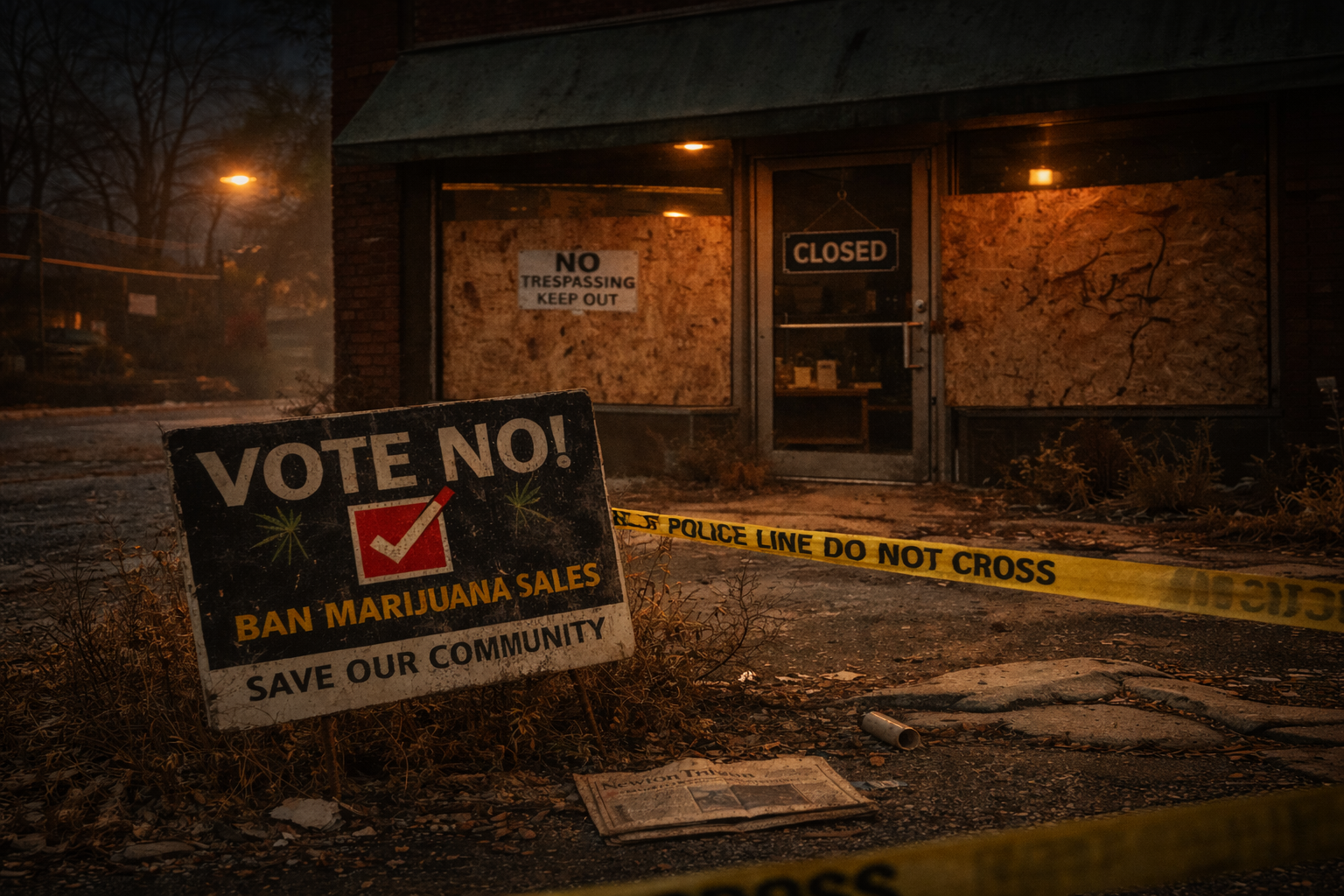
Boarded up storefront with a sign opposing cannabis sales, symbolizing a proposed 2026 ballot measure that could reverse adult use legalization in Newton, Massachusetts.
Local cannabis markets are not only shaped by state law. They are often decided at the city level. A proposed ballot question in Newton, Massachusetts, scheduled for 2026 could dramatically change the city’s cannabis landscape. If approved by voters, the measure would reverse adult use legalization within city limits, effectively shutting down licensed retail operations and ending personal cultivation.
For operators, investors, and property owners, this situation highlights a critical truth about cannabis businesses. Even when a state allows legal access, local politics can quickly alter market access and license viability.
If your business operates in a city where local votes or ordinances could affect cannabis access, now is the time to review your risk exposure. Start with our quick Cannashield intake form to protect your operation from sudden regulatory shifts.
What the Proposed Ballot Measure Would Do
The proposed ballot question would give Newton residents the power to roll back adult use cannabis within the city. If it passes, the consequences would be immediate and far reaching.
Key impacts include:
• Closure of licensed cannabis retail stores
• Termination of local cannabis operations
• Loss of city level tax revenue tied to cannabis sales
• Elimination of legal personal cultivation within Newton
• Potential impact on existing lease agreements and investments
This is not a minor policy adjustment. It would represent a full reversal of legal access at the local level.
While Massachusetts would remain a legal adult use state overall, Newton would become an exception. That creates real risk for businesses that assumed long term stability based on statewide legalization alone.
If your operation relies on local approvals or municipal support, Complete our Cannashield questionnaire to assess how exposed your business is to political or zoning changes.
Why Local Votes Matter So Much in Cannabis
Cannabis is unique among regulated industries because local governments often retain significant control. Cities and towns can influence:
• Whether retail stores are allowed
• How many licenses are issued
• Where facilities may operate
• Whether personal cultivation is permitted
• How zoning rules are applied
This local authority means that cannabis businesses must manage not only state compliance, but also community relationships and political risk.
In Newton’s case, the ballot question reflects concerns raised by some residents about cannabis access, neighborhood character, or social impact. Regardless of where one stands on the issue, the business lesson is clear. Local sentiment matters.
Operators who ignore local politics do so at their own risk.
The Financial and Operational Impact on Businesses
If the ballot measure passes, existing cannabis businesses in Newton could face:
Sudden revenue loss
Retail operations would no longer be permitted, cutting off income immediately.
Stranded investments
Tenant improvements, security systems, buildouts, and inventory may become unrecoverable.
Lease complications
Long term leases tied to cannabis use may be breached or rendered unusable.
Employment disruption
Staff members would lose jobs tied to local operations.
Insurance and liability questions
Policies may need to respond to forced shutdowns, asset loss, or contract disputes.
These are not hypothetical risks. They are very real scenarios when local authorization is removed.
To understand how insurance can respond to local regulatory changes, Fill out our Cannashield intake form for a personalized risk review.
What This Signals for the Broader Massachusetts Market
Newton is not alone. Across the country, cities continue to revisit cannabis rules years after legalization. Some expand access. Others pull back.
This ballot question highlights several broader trends:
• Local control remains powerful
• Cannabis businesses face ongoing political exposure
• Community engagement is essential
• Long term planning must include exit and contingency strategies
Massachusetts operators in other cities should take note. What happens in Newton could inspire similar efforts elsewhere, especially in communities where cannabis remains controversial.
How Cannabis Businesses Can Prepare
While businesses cannot control ballot outcomes, they can control how prepared they are.
Smart operators should consider the following steps:
Review municipal risk exposure
Understand which approvals and ordinances your license depends on.
Strengthen insurance coverage
Ensure policies address business interruption, regulatory shutdown, and property loss.
Diversify operations where possible
Operating in multiple jurisdictions can reduce reliance on a single city.
Engage locally
Building relationships with community leaders and residents can influence outcomes.
Plan for contingencies
Have a clear plan if local authorization is reduced or removed.
Preparation does not guarantee protection, but it reduces the shock when policy changes occur.
Conclusion
The proposed 2026 ballot question in Newton is a reminder that cannabis businesses operate in a dynamic political environment. State legalization does not guarantee local stability. Cities can and do reshape access through ballots, ordinances, and zoning decisions.
For operators, the key takeaway is preparation. Understanding local risk, maintaining strong insurance coverage, and planning for political change are essential parts of running a sustainable cannabis business.
At Cannashield, we help cannabis operators manage regulatory uncertainty with tailored insurance solutions, compliance guidance, and risk planning designed for real world conditions.
Complete our full intake form here to protect your business and prepare for the unexpected in local cannabis markets.