
Hemp-Derived Biosolids Could Transform Sustainable Cultivation in the U.S.
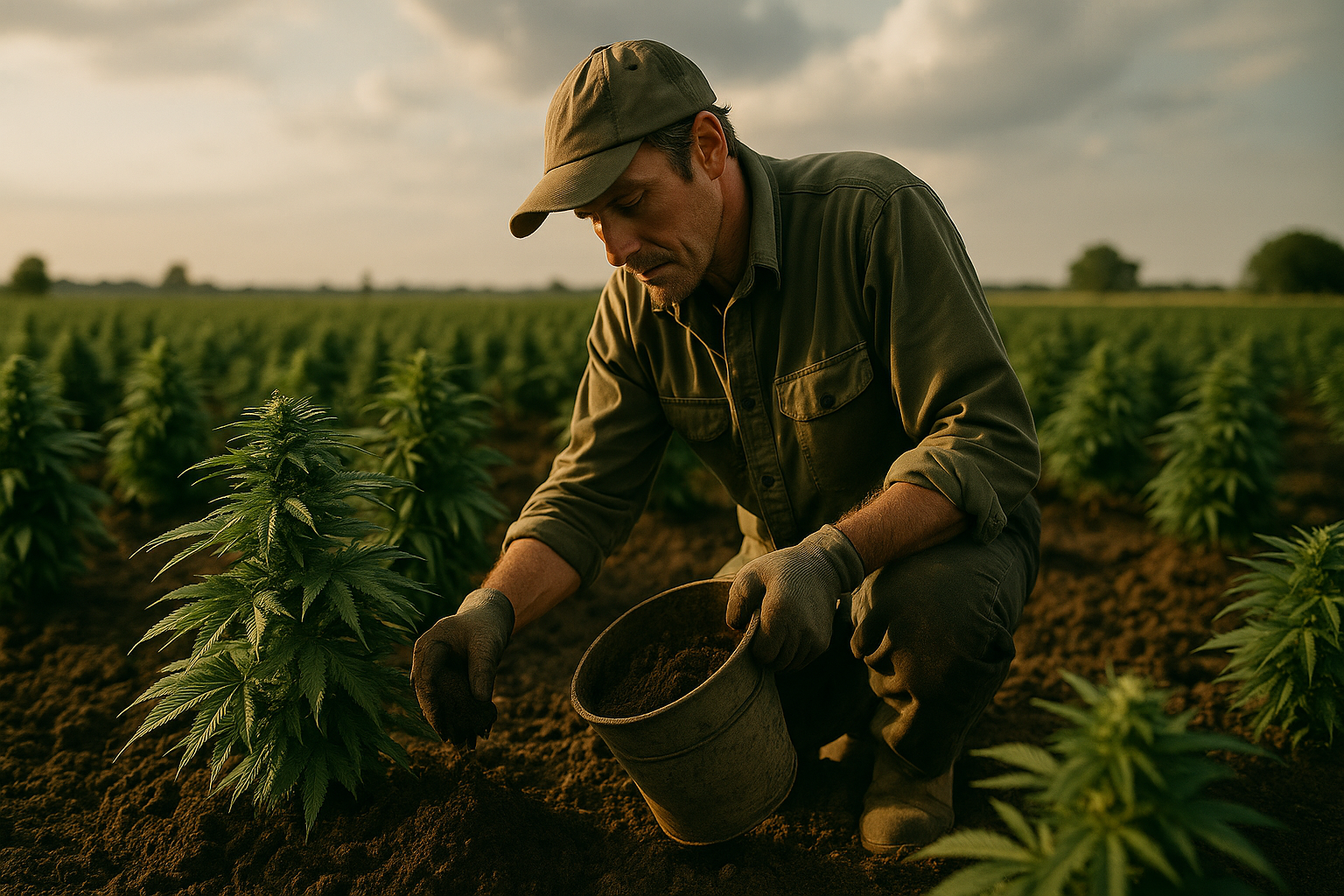
Farmer applying soil around hemp plants during a field trial testing hemp-derived biosolids as a sustainable fertilizer.
As the cannabis and hemp industries grow, so does the conversation around sustainability. One of the most promising innovations now being tested is the use of hemp-derived biosolids as a sustainable fertilizer—a potential breakthrough that could reduce waste, lower operational costs, and support large-scale cultivation with more environmentally conscious practices.
A new U.S. field trial is exploring how processed hemp waste can be repurposed into nutrient-rich biosolids. If successful, this approach could help cultivators move toward a regenerative cultivation model while improving soil health and reducing agricultural inputs.
If your cultivation or manufacturing business prioritizes sustainability and long-term operational efficiency, now is the time to evaluate your risk, compliance, and insurance structure. Start with our quick Cannashield intake form to build a future-ready protection plan.
Turning Industry Waste Into Valuable Fertilizer
The cannabis and hemp industries generate significant plant waste—from stalks and fan leaves to root systems and trim that cannot be used in finished products. Traditionally, much of this material is composted, mulched, or disposed of through regulated waste-management services.
The new field trial takes a different approach:
processing hemp waste into biosolids that can be reapplied to farmland as a natural fertilizer.
Potential benefits include:
Lower fertilizer costs
Reduced environmental waste
Improved soil structure and moisture retention
A more circular, sustainable cultivation ecosystem
Reduced reliance on chemical inputs
Early testing suggests that hemp-derived biosolids may provide balanced nutrient release over time, making them ideal for large-acreage cultivation that relies on predictable soil performance.
Curious whether sustainable practices like biosolids integration could strengthen your compliance position or reduce operating risk? Complete our Cannashield questionnaire for a tailored audit of your current systems.
Why Biosolids Matter for the Future of Cultivation
As cannabis and hemp farming expand nationwide, growers face pressure to adopt more eco-friendly practices. Consumers, regulators, and industry partners increasingly expect businesses to reduce their environmental footprint.
Hemp-derived biosolids offer several strategic advantages:
1. Cost Efficiency for Large-Scale Farms
Fertilizers represent a major recurring cost for cultivators. Biosolids made from industry byproducts could help farms cut expenses while improving yield consistency.
2. Reduced Environmental Waste
Instead of sending plant material to disposal facilities, cultivators could repurpose waste into a valuable soil amendment.
3. Improved Soil Health
Biosolids often increase organic matter, enhance microbial activity, and improve soil aeration—leading to healthier plants and more resilient farmland over time.
4. Industry-Wide Sustainability Alignment
As federal agencies and state regulators update environmental compliance rules, sustainable practices help operators remain competitive and compliant.
5. Support for Future Federal Standards
If national cannabis reform progresses, sustainable farming frameworks will play a central role in shaping long-term agricultural rules.
This field trial could set the foundation for new cultivation standards across the U.S.
Operational Considerations for Biosolid Fertilizers
While the potential is exciting, cultivators must approach biosolid adoption carefully. Hemp-derived biosolids require:
Rigorous Testing
Operators must confirm:
Nutrient composition
Heavy metal levels
Microbial safety
Consistency across batches
Clear Documentation
Regulators will expect thorough recordkeeping to track how biosolids are processed, stored, transported, and applied.
Insurance & Risk Mitigation
Introducing new soil inputs—especially those derived from plant waste—creates additional liability considerations, including:
Soil contamination risks
Crop failure exposure
Environmental liability
Worker safety protocols
Equipment & Application Planning
Large-scale farms may need updated spreading equipment or modified irrigation schedules to integrate biosolids effectively.
These safeguards ensure biosolid programs are safe, compliant, and scalable.
If your cultivation operation is testing or planning sustainability upgrades, Fill out our Cannashield intake form to build the right compliance, coverage, and operational protections.
A Step Toward Circular Agriculture in Cannabis
Circular agriculture—the practice of reusing, recycling, and reintegrating materials back into the farming ecosystem—has already transformed traditional agriculture. Hemp-derived biosolids could bring that same innovation to cannabis cultivation.
A circular model would allow:
Farmers to repurpose their waste
Manufacturers to reduce disposal expenses
Soil fertility to improve naturally
Cultivators to reduce dependence on synthetic fertilizers
The industry to demonstrate measurable environmental responsibility
This approach positions cannabis and hemp businesses as leaders in sustainable agriculture, not just participants.
Conclusion
The U.S. field trial exploring hemp-derived biosolids is more than an agricultural experiment—it’s a glimpse into a more sustainable future for cannabis and hemp cultivation. By converting plant waste into a valuable fertilizer, the industry can reduce environmental impact, improve soil health, and support large-scale farming with smarter, eco-friendly inputs.
For operators, this moment highlights the importance of planning ahead. As federal rules evolve and sustainability expectations increase, businesses that adopt responsible practices—and protect those practices with strong compliance and insurance frameworks—will lead the next era of cannabis agriculture.
At Cannashield, we help cultivation and manufacturing businesses build the risk-management, documentation, and insurance infrastructure needed to operate confidently in a changing regulatory landscape.
Complete our full intake form here to safeguard your business and explore sustainable strategies like biosolid integration with expert support.