
Republican Divisions on Hemp THC Rules Could Reshape Competition
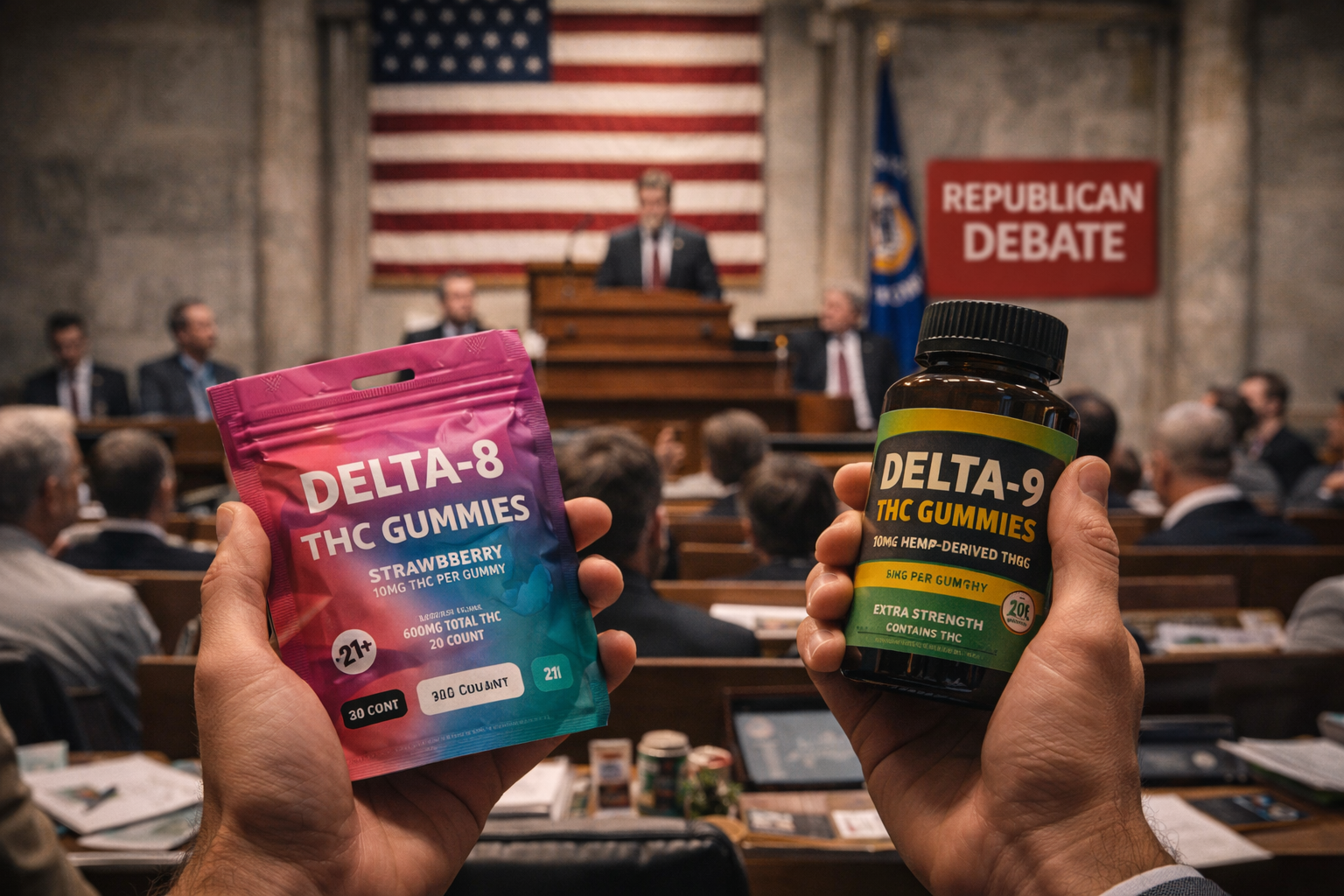
Legislative debate over hemp THC gummies and cannabis regulation inside a government chamber.
Hemp derived THC is no longer a side issue in cannabis policy. Competing Republican proposals now outline very different approaches to limits, labeling, age restrictions, and testing. The debate is not academic. It has real consequences for hemp operators, regulated cannabis businesses, and the balance between the two markets.
As these proposals move forward, the biggest takeaway for operators is not which bill wins. It is that federal and state leaders are actively trying to close gaps that allowed a parallel hemp THC market to grow outside traditional cannabis regulation. How those gaps are closed will determine who can operate, how products are sold, and where consumer demand ultimately flows.
If your business touches hemp THC, cannabis, or adjacent supply chains, now is the time to review compliance and risk exposure. Start with our quick Cannashield intake form to prepare for regulatory change.
What the Competing Proposals Aim to Do
Republican lawmakers are not aligned on a single framework. Instead, multiple proposals are on the table, each emphasizing different controls.
Key areas under debate include:
• THC concentration limits
• Product labeling standards
• Age verification and access controls
• Mandatory testing requirements
• Enforcement mechanisms
Some proposals aim to sharply restrict hemp THC products, while others focus on consumer safeguards without eliminating the category. This split matters because it affects how far the hemp market can continue to compete with regulated cannabis.
If you operate in multiple states or rely on hemp based products, Complete our Cannashield questionnaire to assess how different regulatory outcomes could affect your operations.
Why Labeling and Testing Are Central Issues
Labeling and testing are often the first tools regulators use to bring order to fast growing markets. Clear labeling helps consumers understand what they are buying. Testing requirements protect public health and create accountability.
For hemp operators, stricter standards could mean:
• Higher production costs
• More documentation and audits
• Reduced speed to market
• Greater scrutiny from retailers and distributors
For regulated cannabis businesses, similar standards already exist. Aligning hemp rules with cannabis rules could reduce unfair competition, but it also raises the bar for everyone.
Age Gating Changes the Retail Equation
Age restrictions are another flashpoint. Many hemp THC products have been sold in venues with minimal age verification. Proposals that require stricter age gating would reshape distribution channels.
Possible impacts include:
• Removal of products from convenience stores
• Shift toward specialty retail
• Reduced impulse purchases
• Increased compliance costs for sellers
These changes would likely push some consumer demand back toward licensed cannabis dispensaries.
If your revenue depends on retail placement or distribution access, Fill out our Cannashield intake form to review how age gating rules could affect risk and insurance needs.
How This Affects the Competitive Landscape
The hemp THC market grew quickly because it operated under lighter regulation. As lawmakers debate tighter rules, the competitive gap between hemp and regulated cannabis may narrow.
Potential outcomes include:
• Reduced price advantage for hemp products
• Higher compliance expectations across categories
• Clearer differentiation between regulated markets
• Consolidation among hemp operators
For cannabis businesses, this could restore balance. For hemp operators, it may require adaptation or pivoting.
Why Enforcement Will Matter as Much as the Rules
Even the best written regulations depend on enforcement. Past experience shows that uneven enforcement creates uncertainty and market distortion.
Operators should watch for:
• Which agencies lead enforcement
• How quickly rules are applied
• Whether enforcement is consistent across regions
• How penalties are structured
Enforcement posture often determines whether rules change behavior or simply add confusion.
What Operators Should Be Doing Now
Regardless of which proposal advances, the direction is clear. Hemp THC will face more structure.
Smart preparation includes:
• Reviewing product formulations and labeling
• Strengthening testing and quality controls
• Auditing retail and distribution practices
• Understanding state level alignment with federal rules
• Evaluating insurance coverage for regulatory risk
Waiting for final rules before acting can increase disruption.
If your business wants to stay ahead of regulatory shifts rather than react to them, Complete our Cannashield questionnaire to build a proactive risk strategy.
Why This Debate Signals a Larger Shift
The fact that lawmakers are debating details rather than whether to regulate at all signals a broader change. Hemp THC is being treated as a permanent category that requires clear boundaries.
This shift reflects:
• Recognition of consumer demand
• Concern about public safety
• Pressure from regulated cannabis operators
• Desire for clearer market structure
As rules solidify, markets tend to stabilize.
Conclusion
Competing Republican proposals on hemp THC rules show that regulation is moving from gray areas toward defined standards. Limits, labeling, age gating, and testing will shape how hemp and cannabis compete going forward.
For operators, this is a moment to prepare. Regulatory outcomes will affect cost structures, distribution, and consumer access.
At Cannashield, we help hemp and cannabis businesses navigate these changes with insurance solutions, compliance guidance, and risk strategies designed for evolving markets.
Complete our full intake form here to protect your business and prepare for the next phase of hemp and cannabis regulation.