
Regulatory Tightening Could Redefine Competition Between Hemp THC and Cannabis
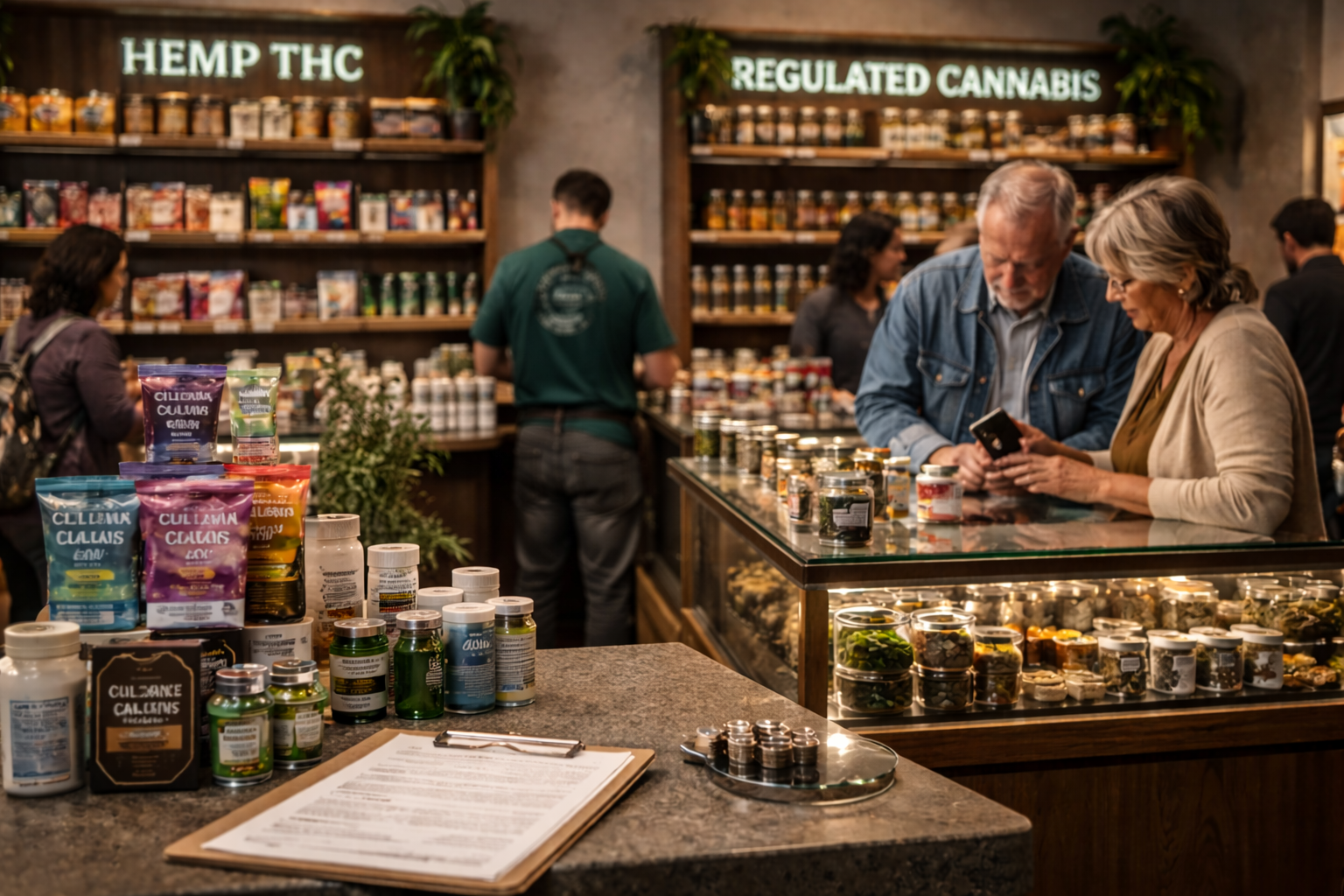
Consumers browsing hemp-derived THC products and regulated cannabis in a retail setting as regulations tighten.
The competitive line between hemp-derived THC and regulated cannabis has been blurry for years. That line may be getting sharper. Proposed regulatory tightening, particularly in large states like Texas, signals a shift that could reshape demand, distribution, and compliance costs across the market.
For operators, this is not just a policy update. It is a structural moment. When rules change, markets move. Businesses that understand how regulation influences competition are better positioned to adapt and protect margins.
If your business touches hemp THC or regulated cannabis, now is the time to review exposure and readiness. Start with our quick Cannashield intake form to align compliance and insurance strategy with a changing landscape.
Why Hemp THC Became a Parallel Market
Hemp-derived THC grew rapidly because it operated under lighter rules than regulated cannabis. Products reached consumers through convenience stores, smoke shops, and online channels without the same testing, licensing, or tax burdens.
This created a parallel market with real effects:
• Price competition with licensed cannabis
• Consumer confusion about product standards
• Uneven enforcement across regions
• Pressure on regulated operators’ margins
For a time, this imbalance benefited hemp sellers. It also caught the attention of regulators and lawmakers.
If your operation competes with or supplies hemp-derived products, Complete our Cannashield questionnaire to assess how regulatory change could affect risk and coverage.
What Regulatory Tightening Looks Like in Practice
Proposed rules focus on bringing structure to hemp THC rather than eliminating it entirely. Key areas include limits, labeling, age verification, and testing.
Potential changes may involve:
• Clear caps on THC content
• Mandatory lab testing and documentation
• Age restricted sales requirements
• Retail placement controls
• Stronger enforcement mechanisms
These measures raise compliance costs and reduce the advantages that allowed hemp THC to scale quickly.
How This Reshapes the Competitive Landscape
When compliance standards rise, competition shifts. Businesses that relied on minimal oversight may struggle to adjust. Those already operating under stricter frameworks may gain ground.
Likely outcomes include:
• Reduced price gaps between hemp and cannabis
• Consolidation among hemp operators
• Shift of consumer demand toward licensed dispensaries
• More consistent product standards across categories
Regulated cannabis operators have long argued for this alignment. Tightening rules could finally level parts of the field.
If your growth plan depends on fair competition and predictable enforcement, Fill out our Cannashield intake form to align risk planning with policy direction.
Distribution Channels Will Change
Retail access is a major factor. If hemp THC faces tighter age and placement rules, distribution channels may narrow.
Possible shifts include:
• Removal from convenience stores
• Increased reliance on specialty retailers
• Greater scrutiny from payment processors
• Changes in logistics and inventory handling
For distributors and retailers, this means rethinking partnerships and compliance workflows.
Compliance Costs Will Move the Market
Higher compliance costs do not just affect individual businesses. They influence market structure.
As costs rise:
• Smaller operators may exit
• Larger, compliant operators gain share
• Investors favor businesses with systems and controls
• Insurers adjust underwriting expectations
This dynamic pushes markets toward fewer but more disciplined players.
Why Enforcement Matters as Much as Rules
Rules alone do not change behavior. Enforcement does.
Operators should watch for:
• Which agencies lead enforcement
• How quickly rules are applied
• Whether enforcement is consistent across regions
• How penalties are structured
Uneven enforcement creates uncertainty. Consistent enforcement creates predictability.
Businesses that plan for both scenarios are more resilient.
If enforcement uncertainty affects your planning, Complete our Cannashield questionnaire to build a risk strategy that accounts for multiple outcomes.
What Operators Should Be Doing Now
Regardless of final rule language, direction is clear. Hemp THC will face more structure.
Practical steps include:
• Reviewing product portfolios and formulations
• Strengthening labeling and documentation
• Auditing retail and distribution practices
• Monitoring state and federal signals
• Evaluating insurance coverage for regulatory risk
Waiting for final enforcement before acting can increase disruption.
Why This Moment Matters for the Broader Cannabis Industry
This regulatory tightening signals a broader shift. Cannabis and hemp are being treated less as exceptions and more as regulated consumer markets.
That benefits businesses that operate transparently and responsibly. It also raises expectations across the board.
Markets become more stable when rules are clear and consistently enforced.
Conclusion
Regulatory tightening around hemp THC is a direct signal that competition between hemp and regulated cannabis is entering a new phase. If rules change, demand, distribution, and compliance costs will move with them.
For operators, this is a moment to prepare rather than react. Businesses that understand how regulation reshapes competition will be better positioned to capture opportunity and manage risk.
At Cannashield, we help cannabis and hemp businesses navigate regulatory transitions with insurance solutions, compliance guidance, and risk strategies built for evolving markets.
Complete our full intake form here to protect your business and stay ahead as hemp and cannabis regulation continues to tighten.