
Kansas Hemp Farmers Sound the Alarm as Federal Restrictions Threaten the Industry
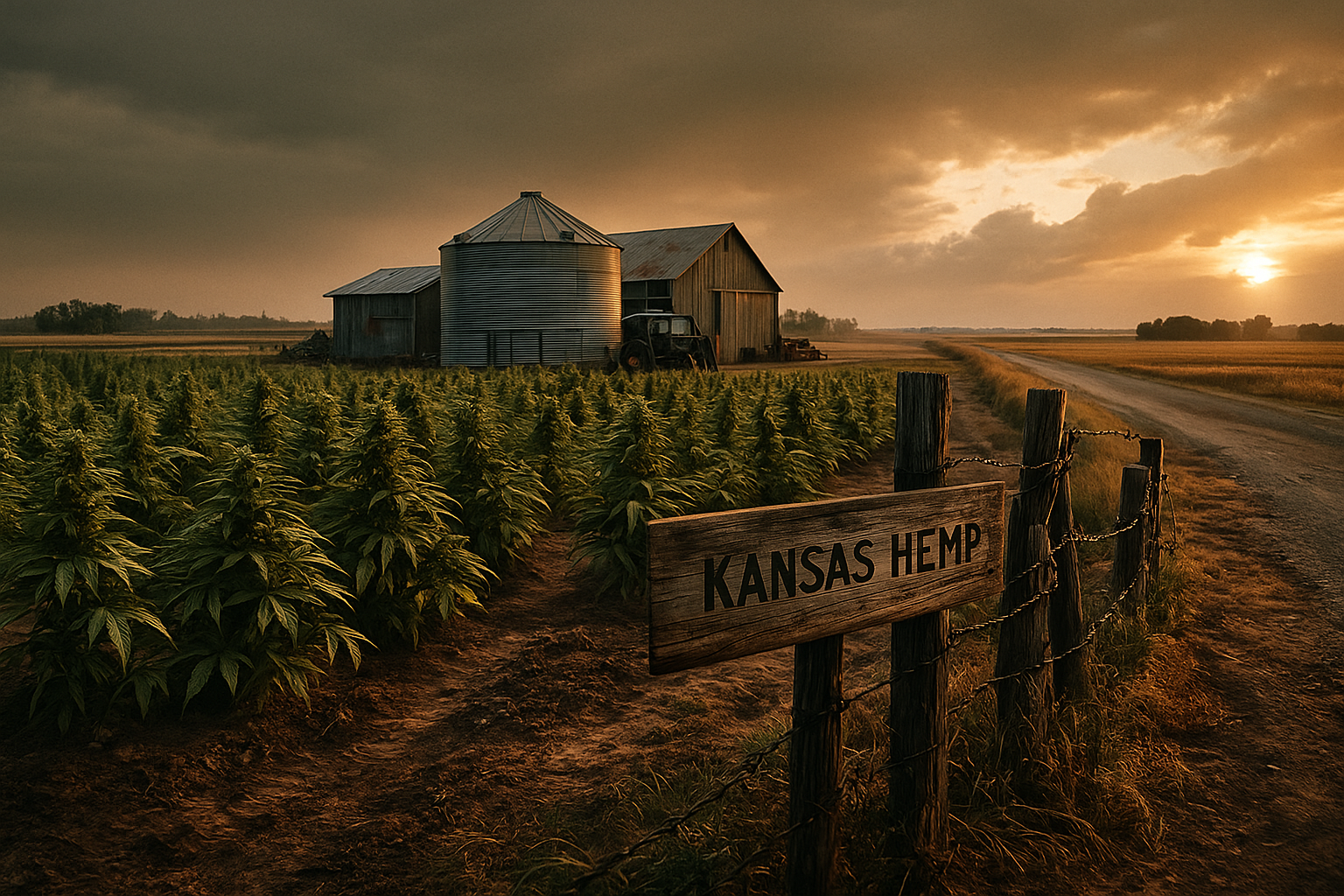
Kansas hemp farm at sunset with a wooden sign reading ‘Kansas Hemp,’ symbolizing concerns about new federal restrictions threatening the state’s hemp industry.
Kansas once positioned itself as a rising force in U.S. hemp production — with farmers, processors, and rural communities investing heavily in what they believed would be a long-term growth sector. But recent federal changes targeting intoxicating hemp-derived products have shaken the industry, leaving Kansas operators warning that their investments, equipment, and future viability are now at serious risk.
For a state that poured energy into building a hemp economy from scratch, this regulatory shift could reshape the landscape overnight.
If your hemp business needs support navigating federal changes, compliance strategy, or insurance protection, Start with our quick Cannashield intake form to get ahead of what’s coming.
The Federal Shift That Changed Everything
The federal government’s recent decision to restrict or eliminate intoxicating hemp products — including Delta-8 THC, hemp-derived Delta-9, THCA, and similar cannabinoids — is sending shockwaves through states like Kansas, where hemp farming and processing became major local industries.
The new rules are designed to close the 2018 Farm Bill loophole that allowed intoxicating cannabinoids to flourish in unregulated retail channels. But the impact on Kansas hemp operators is massive:
Farmers now risk losing buyers for their biomass
Processors dependent on cannabinoid extraction may face shutdowns
Retailers who built inventory around hemp-THC products are scrambling
Small towns that relied on hemp growth may lose vital economic activity
Kansas operators are calling this the most disruptive policy shift since hemp was first legalized.
Not sure how these federal changes affect your operation specifically? Complete our Cannashield questionnaire for a tailored compliance and risk assessment.
Why Kansas Is Hit Especially Hard
Kansas was an early adopter in the modern hemp movement. With vast farmland, an agricultural workforce, and strong rural infrastructure, the state quickly became one of the top hemp-growing regions.
Hemp biomass, cannabinoid extraction, and infused-product manufacturing provided:
New revenue streams for farmers
Diversification opportunities amid grain and commodity volatility
Job creation in rural communities
A path for processors to scale value-added agricultural products
But most of those business models depended on intoxicating hemp cannabinoids, which made up the bulk of consumer demand and wholesale value.
With federal restrictions now banning most of those products, Kansas businesses face an impossible question:
What happens when the market you invested in simply disappears?
What Operators Are Saying
Farmers fear stranded inventory and falling biomass prices. Processors worry about idle equipment and massive sunk costs. Retailers anticipate store closures. And local officials worry about economic fallout across already-struggling rural towns.
Several themes keep coming up in Kansas hearings and statements:
1. The rules moved faster than the industry could adjust.
Operators said they received little warning before federal decisions reshaped the market.
2. Investments were made in good faith.
Farmers and processors followed state guidelines and built businesses under the legal structure that existed — until it suddenly didn’t.
3. Hemp farmers feel treated differently than other agricultural sectors.
Traditional crops aren’t subject to product-category volatility based on federal enforcement shifts.
4. Kansas risks losing an entire industry before it matures.
The concern isn't just product bans — it’s the collapse of a value chain that took years to build.
If federal shifts threaten your contracts, inventory, or operations, Fill out our Cannashield intake form to build a protection and pivot strategy.
What Kansas Hemp Operators Can Do Now
While the federal restrictions are disruptive, there are still opportunities for operators who move quickly and strategically.
1. Pivot into Non-Intoxicating Cannabinoids
CBD, CBG, CBN, and minor cannabinoids still offer viable product avenues — especially if paired with strong compliance and quality control.
2. Explore Industrial Hemp Markets
Fiber, hurd, and seed-oil categories remain largely unaffected by federal restrictions.
3. Strengthen Compliance and Documentation
Hemp businesses that can demonstrate GMP-level processes will be better positioned for future regulatory opportunities.
4. Consider Partnerships With State-Licensed Cannabis Operators
As more states legalize, cross-industry collaboration becomes more valuable.
5. Secure Insurance Protection
Operators face increased exposure from:
Contract disputes
Product liability
Inventory losses
Supply chain disruption
Insurance and risk planning become essential as the industry pivots.
6. Prepare for 2026 and Beyond
Once the federal sunset takes effect, only businesses that have restructured their product lines and compliance standards will remain competitive.
The Bigger Picture: A National Reset With Local Consequences
The federal crackdown is not just a Kansas problem — but Kansas illustrates the ripple effects clearly. Rural communities, farmers, and small-scale processors built their operations around federal policy signals that suddenly changed.
This is a national market correction, but its impact will be felt locally.
Long term, hemp will remain a viable agricultural product — but the intoxicating-THC market that fueled its early boom is ending. What replaces it will depend on how states like Kansas adapt.
Conclusion
Kansas hemp farmers and processors are sounding the alarm as new federal restrictions threaten the business models they spent years building. The hemp industry in Kansas was built on optimism, innovation, and economic opportunity — and now faces regulatory uncertainty that requires rapid strategic adaptation.
But this moment can also be the start of a smarter, more resilient hemp industry. Operators who pivot early, strengthen compliance, secure insurance protections, and rethink their product mix will be the ones positioned to thrive after the federal sunset.
At Cannashield, we help hemp businesses navigate uncertainty with tailored compliance strategies, insurance solutions, and risk-management support.
Complete our full intake form here to protect your operation and develop a pivot plan as Kansas — and the nation — prepares for the next era of hemp regulation.