

Missouri Hemp THC Crackdown Hits Retailers
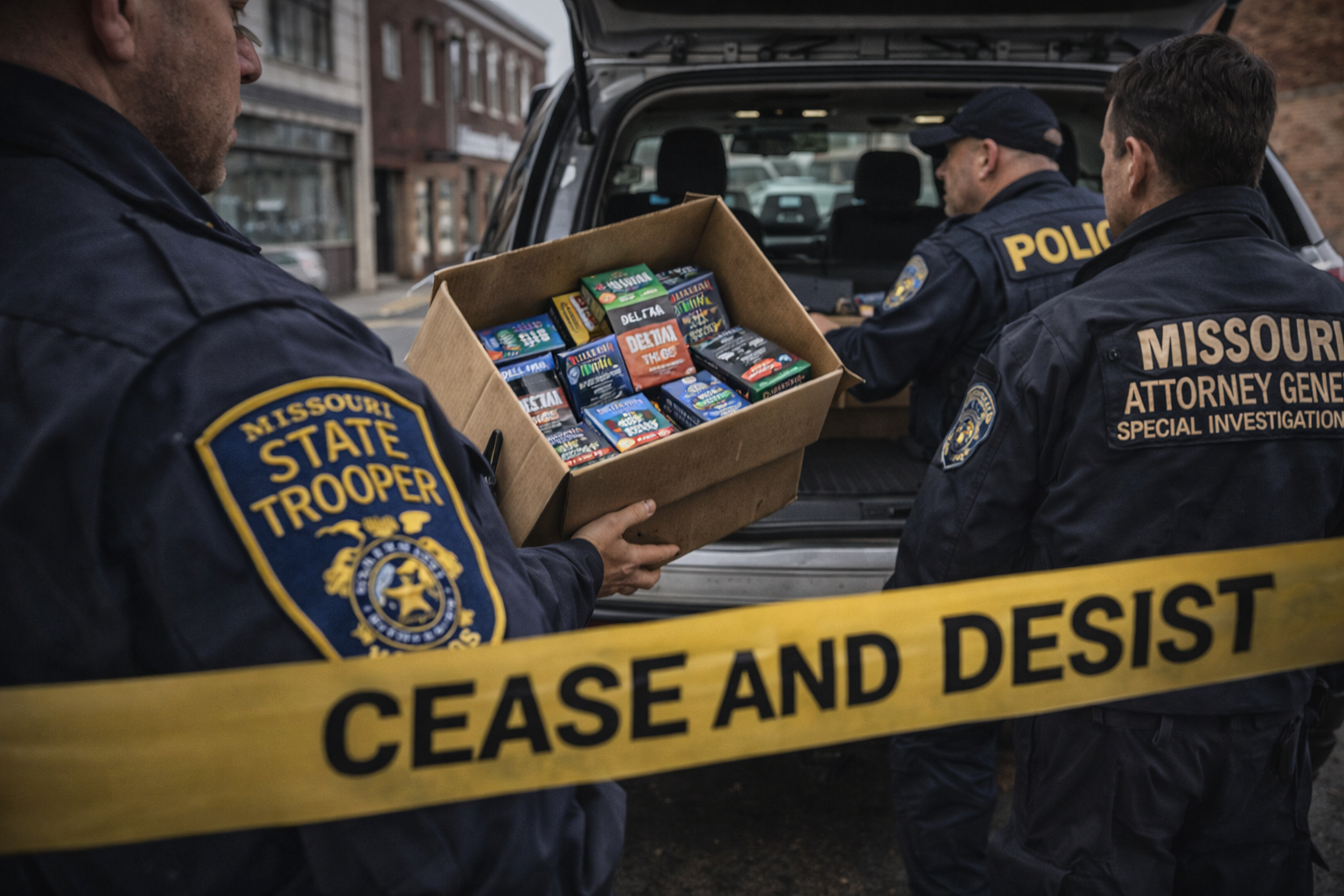
Missouri hemp THC enforcement scene showing seized retail products, investigators, and crackdown visuals.
Missouri hemp THC enforcement risk is now real for retailers that built revenue around intoxicating hemp products sold outside the state licensed cannabis system. Missouri Attorney General Catherine Hanaway announced that her office sent 33 cease and desist letters to unlicensed retailers accused of selling intoxicating cannabis products outside Missouri’s Article XIV framework. The letters demand an immediate halt to sales and frame the issue as a consumer protection and deceptive practices problem, not just a market structure debate. For operators in any state, that is the bigger lesson. Revenue that feels tolerated can become a direct enforcement target fast.
Quick facts
• Missouri’s attorney general said 33 unlicensed retailers received cease and desist letters.
• The state said the letters went to 18 retailers in the St. Louis region, 13 in the Kansas City region, and 2 in the Springfield region.
• The attorney general said lab testing found many products contained lead, arsenic, mercury, ethanol, solvents, pesticides, or unknown byproducts.
• The office also alleged deceptive packaging and labeling, including designs that target children, and sales practices that could confuse consumers.
If Missouri hemp THC enforcement pressure is affecting your retail plan, Start with our quick Cannashield intake form so you can map product, labeling, and operational exposure before it becomes a legal problem.
Why This Matters Beyond Missouri
This is not just a Missouri story. It is a warning about how fast loosely regulated cannabis adjacent revenue can move from tolerated to attacked. The official state release shows the attorney general is using the Missouri Merchandising Practices Act and a consumer safety angle to challenge these sales. That matters because once enforcement is framed around unsafe products, deceptive labeling, or child appealing packaging, the discussion stops being about clever positioning and starts being about liability, evidence, and urgency.
Universal operator lesson: if a revenue stream depends on ambiguity, it is not stable revenue. That is the practical takeaway here for smoke shops, wellness stores, liquor adjacent retailers, and even licensed cannabis operators watching nearby gray channel competition. [Cannabis Retail Compliance Checklist] [Product Labeling Risk Review] This is an inference based on Missouri’s enforcement framing and the stated reasons behind the cease and desist letters.
What Missouri Is Actually Targeting
The Missouri attorney general did not frame this as a minor paperwork issue. The office said these retailers were selling intoxicating cannabis products outside the state licensed system and demanded they stop selling adulterated and deceptive products. The press release also said many items were marketed as cannabis even though they were outside Missouri’s constitutional cannabis framework, and that none of the products were approved by the FDA for medical use.
That distinction matters. Missouri is signaling that storefront presentation does not create legitimacy by itself. A clean display case, trendy packaging, and casual consumer demand do not override product safety concerns, licensing rules, or labeling scrutiny. For businesses that leaned on intoxicating hemp because it looked like an easier lane than licensed cannabis, that bet just got riskier.
If your store sells products that sit anywhere near a gray line, use the Cannashield questionnaire to pressure test your documentation, labeling, sourcing, and retail controls before regulators do it for you.
The Real Risk Is Operational, Not Just Legal
A lot of operators look at stories like this and think the risk belongs only to the businesses that got the letters. That is too narrow. The real exposure is operational. What exactly are you buying, how is it labeled, what does testing show, who made it, what claims are on the package, and can your team explain why the product belongs on the shelf if a regulator asks tomorrow. Missouri’s action shows those questions can stop being theoretical overnight.
This is where smart operators separate themselves. They do not wait for a crackdown to review product files, vendor paperwork, packaging, shelf claims, and marketing language. They build an internal standard that assumes anything confusing, intoxicating, or loosely described may get inspected through the lens of consumer harm. [How To Audit Hemp THC Inventory] [State By State Cannabis Enforcement Tracker] That is not fear talking. That is what enforcement pressure looks like when a market matures and regulators decide enough is enough. This is an inference based on the state’s stated focus on deceptive products, contaminants, and confusing retail conduct.
Why The Timing Matters Right Now
MJBizDaily reported Missouri’s crackdown fits a broader national pattern as states move ahead of a coming federal hemp THC crackdown. The same report said Missouri lawmakers advanced House Bill 2641 earlier this year, and official Missouri Senate records show the bill remains active in the 2026 session. Together, that means operators should not treat this as a one day headline. It looks more like part of a larger tightening cycle.
That timing creates another universal operator lesson. When enforcement and legislation start moving in the same direction, the window to clean things up usually gets smaller, not bigger. Businesses that wait for absolute clarity often wait too long.
If uncertainty around hemp THC sales, packaging, or retail exposure is affecting how you plan, negotiate, or shift revenue, Complete our Cannashield questionnaire so you can identify weak spots before the next move gets forced on you.
Conclusion
Missouri’s cease and desist campaign is a clean example of how quickly gray zone product revenue can become an enforcement target. The state is not just challenging who gets to sell these products. It is challenging safety, labeling, marketing, and the basic legitimacy of the retail channel itself. Operators in every state should take the same message from this: if you cannot defend the product, the paperwork, and the shelf decision in one clean file, you are more exposed than you think.
Educational note: This article is for education only and is not legal, regulatory, or insurance advice.
What To Do This Week
• Pull every intoxicating hemp THC product currently on your shelves and review the label, test record, and supplier file.
• Flag anything with confusing packaging, child appealing imagery, or unclear cannabinoid content.
• Confirm who manufactured each product and what documentation supports its sale.
• Review your website and social content for claims that could create consumer confusion.
• Build a written intake standard for any new hemp THC product before it reaches the sales floor.
• Prepare a response plan in case your store receives a cease and desist letter or regulator inquiry.
FAQ
What happened in Missouri?
Missouri’s attorney general announced that 33 unlicensed retailers received cease and desist letters over sales of intoxicating cannabis products outside the state licensed system.
Why did the state say these products were a problem?
The state alleged deceptive practices, unsafe or adulterated products, and confusing or child appealing packaging and labeling.
Did the state mention contaminants?
Yes. The attorney general said lab testing found many products contained lead, arsenic, mercury, ethanol, solvents, pesticides, or unknown byproducts.
Is this only a Missouri issue?
No. MJBizDaily reported the crackdown fits a broader national trend as states tighten hemp THC enforcement ahead of broader federal changes.
What is House Bill 2641?
Official Missouri Senate records describe HB 2641 as legislation that would create new cannabis related provisions and remain active in the 2026 session. Search results for the bill say it would establish the Intoxicating Cannabinoid Control Act.
What is the operator lesson here?
Do not treat ambiguous product revenue as safe revenue. If your product file, testing, labeling, and retail logic are weak, enforcement can hit faster than your team expects. This is an inference based on the Missouri action and the active legislative push.