
North Carolina Cannabis Legalization Debate Is A 2026 Watch List Signal
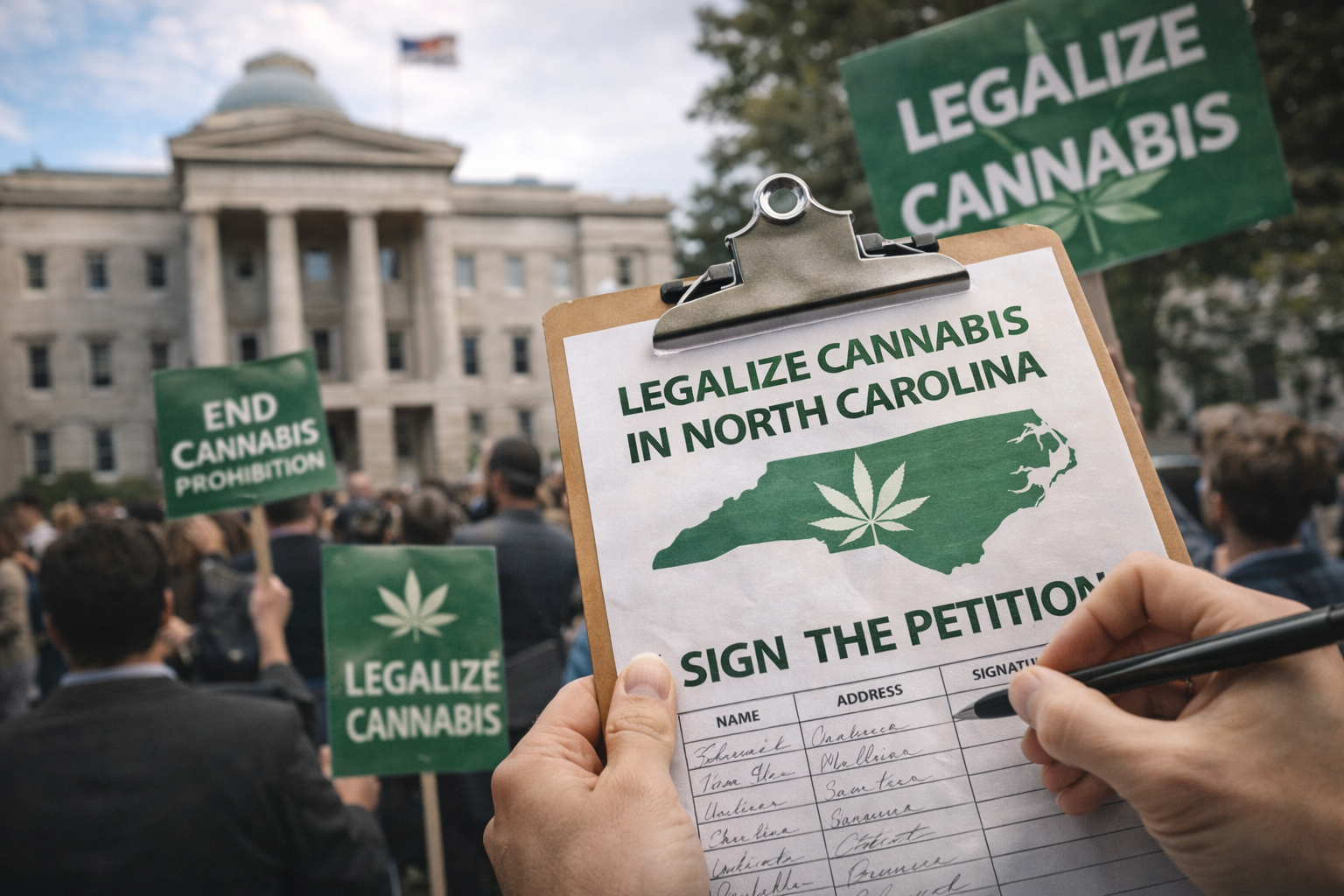
North Carolina cannabis legalization rally with petition signing and protest signs outside the capitol.
North Carolina adult use cannabis legalization is still in debate, but the signal for operators is already real. When a large state keeps the conversation active around revenue, public safety, and regulatory design, it affects investor confidence, partnership timing, and how service providers plan capacity. In the Southeast, this is a watch list story because if political winds shift later in 2026, North Carolina could move from discussion to a structured market faster than most teams are prepared for.
Quick facts
• Executive Order No. 16 created the North Carolina Advisory Council on Cannabis and directed it to deliver preliminary recommendations by March 15, 2026 and final recommendations by December 31, 2026
• The executive order frames today’s environment as an unsafe and unregulated intoxicating THC marketplace and calls for a comprehensive statewide approach grounded in public health and public safety
• House Bill 413 was filed March 17, 2025 and its last action shows it was referred to the House Rules committee on March 18, 2025
• A legislative summary for HB 413 outlines a full adult use framework concept, including local authority options, possession limits, and an excise tax structure, but with major provisions effective January 1, 2028
• Adult sales have already occurred on Eastern Band of Cherokee Indians land, showing demand exists even while statewide law remains restrictive
If North Carolina timing affects your growth plan, Start with our quick Cannashield intake form so you can map exposure and plan for multiple outcomes.
Why North Carolina Matters Even Before A Bill Passes
Operators tend to treat legalization as a finish line. In reality, the most important work happens before the vote: regulatory architecture, enforcement posture, local control decisions, and who gets positioned as credible when the state finally moves.
North Carolina is a large population and tourism state in a region where markets are still forming. That makes it a strategic hinge. If the state stays stalled, the opportunity is delayed. If the state turns, the early winners will be the teams that already built local relationships, created a realistic timeline model, and tightened their compliance posture before the rush.
Universal operator lesson: when a state is in active debate, the market is already forming in the background through expectations, narratives, and deal flow.
The Real Debate Is Not Only About Cannabis
Most legislative debates are packaged as moral arguments or revenue arguments, but operators should translate them into operational questions.
How will the state define lawful sales and which agency will regulate it
Will local governments be able to opt out or cap locations
How will youth access be addressed through packaging, testing, and retail controls
What tax structure will exist and will it allow legal operators to compete with unregulated channels
How will the state handle intoxicating hemp derived THC that already exists in convenience and vape channels
The governor’s executive order is useful because it signals what leadership wants the debate to focus on: youth protection, potency and purity standards, impaired driving tools, taxation, public health campaigns, and expungement concepts. Those themes usually become the backbone of any eventual framework.
Universal operator lesson: the winning operators plan for the framework, not just the headline.
What A 2026 Watch List Should Track
North Carolina has two meaningful tracks that could move in 2026.
Track one is the advisory council timeline. Preliminary recommendations are due March 15, 2026. That is a real milestone because it can shape draft legislation, talking points, and where lobbying energy concentrates.
Track two is legislation that already exists as a reference point, such as HB 413. Even if HB 413 does not advance quickly, its summary shows how some lawmakers have thought about licensing, local authority, possession limits, and taxation. It also shows a long runway concept, with major provisions not taking effect until 2028. That matters for operators because it is a reminder that a bill can exist while the real timeline remains slow.
If uncertainty is affecting how you plan or negotiate, Complete our Cannashield questionnaire to pressure test your market entry assumptions, local access risk, and compliance posture before you spend on consultants or real estate.
How Service Providers And Operators Should Prepare Now
If you are an operator, treat North Carolina like a pipeline market.
Build a city shortlist and map local political posture. Identify which municipalities are business friendly, which are cautious, and which are likely to restrict retail. Local control often defines who wins.
If you are a service provider, build a readiness package you can deploy in 30 days. That means intake, documentation standards, vendor qualification, and compliance education. When debate becomes action, demand for competent support spikes fast.
And for everyone, keep the federal government reality in view. Even if a state legalizes, interstate commerce and banking frictions remain part of the operating environment. That makes clean documentation and conservative planning more valuable, not less.
If you want a simple watch list template your team can update weekly, Cannashield intake form to request it so you stay ahead of hearings and bill movement without chasing headlines.
Conclusion
North Carolina is not a confirmed 2026 launch market, but it is a confirmed 2026 planning market. The debate itself affects timing, sentiment, and how quickly serious frameworks can form once the political moment arrives.
The operators who win these transitions are the ones who prepare for local access constraints, assume multi year timelines, and keep their compliance posture tight enough to survive scrutiny the moment attention spikes.
What To Do This Week
• Add North Carolina to your 2026 policy watch list and assign one owner to track updates weekly
• Build two scenarios for timing, one slow path and one fast path triggered by a political shift
• Create a city shortlist and begin mapping local zoning posture and council calendars
• Draft a basic compliance readiness checklist for testing, labeling, packaging, and age controls
• Build a partner map of legal, accounting, real estate, and security relationships in the state
• Create a capital rule that prevents long lease commitments until local access is confirmed
FAQ
Is adult use cannabis legal in North Carolina today
No, statewide adult use sales are not authorized, and the state remains in active policy debate.What is a practical 2026 milestone to watch
The Advisory Council on Cannabis is directed to provide preliminary recommendations by March 15, 2026.What is House Bill 413 and why does it matter
HB 413 is an adult use legalization proposal filed in 2025 that illustrates one approach to regulation, taxation, and local authority, even if it has not advanced.Why do local governments matter so much in legalization states
Local zoning, caps, and permitting timelines often decide market access and competition more than statewide headlines.What does the executive order signal about regulatory priorities
It emphasizes youth protection, potency and purity considerations, public safety, regulatory structure, and tax design.What is the universal operator lesson from this debate
Treat policy debate as early market formation and prepare your access map, timeline model, and compliance posture before the rush.