
Why This Supreme Court Case Could Redefine Cannabis Compliance and Personal Risk
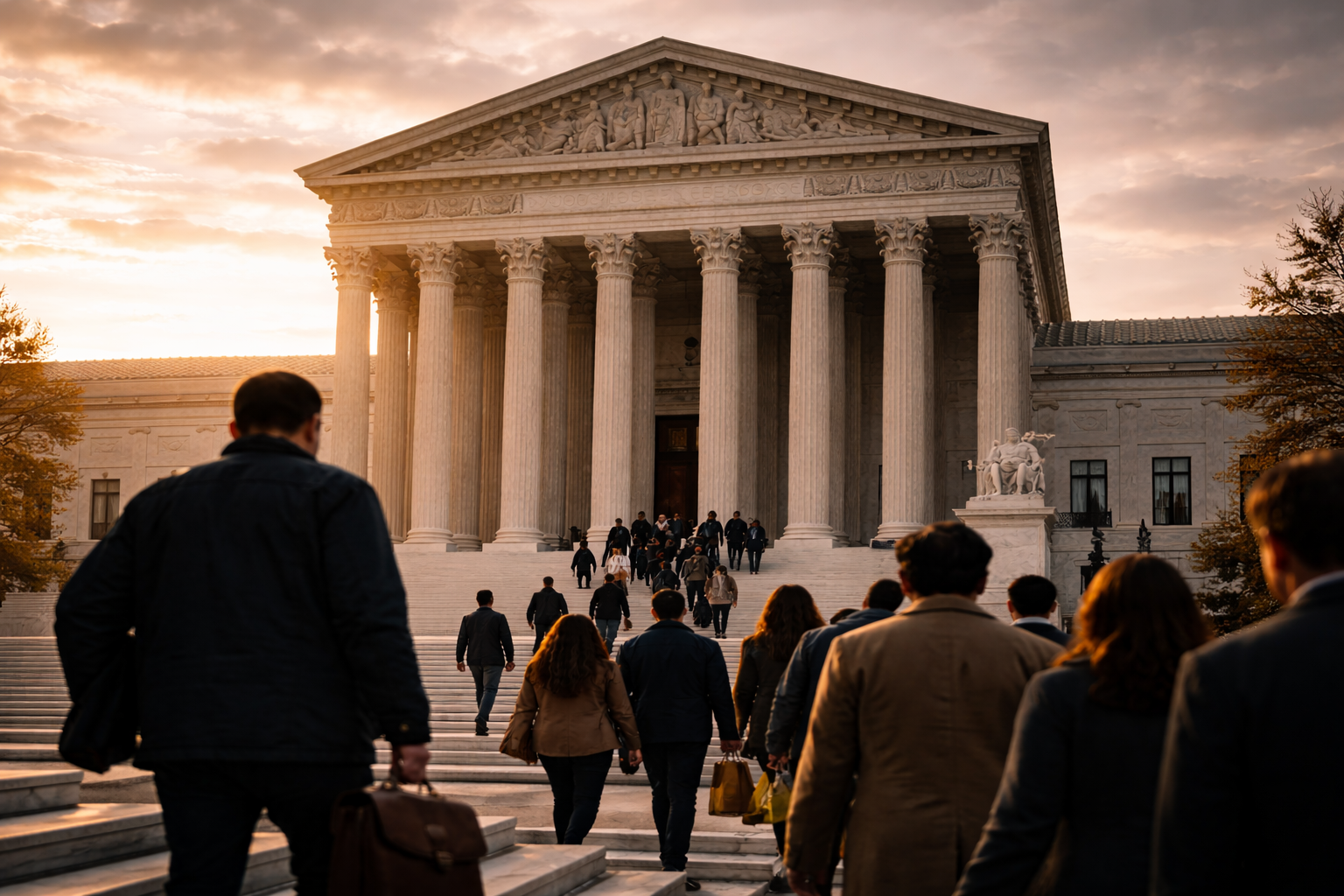
People walking up the steps of the U.S. Supreme Court as a major cannabis related case moves toward a national legal precedent.
A case headed to the U.S. Supreme Court is quietly becoming one of the most consequential cannabis related legal moments in years. The Court’s decision to hear arguments signals that this issue is no longer theoretical. It is moving toward a national precedent that could reshape how cannabis use intersects with personal rights, compliance expectations, and enforcement posture across the country.
For operators, consumers, and professionals working in or around the cannabis industry, this case matters because it touches on personal risk exposure in ways that extend beyond business operations. It also highlights how unresolved federal cannabis policy continues to surface in unexpected legal arenas.
If your business or personal exposure depends on understanding how federal enforcement and compliance standards may shift, now is the time to prepare. Start with our quick Cannashield intake form to review risk and coverage considerations.
Why the Supreme Court’s Involvement Changes Everything
Many cannabis related legal disputes are resolved at the state or appellate level. When the Supreme Court agrees to hear a case, it signals that the issue has broad constitutional or federal implications.
This case sits at the intersection of federal law, individual rights, and cannabis use. Because cannabis remains federally regulated despite widespread state legalization, questions about how federal statutes apply to individuals and businesses continue to surface.
A ruling from the Supreme Court would not just affect one state or one group. It would establish guidance that lower courts, regulators, and enforcement agencies across the country must follow.
That is why compliance professionals are paying close attention.
If you operate in multiple states or work with customers whose activities cross regulatory lines, Complete our Cannashield questionnaire to assess how national precedent could affect your risk profile.
What Is at Stake for Consumers and Operators
At its core, the case highlights a problem the cannabis industry has faced for years. State legalization has moved faster than federal clarity. That gap creates situations where legal conduct under state law can still trigger consequences under federal interpretation.
For consumers, this raises questions about personal exposure and rights. For operators, it creates indirect risk through customer interaction, education, and compliance responsibilities.
Key concerns include:
• How federal law treats lawful state cannabis use
• Whether personal activities can trigger unrelated federal consequences
• How enforcement agencies interpret existing statutes
• The extent of liability for businesses interacting with consumers
These questions are not abstract. They affect real decisions people make every day.
Why This Case Is Bigger Than Cannabis
Although cannabis is at the center of this dispute, the implications extend further. The Court’s reasoning could influence how federal law interacts with state regulated activities more broadly.
This includes:
• How federal agencies enforce statutes tied to prohibited substances
• How individual rights are balanced against regulatory frameworks
• How much discretion enforcement agencies retain
• How states and the federal government share authority
For cannabis, this could either reduce ambiguity or reinforce existing federal leverage. Either outcome carries real consequences.
If enforcement posture or legal uncertainty affects how you operate, Fill out our Cannashield intake form to review insurance and compliance strategies that account for federal risk.
Compliance and Personal Risk Are Becoming Linked
One of the most important takeaways from this case is how personal conduct and business compliance are increasingly connected. Operators are not only responsible for their own licensing and procedures. They are often expected to understand how laws affect customers, staff, and partners.
As legal scrutiny increases, businesses may face questions about:
• Customer education and disclosures
• Employee policies and training
• Documentation and recordkeeping
• Risk communication practices
• Insurance coverage for legal disputes
Ignoring these connections can create exposure that is difficult to unwind later.
Why Insurance and Risk Planning Matter More Now
When national precedent is at stake, uncertainty rises. Insurers and legal advisors respond by looking more closely at how businesses manage risk.
Strong risk planning includes:
• Clear internal policies
• Documented compliance procedures
• Appropriate insurance coverage
• Awareness of federal and state interaction
• Preparedness for legal or regulatory inquiries
Businesses that treat compliance as a living process rather than a checklist are better positioned when rules are clarified.
If you want to reduce exposure as this case moves forward, Complete our Cannashield questionnaire to build a proactive risk strategy.
What Operators Should Do While the Case Develops
The Supreme Court process takes time. Arguments, deliberation, and opinions do not happen overnight. That gives operators an opportunity to prepare rather than react.
Recommended steps include:
• Monitoring legal developments closely
• Reviewing policies that intersect with federal law
• Ensuring insurance coverage aligns with potential outcomes
• Consulting with compliance and risk professionals
• Avoiding assumptions about enforcement leniency
Preparation does not mean panic. It means readiness.
Why This Case Signals a Turning Point
Regardless of the outcome, the fact that the Supreme Court is weighing in reflects how far cannabis issues have moved into the mainstream legal system. These questions are no longer being avoided. They are being addressed at the highest level.
For the industry, this marks a shift from uncertainty by omission to clarity by decision. That clarity may bring relief in some areas and stricter interpretation in others. Either way, it will define the next phase of compliance.
Conclusion
The Supreme Court’s decision to hear this cannabis related case signals that personal risk exposure, compliance obligations, and enforcement posture are moving toward a national definition. For consumers and operators alike, the outcome could reshape how federal law interacts with state legal cannabis use.
This is not just a legal story. It is a risk story.
At Cannashield, we help cannabis businesses navigate moments like this with insurance solutions, compliance guidance, and risk strategies designed for evolving legal landscapes.
Complete our full intake form here to protect your business and prepare for the impact of a defining national precedent.