
Texas Is a Massive Upside Market, But Hemp THC Policy Will Decide the Winners
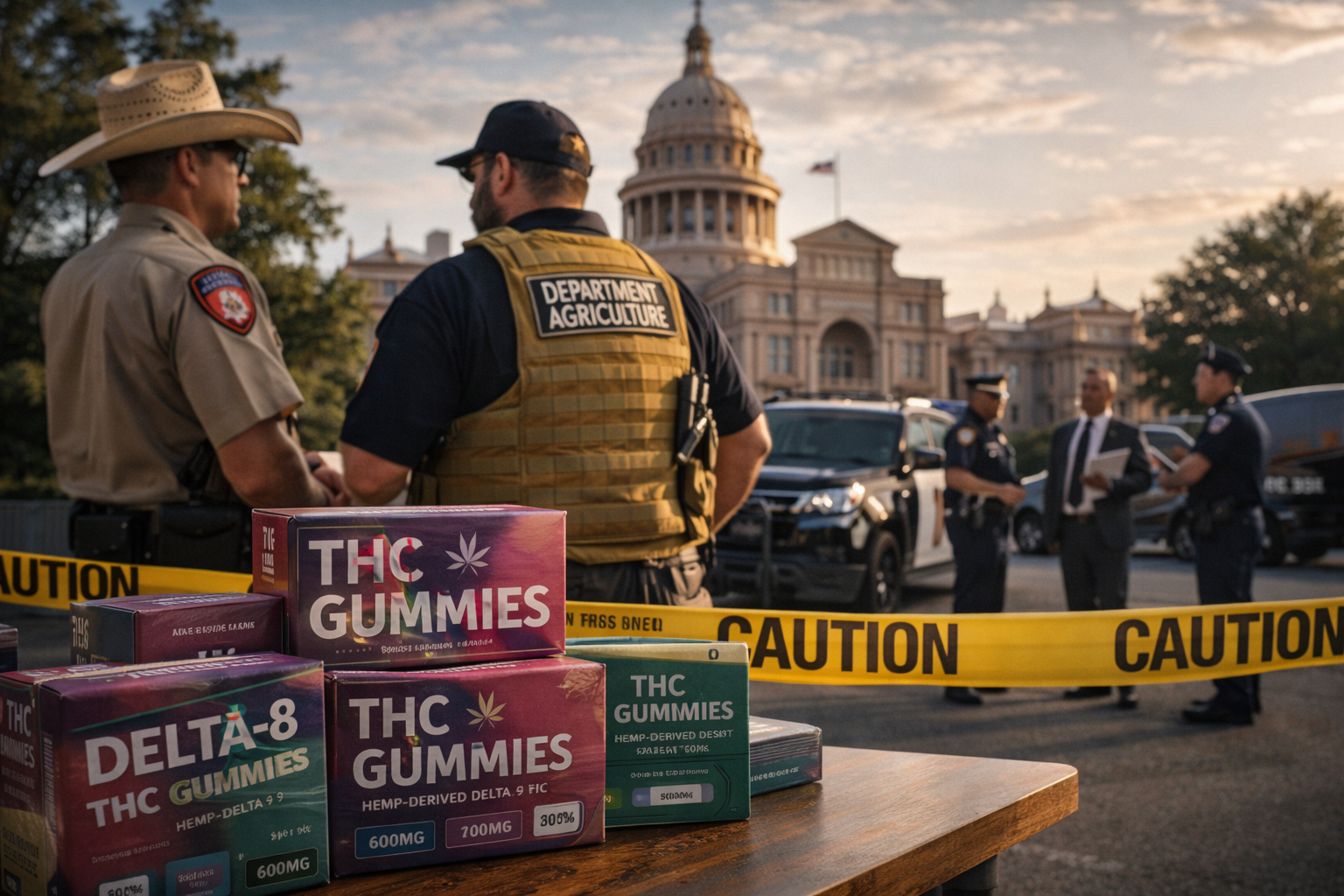
Law enforcement and agriculture officials near seized hemp THC products outside the Texas State Capitol.
Texas continues to stand out as one of the biggest upside states in cannabis. Population size, consumer demand, and political momentum all point toward long term growth. But the friction point that will determine who actually wins market share is not just medical program expansion. It is how the state handles competition and regulation around hemp derived THC.
Right now, Texas sits at the intersection of strict medical rules and a loosely regulated hemp market. That tension is shaping behavior across supply chains, retail channels, and enforcement. As policymakers debate how to address hemp derived THC, the outcome will decide whether demand flows into regulated channels or remains fragmented.
If your business operates in Texas or plans to enter the state, now is the time to review compliance and risk exposure. Start with our quick Cannashield intake form to prepare for a policy driven market shift.
Why Texas Represents Outsized Opportunity
Texas is not a typical cannabis market. It has a large population, a strong consumer economy, and a medical program that is expanding steadily. Even with limited access, demand has proven resilient.
Key factors that make Texas attractive include:
• A population approaching 30 million
• Strong interest in medical alternatives
• Gradual expansion of qualifying conditions
• Institutional infrastructure already in place
• Significant unmet demand
As access increases, sales potential scales quickly. That is why national operators and investors continue to watch Texas closely.
If your growth strategy includes emerging markets, Complete our Cannashield questionnaire to evaluate how Texas specific risks affect insurance and operations.
The Hemp THC Friction Point
The biggest challenge in Texas is not demand. It is how hemp derived THC products compete with the regulated medical program.
Hemp products have been widely available through non medical channels, creating a parallel economy that operates under different rules. This has led to confusion for consumers and frustration for licensed operators.
Key issues include:
• Uneven enforcement across jurisdictions
• Inconsistent product standards
• Price competition from lightly regulated products
• Retail placement outside medical channels
This dynamic affects who captures demand and how revenue is distributed.
Policy Decisions Will Shape Market Share
Texas policymakers now face a choice. They can allow the current imbalance to continue, or they can tighten rules around hemp derived THC to align more closely with medical cannabis standards.
The direction they choose will influence:
• Whether consumers shift toward regulated medical dispensaries
• How operators invest in facilities and staff
• Where enforcement resources are focused
• How quickly the medical program grows
Markets are shaped by rules. Texas is no different.
If your business depends on predictable enforcement and fair competition, Fill out our Cannashield intake form to align risk planning with policy outcomes.
What This Means for Medical Cannabis Operators
For licensed medical operators, clarity around hemp THC regulation could be a catalyst. If rules become more consistent, regulated channels stand to benefit.
Potential outcomes include:
• Improved consumer trust
• Clear differentiation between product categories
• Reduced competition from unlicensed sellers
• More stable pricing dynamics
However, operators should also prepare for increased scrutiny as demand shifts back into regulated systems.
Why Enforcement Consistency Matters
Policy is only as effective as enforcement. Texas has seen varied enforcement approaches across cities and counties, creating uncertainty for businesses.
Inconsistent enforcement leads to:
• Uneven competition
• Hesitation from investors and insurers
• Difficulty planning expansion
• Increased compliance costs
Consistency does not require harsh penalties. It requires clarity and predictability.
Preparing for a Policy Driven Transition
Operators should not wait for final rules to begin preparing. The direction of travel is clear, even if details are not.
Smart preparation includes:
• Reviewing product portfolios for exposure
• Strengthening compliance documentation
• Monitoring enforcement trends locally
• Evaluating insurance coverage for regulatory risk
• Planning supply chain adjustments
These steps help businesses remain flexible as policy solidifies.
If your operation touches hemp or medical cannabis in Texas, Complete our Cannashield questionnaire to build a proactive risk strategy.
Texas Signals the Next Phase of Cannabis Growth
Texas shows how emerging markets can move quickly once access expands. It also shows how policy details determine who benefits.
As the state continues to grow its medical program and address hemp THC competition, the winners will be those who understand regulation, prepare early, and manage risk deliberately.
This is not a market for shortcuts. It is a market for disciplined operators.
Conclusion
Texas remains one of the most significant upside opportunities in cannabis. But the friction point around hemp derived THC will determine how demand is captured and which businesses gain market share.
Policy decisions around competition and enforcement will shape the next phase of growth. Operators who prepare now will be better positioned when clarity arrives.
At Cannashield, we help cannabis and hemp businesses navigate policy driven markets with insurance solutions, compliance guidance, and risk strategies built for scale.
Complete our full intake form here to protect your business and prepare for Texas’ next chapter.