
Virginia Retail Cannabis Sales Bills Signal A Major 2026 Market Shift
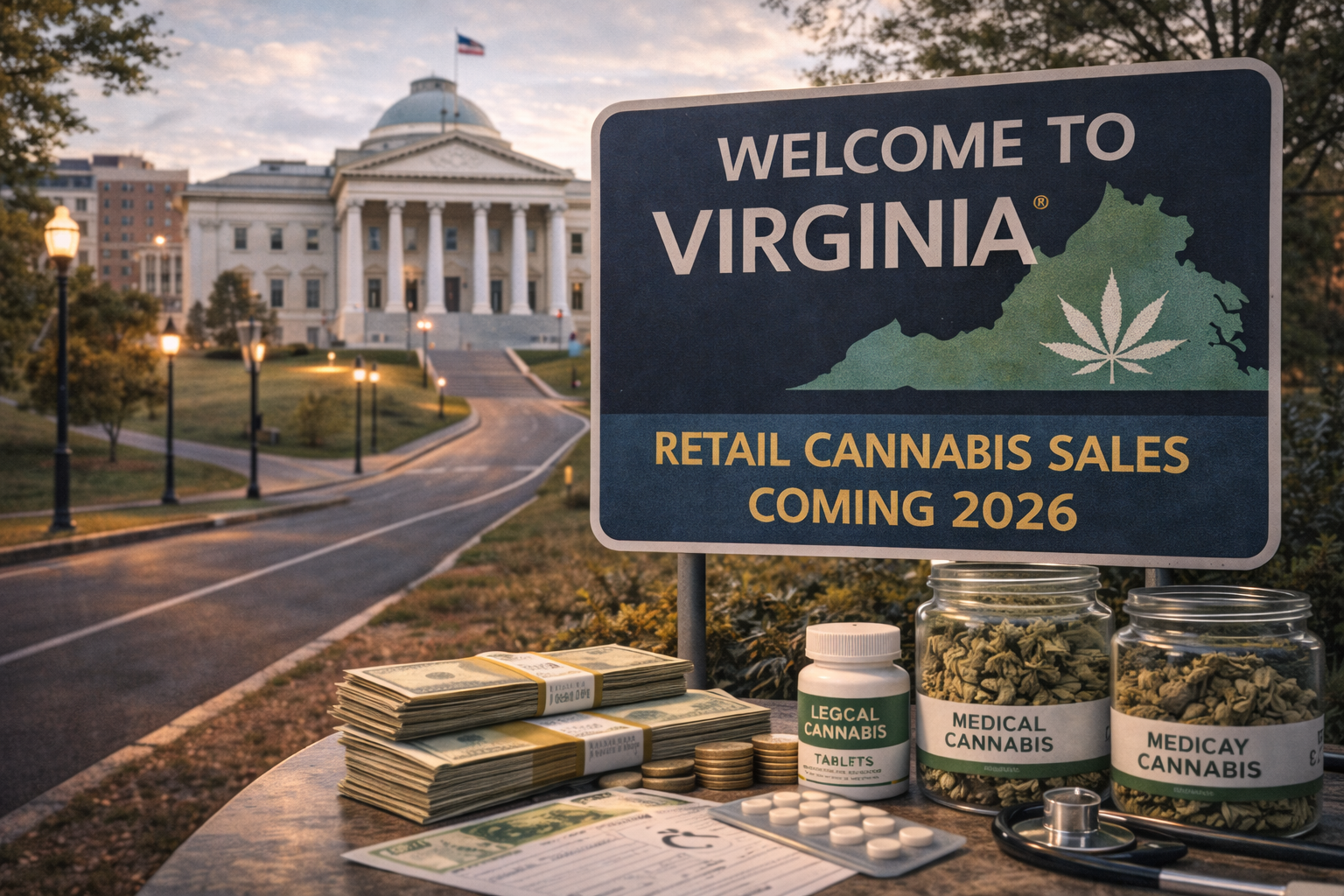
Virginia government building at sunset with cannabis jars gummies and tablets representing a regulated adult use retail launch
Virginia retail cannabis sales planning just got real again. Lawmakers advanced separate bills to build the states first regulated adult use marketplace, closing the long running gap between legal possession and legal sales. For operators, investors, and service providers, this is a major East Coast market access signal because the framework focuses on licensing caps, taxes, product rules, and local control that will shape who wins the early lane.
Quick facts
• Both chambers passed separate bills that set the framework for retail cannabis sales
• Sales timing differs by version, with the House allowing sales as early as November 1, 2026 and the Senate version starting January 1, 2027
• Both versions cap statewide retail stores at 350
• Purchase limits: up to 2.5 ounces per transaction, and legal possession increases to 2.5 ounces
• Product THC limits: 10 milligrams per serving and 100 milligrams per package
• Taxes differ by version, but both use a state sales tax plus a local option add on
• Local governments cannot hold referenda to ban stores, but they can control where stores go and when they operate
• No onsite consumption is allowed under the bills, and the state is directed to study it
If Virginia timing affects your growth plan, Start with our quick Cannashield intake form so you can map exposure and plan for multiple outcomes.
Why This Is A Real Market Access Inflection Point
Virginia already has demand. What it has not had is a legal retail system to pull that demand into the regulated lane. That gap creates a predictable outcome in every state: possession becomes legal, but the unlicensed channel keeps serving the market because consumers still want convenience and variety.
This framework is designed to replace that gray zone with rules that define who can sell, how products must be tested and labeled, and how enforcement is supposed to work. That shift matters because once the state builds a working system, the competitive game changes from who can move product to who can operate consistently under scrutiny.
Universal operator lesson: legalization is not the finish line. Access plus rules is what builds a real market.
Taxes And Price Pressure Will Decide How Fast The Regulated Channel Wins
Virginia is using taxes as part of the market design, and the details matter because taxes show up in shelf price. The Senate version calls for a 12.9 percent state sales tax with an optional 3 percent local add on. The House version calls for a 6 percent state sales tax with an optional local add on described as 1 percent to 3.5 percent.
Operators should read this as a warning and an opportunity.
The warning is obvious. Higher tax burdens make it harder for legal stores to compete with unlicensed sellers on price, especially early when costs are high and supply chains are still stabilizing.
The opportunity is strategic. If taxes push prices up, the operators who win are the ones who compete on trust, reliability, and operational excellence. Clear labeling, consistent products, and disciplined inventory controls reduce complaints and repeat problems, which protects margin when price competition gets ugly.
Universal operator lesson: in emerging markets, price matters, but trust keeps customers when prices are not the cheapest.
Local Zoning Still Controls The Real Competitive Map
Even with statewide rules, cities and counties still decide access in practice. Virginia localities cannot hold a referendum to ban retail stores under these proposals, but they can control store location and hours. That means Virginia will not behave like one market. It will behave like a collection of local markets with different permitting timelines and different levels of friction.
If you are building an entry plan, start with a locality shortlist, not a statewide headline. Identify where retail is likely to be permitted smoothly, then work backward into leases, buildout, and staffing. When local processes slow down, carrying costs become your real enemy.
Universal operator lesson: state law sets the lane, but local decisions set the speed limit.
If local zoning uncertainty is affecting how you plan or negotiate, Complete our Cannashield questionnaire to pressure test your location and permitting assumptions before you commit capital.
Compliance Infrastructure Will Be A Competitive Advantage
Virginia is not just opening stores. It is setting product rules that will shape consumer expectations from day one, including THC caps of 10 milligrams per serving and 100 milligrams per package, plus testing and labeling standards.
That is a gift to disciplined operators.
In early markets, the biggest wins often come from boring excellence: clean documentation, consistent procedures, staff training that holds up under inspection, and product decisions you can explain without improvising. The moment a state shifts from a gray market to a regulated market, the operators who already run tight systems move faster and get fewer surprises.
Also remember the federal government reality. Even if a state launches retail, the federal government still shapes banking, interstate commerce, and risk posture for partners. That makes compliance and documentation even more valuable when you are courting landlords, lenders, and vendors.
Universal operator lesson: compliance is not overhead in a new market. It is a trust engine.
What To Watch Next
The bills still need alignment between the House and Senate versions before final enactment. Operators should plan for both timeline scenarios, because the start date difference is meaningful for hiring, buildout, and inventory strategy.
If you are serious about Virginia, the move is to build readiness now, not after the final vote. Local approvals, tax planning, and documentation standards take time.
If you want a Virginia launch readiness checklist that covers taxes, local access, and compliance basics, use our Cannashield intake form to request it.
Conclusion
Virginia is moving from possession without legal sales toward a regulated adult use system, and that is one of the biggest emerging market access signals of 2026. The early winners will map local access first, plan around real tax and pricing pressure, and build compliance systems that create trust before the market gets crowded.
What To Do This Week
• Build two launch scenarios, one for late 2026 and one for early 2027
• Create a locality shortlist and score each area on zoning posture and permitting speed
• Model shelf pricing using both tax structures described in reporting
• Draft a simple compliance binder outline for testing, labeling, packaging, and staff training
• Set a rule to avoid long lease commitments until local permitting confidence is high
• Assign an owner to track bill reconciliation updates weekly
FAQ
Is Virginia retail cannabis sales live today
No. The bills advanced through the General Assembly, but the market still depends on reconciliation and final enactment steps.When could retail sales begin
The House version allows sales as early as November 1, 2026, and the Senate version starts January 1, 2027.How many retail licenses could be issued
Reporting describes a statewide cap of 350 retail stores under both versions.What are the proposed cannabis tax rates
The Senate version describes a 12.9 percent state sales tax plus an optional 3 percent local add on. The House version describes a 6 percent state sales tax plus an optional local add on.Can cities ban retail stores with a local vote
The bills do not allow local referenda to ban stores, but local governments can still control location and hours.What is the universal operator lesson from Virginia
Local access plus disciplined operations wins early markets. Treat zoning, pricing, and compliance like one integrated plan.