

West Virginia Cannabis Legalization And Reclassification Signals A Market Shift
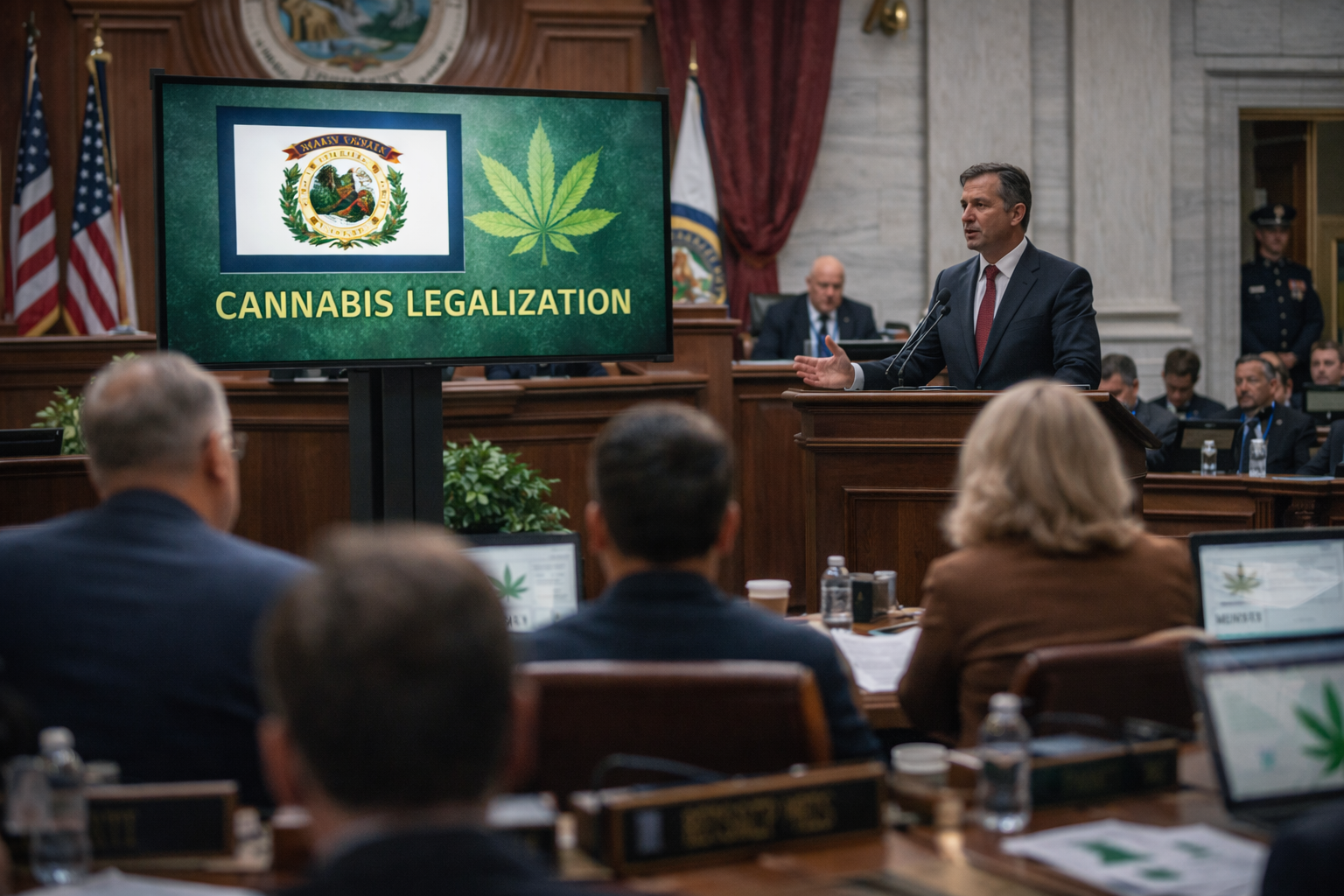
Officials discussing recreational cannabis legalization during a West Virginia committee hearing
West Virginia is quietly turning into a real watch list market. Lawmakers are weighing two different paths at the same time: one route that could open the door to adult use legalization through a constitutional amendment, and another route that focuses on reclassifying cannabis inside state law to reduce friction for the existing medical program. For operators and investors, this is the kind of early policy movement that shapes timelines, capital strategy, and local market access long before a single new license is issued.
Quick facts
• House Joint Resolution 37 proposes a 2026 ballot amendment that would allow adults 21 and older to possess up to two ounces or four plants per person, and allows the Legislature to regulate manufacturing and sales, with an expungement pathway for certain prior possession convictions
• The resolution was introduced February 5, 2026 and its last action shows referral to House Judiciary
• Senate Bill 809 would move cannabis and its natural and synthetic derivatives from Schedule I to Schedule III in West Virginia code, without legalizing adult use sales
• Senate Bill 809 was introduced February 6, 2026 and referred to the Senate Health and Human Resources committee
• Enforcement is still a real theme in regulated markets nearby, illustrated by a Maryland case where regulators issued a six figure fine tied to oversales and inventory tracking issues, a reminder that new markets often come with strict controls once rules go live
If West Virginia timing affects your growth plan, Start with our quick Cannashield intake form so you can map market access risk and plan for multiple outcomes.
Why West Virginia Is A Real 2026 Watch List Market
West Virginia sits in a corridor where surrounding states are moving, and that matters. When neighboring markets open, local lawmakers face pressure on tax revenue, enforcement burden, and consumer safety standards. In the West Virginia debate, one lawmaker explicitly pointed to revenue examples from nearby states and framed legalization as a way to reduce black market sales and generate tax revenue.
For operators, the bigger point is not the politics. It is the planning window. When a state starts debating adult use seriously, the early winners are usually the teams that build relationships, model timelines conservatively, and stay disciplined with capital. Emerging markets rarely reward the team that rushes into a lease before they understand local approvals.
Universal operator lesson: treat early legalization debate as the start of market formation, not background noise.
Two Tracks Are Moving At Once And They Signal Different Outcomes
West Virginia has two policy tracks on the table.
Track one is the adult use conversation through House Joint Resolution 37. This is a constitutional path, which means it is not just a bill that passes and becomes law. It requires the Legislature to advance it and then voters to decide at the ballot. The text proposes legal possession limits and gives the Legislature authority to regulate manufacturing and sales, plus an expungement process tied to certain prior possession convictions.
Track two is Senate Bill 809, a reclassification move that would shift cannabis from Schedule I to Schedule III under state law. This does not legalize adult use sales, but it is designed to ease some of the regulatory and financial friction that medical operators face when state rules feel out of sync with the broader environment.
Universal operator lesson: when a state debates both legalization and reclassification, it is signaling a desire to modernize even if adult use timing stays uncertain.
If you are building in Appalachia or the Southeast, Complete our Cannashield questionnaire to pressure test your timeline, documentation readiness, and capital plan before you lock into a single path.
Local Access Still Decides Who Wins In Smaller Markets
Even when a state is willing, local government can still control the real map. In many states, cities and counties decide where retail can exist, how far it must be from sensitive uses, and how hard permitting becomes. West Virginia’s discussion is early, but operators should assume the same local gatekeeping dynamics will apply if adult use moves forward.
That means the smart strategy is city first planning. Build a shortlist of jurisdictions likely to support regulated commerce. Track meeting calendars. Understand who sits on planning boards. Identify industrial zones that can support compliant buildouts if the state goes that direction. This is how serious teams avoid spending real money before market access is real.
Universal operator lesson: state legalization creates the lane, but local approval decides whether you can drive.
Enforcement Signals What The Rulebook Will Feel Like
The other part of this story is enforcement posture. Even before West Virginia launches anything new, nearby regulated markets are showing what oversight looks like when rules get specific. Maryland’s fine against a dispensary tied to oversales and inventory reconciliation issues is a practical example of how quickly regulators can escalate when limits and tracking controls are violated.
West Virginia operators should take that as a warning shot. If adult use comes, it will come with controls. That means inventory discipline, point of sale guardrails, staff training, and clean documentation will be the difference between operating smoothly and living in enforcement stress.
Universal operator lesson: the regulated lane rewards boring excellence, especially in early market years.
If you want a weekly policy watchlist and compliance readiness template for emerging markets, use the Cannashield intake form to request it so your team can stay ready without chasing headlines.
Conclusion
West Virginia is showing early signs of a market transition: a ballot driven legalization proposal on one side, and a reclassification proposal aimed at reducing friction on the other. Operators who win this type of moment do not guess outcomes. They build scenarios, map local access early, and tighten their operating controls so they can move fast when the window opens.
What To Do This Week
• Add HJR 37 and SB 809 to your policy watch list and assign one owner to track updates weekly
• Build two timelines, one for a ballot driven adult use path and one for medical focused modernization
• Create a locality shortlist and start tracking zoning posture and permitting cadence
• Draft a simple compliance binder outline for inventory, sales limits, and staff training
• Review your capital plan and set a rule against long leases until local approval confidence is high
• Identify two partnership types you may need early, legal and local real estate
FAQ
Is West Virginia launching adult use cannabis sales right now
No. The state is debating proposals, including a constitutional amendment approach, and timing depends on future legislative action and voter approval.What does House Joint Resolution 37 propose
It proposes a constitutional amendment to allow adult possession within defined limits, allow the Legislature to regulate sales and manufacturing, and create an expungement pathway for certain prior possession convictions.What is Senate Bill 809 designed to do
It would move cannabis and its derivatives from Schedule I to Schedule III under West Virginia law.Does reclassification automatically legalize adult use sales
No. Reclassification is a state law scheduling change and is separate from creating a regulated adult use marketplace.Why should operators care about enforcement examples in other states
Because once rules go live, regulators often enforce sales limits and inventory controls aggressively, which can affect licensing risk and community trust.What is the universal operator lesson from this moment
Do not build your plan on a single outcome. Build a scenario based strategy that starts with local access mapping and documentation discipline.