
2026 Farm Bill Puts Intoxicating Hemp Revenue Under Federal Pressure
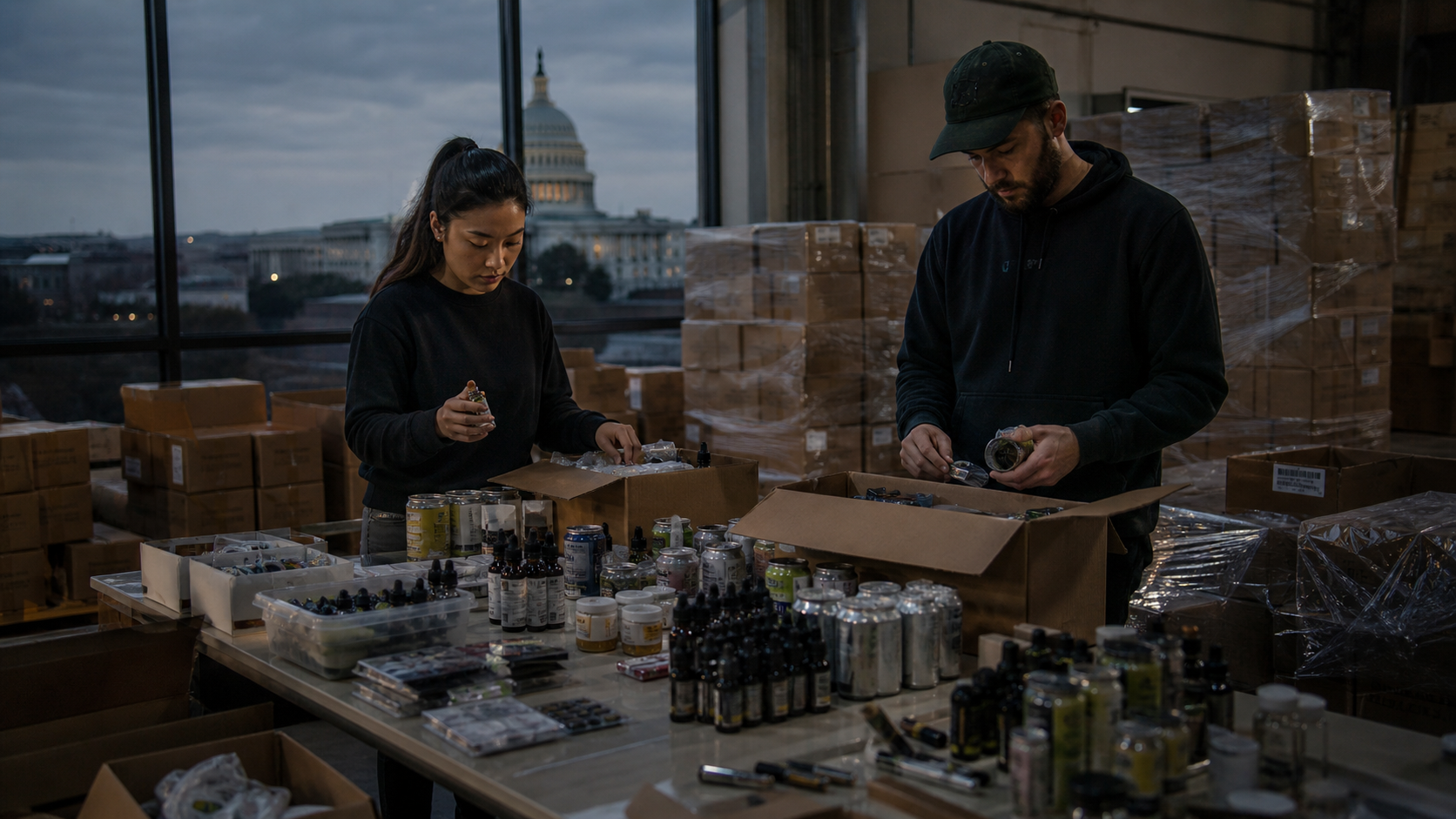
Workers handling hemp products as the 2026 Farm Bill signals a compliance reset.
The U.S. House passing the 2026 Farm Bill with the intoxicating hemp product ban still included is a serious signal for operators selling or sourcing hemp derived products. This is not just another federal headline. It points to a possible compliance reset that could change product categories, testing assumptions, sourcing decisions, and revenue models. For businesses relying on intoxicating hemp sales, the 2026 Farm Bill hemp ban and total THC standard now deserve immediate attention.
Quick facts
• The U.S. House passed the 2026 Farm Bill with the intoxicating hemp product ban still included
• The bill would redefine hemp using total THC, including THCA
• That matters for operators selling or sourcing hemp derived products
• Companies relying on intoxicating hemp revenue may face reformulation pressure
• Supply chain changes may be needed if the bill advances further
• The universal operator lesson is simple: when federal definitions shift, inventory, testing, and product strategy can change fast
If federal hemp pressure is affecting your growth plan, Start with our quick Cannashield intake form so you can map product, operational, and insurance exposure before the rules move further.
What the House vote signals right now
This matters because it turns federal pressure into something more concrete. For a while, many hemp operators have worked inside a market shaped by state rules, testing interpretations, and the space created by the 2018 Farm Bill. The House vote suggests that space may narrow if the total THC standard becomes the new federal line.
That changes the tone of the conversation. Businesses are no longer just debating whether intoxicating hemp is under scrutiny. They are looking at a federal signal that product legality may depend on a stricter definition of hemp. When Washington starts moving from debate to statutory language, operators should stop treating it like background noise.
Why total THC changes the business math
The key issue is total THC, including THCA. For operators, that is not a technical footnote. It affects whether certain flower, pre rolls, vapes, and other hemp derived products remain commercially viable under a future federal framework.
THCA matters because it can convert when heated. That means businesses that previously relied on one reading of compliance may need to rethink how they classify products, source biomass, review lab work, and structure inventory. A product line that worked under one definition can quickly become exposed under another.
This is the bigger lesson for operators in every market. Compliance is not just about what the label says today. It is also about how regulators define the product tomorrow. If the federal government tightens the definition, companies may need to reformulate, shift suppliers, or exit certain categories altogether.
If uncertainty around total THC, THCA exposure, or product mix is affecting how you plan, Complete our quick Cannashield intake form to pressure test your inventory, sourcing, and compliance posture before deadlines create harder decisions.
What operators should be reviewing now
The smartest businesses will treat this moment as a planning exercise, not just a policy update. If your company has meaningful revenue tied to intoxicating hemp, now is the time to identify which products depend on current interpretations and which would become vulnerable under a stricter total THC standard.
That review should go beyond the product itself. It should include supplier agreements, lab testing assumptions, purchase commitments, packaging, marketing language, customer expectations, and warehouse exposure. A compliance reset rarely stays inside one department. It touches operations, finance, legal, and risk management all at once.
This also affects supply chain planning. If certain inputs become harder to use or harder to defend, operators may need replacement suppliers, different formulations, or new product strategies. Waiting until the final stage of the process can leave a business reacting instead of planning.
The operator lesson
The temptation is to see this as a hemp politics story. It is more useful to treat it as a business continuity story. Federal pressure on intoxicating hemp means companies should assume that at least some current product assumptions may not hold forever.
That does not mean every operator should panic. It does mean every operator should identify where revenue depends on a category that could face reformulation, tighter testing, or outright restriction. In hemp, the businesses that survive policy shifts are usually the ones that prepare before the deadline, not after it.
If you need to organize your product, supplier, and compliance documents before the next phase of federal change, Complete our quick Cannashield intake form to identify weak points and build a clearer plan.
You might also like


Conclusion
The House passing the 2026 Farm Bill with the intoxicating hemp product ban still included is a serious market signal. The message is clear. Federal pressure is building, and operators relying on intoxicating hemp revenue may need to prepare for reformulation, supply chain changes, and a wider compliance reset.
The operators best positioned for what comes next will be the ones that review product exposure now, understand how total THC changes the analysis, and make practical decisions before the market forces them into rushed ones.
Educational note: This article is for education only and is not legal, regulatory, tax, or insurance advice.
What To Do This Week
• Review which products rely on current intoxicating hemp interpretations
• Organize lab results and identify where THCA exposure could change the compliance picture
• Check supplier agreements for flexibility if sourcing or formulation needs to change
• Separate revenue by product category so you know what is truly at risk
• Build a short internal plan for reformulation, substitution, or category exit if needed
• Track the federal process so leadership is not surprised by the next step
FAQ
What did the House pass?
The U.S. House passed the 2026 Farm Bill with the intoxicating hemp product ban still included.
Why does total THC matter?
Because the bill would redefine hemp using total THC, including THCA, which could change how many hemp derived products are treated.
Why is THCA important?
THCA can convert when heated, making it a major issue for product testing, classification, and compliance planning.
Who is most affected?
Retailers, manufacturers, suppliers, and distributors that rely on intoxicating hemp revenue or source hemp derived products.
Does this mean the rule is final?
No. The House vote is a major signal, but operators should watch the broader federal process before assuming the final outcome.
What is the biggest operator takeaway?
Know which products and revenue streams depend on current hemp definitions, because those assumptions may not hold if federal policy tightens.
SOURCES
Cannabis Business Times, U.S. House Passes 2026 Farm Bill, Intoxicating Hemp Product Ban Remains
https://www.cannabisbusinesstimes.com/hemp/news/15823852/s-house-passes-2026-farm-bill-intoxicating-hemp-product-ban-remains
Congress.gov, farm bill legislative activity and status
https://www.congress.gov/
USDA Agricultural Marketing Service, Domestic Hemp Production Program
https://www.ams.usda.gov/rules-regulations/hemp

Houston misdemeanor cannabis possession arrests have risen nearly 1,200 percent, from an average of about 35 per year from 2021 through 2023 to roughly 440 annually during the current mayoral administration. The surge comes as voters prepare to decide whether low level cannabis possession should become HPD's lowest enforcement priority.