
A new federal hemp bill could reshape where adults buy THC adjacent products
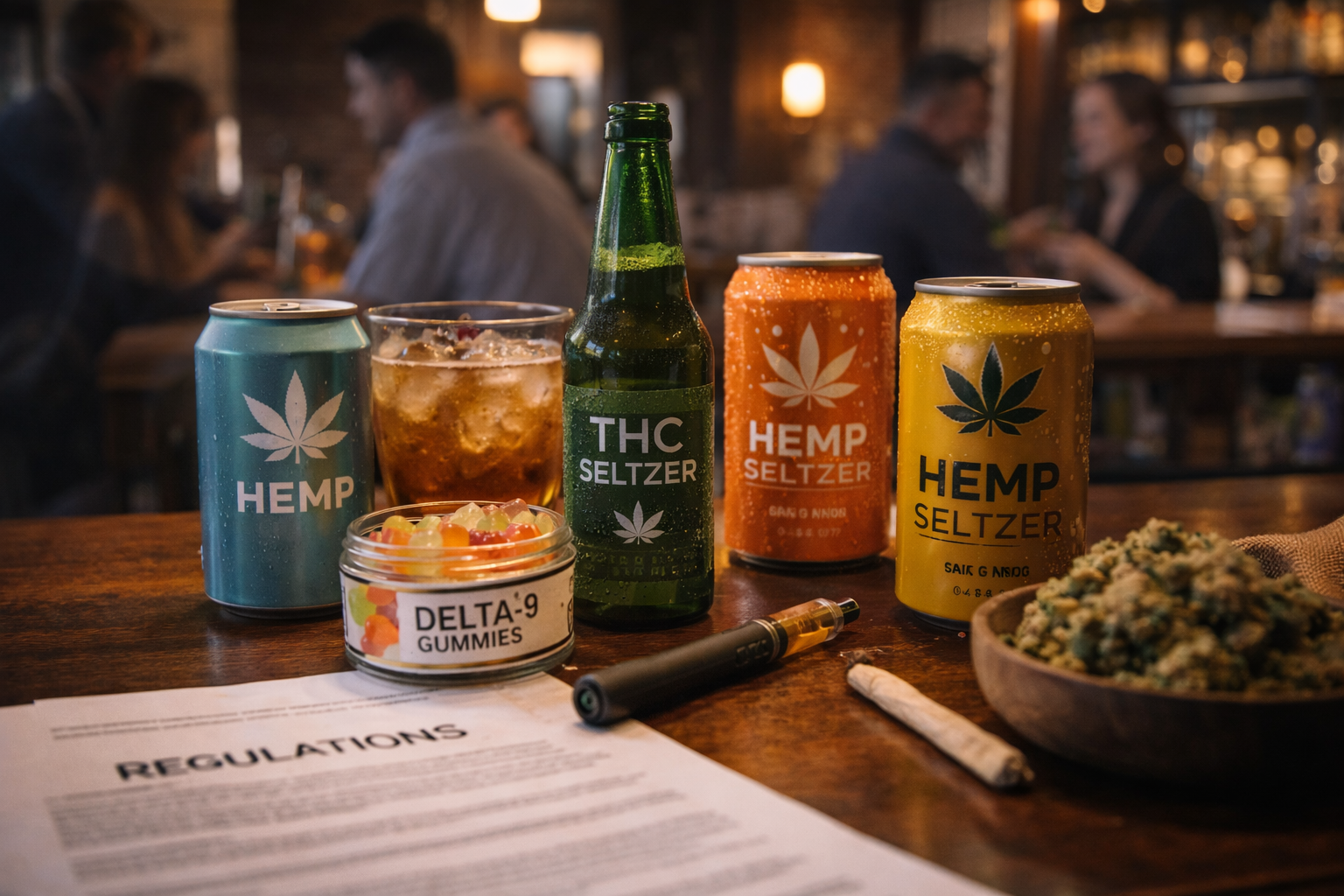
Hemp beverage cans and delta 9 gummies on a bar table next to a federal regulation document showing 21 plus hemp consumables rules.
For years, consumable hemp products have lived in a strange middle lane. They are widely available, marketed like wellness, and sold through channels that traditional cannabis businesses cannot touch. At the same time, the rules have been inconsistent, enforcement has been uneven, and consumers have been stuck guessing what is actually in the package.
That gray zone created a booming market for hemp edibles, beverages, and inhalables, especially products that feel THC adjacent. But it also created a mess. States started patching together their own rules, some moving toward restrictions and some moving toward outright bans. Meanwhile, licensed cannabis operators watched a parallel THC style market grow outside the usual guardrails like age gates, testing consistency, and standardized labeling.
Now Congress is looking at a different approach: regulate instead of ban.
A bipartisan House bill would affirmatively allow regulated sales of consumable hemp products to adults 21 and older, including edibles, beverages, and inhalables. The goal is to create a clear federal framework instead of leaving this market stuck in limbo.
For operators, this matters because it is not just “hemp news.” It directly affects competitive pressure, enforcement priorities, distribution strategies, and where consumers choose to buy THC adjacent products.
If you sell hemp derived consumables or operate licensed cannabis, this is a good time to pressure test your exposure. Start with our quick Cannashield intake form
What the bill actually does in plain English
This proposal is designed to create a federal regulatory pathway for cannabinoid hemp products, with FDA style oversight and clearer rules of the road.
Here are the practical pieces that matter to real businesses:
21 plus access for consumable hemp products such as edibles, beverages, and inhalables
Packaging rules that aim to reduce youth appeal and require tamper resistant features
Labeling requirements to list cannabinoids present, plus a QR code to a certificate of analysis
Manufacturing and testing standards and facility registration requirements
Ingredient restrictions that would prohibit adding certain substances like alcohol, nicotine, melatonin, and other additives that could interact with cannabinoids
A total cannabinoid cap concept, with HHS tasked with proposing limits and an advisory structure to guide thresholds
Recall authority tied to cannabinoid hemp products, which raises the seriousness level of compliance fast
The big takeaway is simple: if a product is going to be allowed, it is going to be allowed under rules that look a lot more like regulated consumer goods and a lot less like the current free for all.
Why “regulate instead of ban” changes enforcement priorities
Bans create one predictable outcome: demand does not disappear, it just relocates. Usually into the least controlled channels.
A federal regulatory pathway is different. It gives enforcement agencies a clearer target. Instead of arguing over whether the category should exist, the focus shifts to who is compliant and who is not.
That means two things can happen at the same time:
Legit operators get a clearer lane to sell, distribute, and scale.
Noncompliant operators get squeezed harder because the excuse of “no federal rules” goes away.
If you are a hemp operator, this is a chance to level up and separate from the sloppy side of the market.
If you are a licensed cannabis operator, it is a warning that THC adjacent products may become even more normalized in mainstream retail, depending on how the final rules land.
What this means for licensed cannabis operators
This is where the chessboard changes.
If federally regulated hemp consumables are allowed for adults, it can pull consumer spending into channels that are currently off limits to licensed cannabis. Think about where beverages and gummies can show up if the rules are clear and retailers feel protected.
That increases competitive pressure in categories that overlap with cannabis, especially:
Low dose edibles and gummies
THC style beverages
Discreet inhalables and vapes
“Wellness positioned” cannabinoid products that appeal to new customers
The operators who win do not just complain about it. They adjust.
Licensed cannabis has natural advantages when it is run clean: stronger track and trace, tighter product control, trained staff, and a customer experience that can educate. If hemp products get regulated, cannabis retailers need to double down on what builds trust: dosing clarity, consistent labeling, and a no drama buying experience.
Want a fast checklist of where your operation could get exposed as hemp rules tighten? Complete our Cannashield questionnaire
What hemp brands should do now if they want to survive the rulebook
If you are in hemp, do not wait for the final vote to start acting like a regulated business.
Start here:
Audit your labels so serving size, cannabinoids, and claims match your lab results
Fix your COA workflow so it is batch specific and easy to access
Build age gate discipline across retail partners and online channels
Clean up packaging to avoid anything that can be interpreted as youth focused
Tighten your manufacturing documentation because facility registration and testing standards are not friendly to chaos
Map your distribution footprint so you know which states and channels create the most enforcement friction
This is the difference between being a real operator and being a temporary trend.
Why this also matters for insurance and risk planning
The more regulated the category becomes, the more your documentation becomes your defense.
When rules tighten, exposure usually shows up in predictable places: labeling errors, inconsistent testing, contamination issues, adverse reactions, shipping mistakes, and customer complaints. A formal pathway also raises expectations around recalls and quality systems.
No promises, no magic coverage talk. Just the reality that better controls and cleaner paperwork reduce the odds of a loss event turning into a business ending problem.
Conclusion
A bipartisan move to regulate 21 plus consumable hemp products is a serious signal that the hemp cannabinoid market is entering a new phase. If this becomes law, the gray zone shrinks and the compliance bar goes up. For hemp brands, it is a chance to legitimize and scale. For licensed cannabis operators, it is a direct competitive pressure story that impacts where consumers buy THC adjacent products and how enforcement is prioritized.
The smart play is getting ahead of it now: tighten labeling, tighten testing, tighten distribution discipline, and build a customer experience that wins on trust.