
Federal CBD rules are finally on the table and the hemp market will feel it
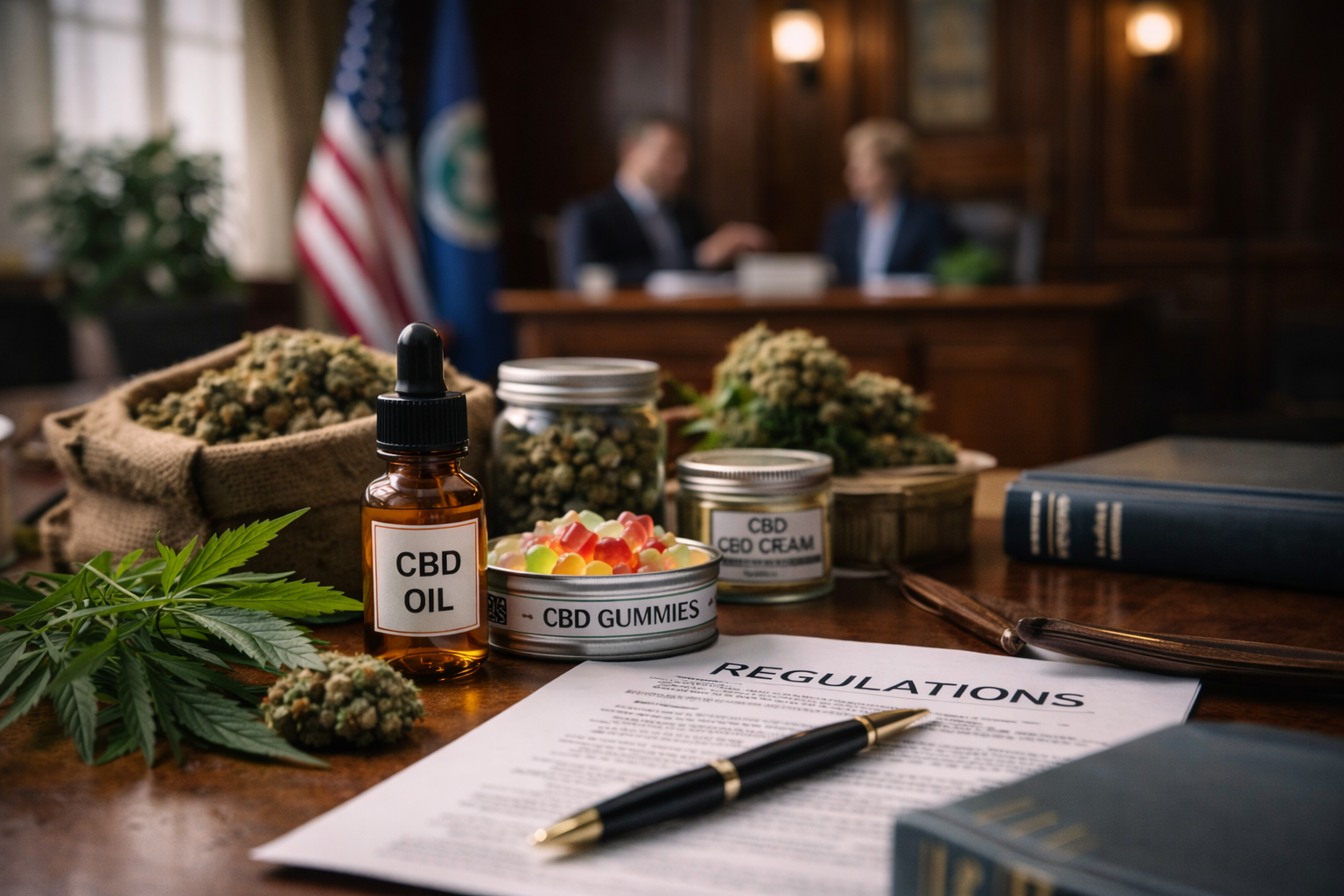
CBD oil and hemp products next to a federal regulation document on a desk.
For a long time, the CBD and hemp derived product market has lived in a weird space. It is everywhere, but the rules are inconsistent. You can find CBD in wellness shops, convenience stores, online marketplaces, and sometimes right next to products that look and feel intoxicating. Meanwhile, licensed cannabis operators are dealing with strict state compliance while hemp products often operate under a patchwork of state level rules and uneven enforcement.
That “gray zone” has been a business model for some and a liability for everyone.
Now Washington is signaling a shift from “ignore it” to “regulate it.” A bipartisan House proposal would create a federal pathway for CBD and certain hemp derived cannabinoid products, with the FDA playing a central role. That is a big deal because once federal rules show up, everything changes: labeling, testing, packaging, distribution channels, age gates, and how hemp competes with licensed cannabis.
This is not just policy news. This is a market structure story.
If you sell CBD, hemp derived products, or operate licensed cannabis and want a quick compliance and risk reality check, Start with our quick Cannashield intake form
Why the “gray zone” became a problem worth fixing
The hemp boom created real opportunity, but it also created real confusion.
Operators have been dealing with:
Different rules in every state
Products that look legitimate but vary widely in quality and consistency
Label claims that are hard to verify
Unclear standards around serving size, cannabinoid content, and consumer safety
Political pressure around youth access and intoxicating hemp products
At the same time, federal policy has tightened in other places, especially around how hemp is defined and how THC limits could be enforced in finished products. That combination has the industry stuck between two bad options: stay in a gray zone and risk getting squeezed, or push for federal regulation and accept that compliance costs will rise.
This is why a federal framework matters. It creates a single set of expectations that serious operators can build around.
What the bipartisan House proposal would actually change
In plain English, the proposal is designed to pull CBD and consumable hemp derived cannabinoid products into a formal federal system.
Key pieces operators should pay attention to:
FDA would be pushed to establish a federal regulatory framework for hemp derived CBD products intended for human use
The proposal includes a pathway for setting cannabinoid limits for different product types
It also adds structure around packaging and labeling, including requirements to disclose cannabinoids present and link to certificates of analysis through QR codes
It includes manufacturing and testing requirements and facility registration
It frames adult access, including a structure around sales to adults
Here is the operator translation: the days of vague labels and inconsistent testing will not survive a real federal framework. If this moves forward, the “professional” hemp market gets stronger, and the sloppy side of the market gets expensive fast.
What this means for hemp operators and CBD brands
If you are in hemp, this is both a threat and an opportunity.
The threat is obvious. More rules mean more cost. Testing, packaging compliance, facility registration, documentation, and quality systems will separate operators who are built for scale from operators who are built for quick wins.
The opportunity is bigger. Federal rules create legitimacy. Legitimacy unlocks better retail partners, cleaner distribution, and a stronger story for banks, investors, and insurers who want stability.
If you are serious in hemp, this is the moment to tighten up:
Treat your COAs like a core part of the product, not an afterthought
Clean up labeling so it matches actual cannabinoid content
Build a recall plan and a customer complaint process that is documented
Audit your supply chain and manufacturing practices like you expect scrutiny
What this means for licensed cannabis operators
Licensed cannabis businesses should not tune this out.
If hemp derived products get a federally defined pathway, competition can intensify in categories that overlap with cannabis, especially wellness adjacent formats like tinctures, edibles, beverages, and topicals.
Two things can be true at once:
Better federal regulation can reduce the “Wild West” effect and improve consumer trust overall
It can also expand the hemp channel into more mainstream retail, which forces licensed operators to compete harder on experience, education, and product strategy
The winners will be the operators who lean into what licensed cannabis does best: controlled distribution, stronger consumer education, predictable dosing, and a retail experience that feels safe and stigma free.
Want to see where your product mix, labeling discipline, and risk controls might get exposed as federal rules tighten? Complete our Cannashield questionnaire
A practical operator checklist to get ahead of regulation
Whether you are hemp or licensed cannabis, here is the move: prepare like federal scrutiny is coming, because it is.
Start with:
Label audit: Do your labels match your lab results and serving sizes clearly
COA workflow: Can customers access COAs easily and do they match the exact batch
Packaging discipline: Child resistant, tamper evidence, and no youth appeal is the baseline
Distribution mapping: Identify any channels that create enforcement risk or reputational risk
Documentation: SOPs, batch records, complaint logs, and corrective actions should be organized
Insurance readiness: Do not assume anything. Review your product liability, recall related exposures, and operational controls so you know where you stand
This is how you protect margin and avoid getting caught in the gap between “new rules” and “new enforcement.”
Conclusion
A bipartisan House push to create federal CBD and hemp derived product rules is a clear signal that the market is entering a more regulated phase. The upside is legitimacy and consistency. The downside is that the compliance bar goes up and the casual operators get squeezed.
For serious operators, this is not bad news. This is the next filter. The businesses that tighten labeling, testing, packaging, documentation, and distribution discipline early will be the ones still standing when the gray zone finally closes.