
Brazil Approves Major National Cannabis Research Program Through Embrapa
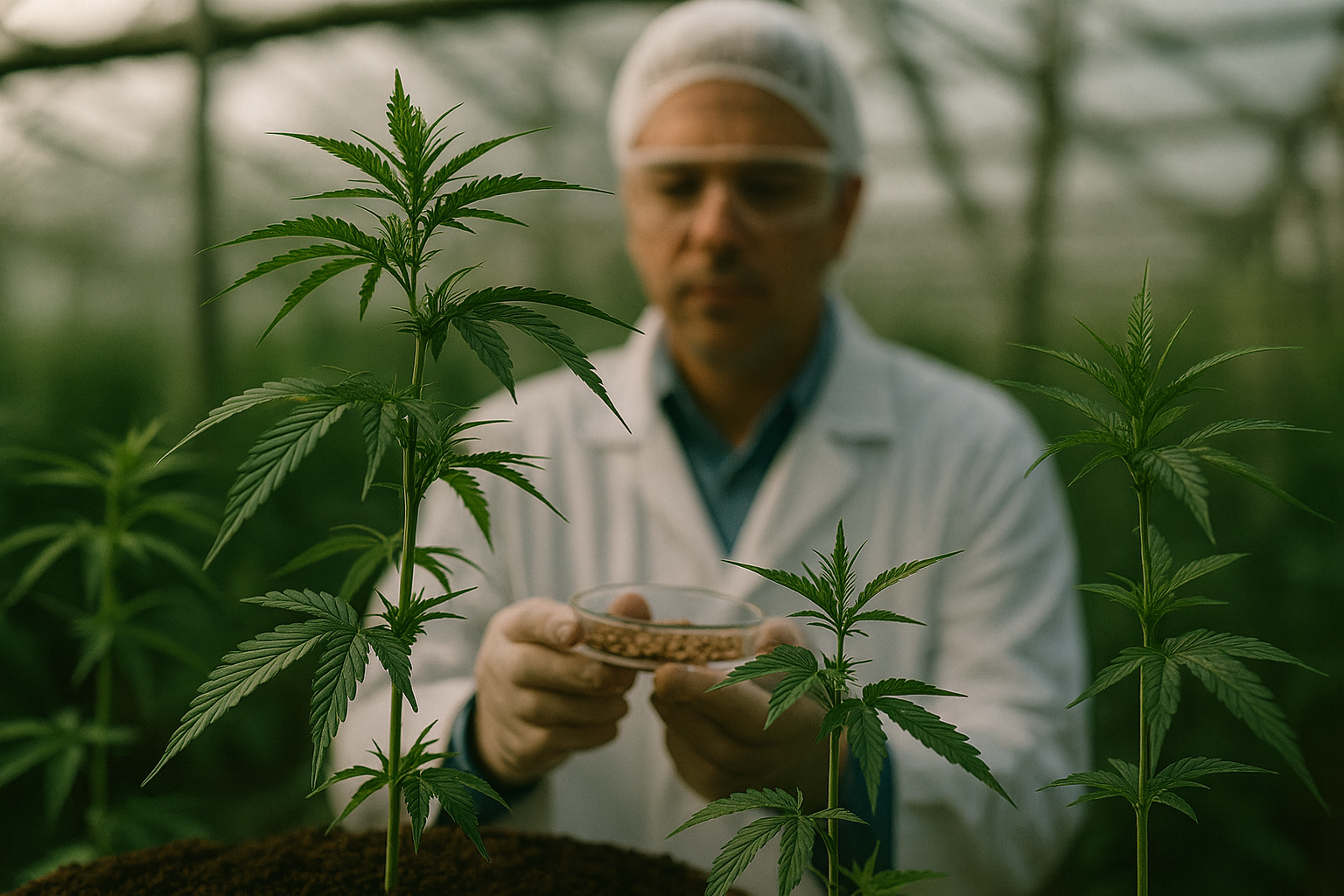
Researcher in a lab coat examining a cannabis plant in a field, symbolizing Brazil’s Embrapa receiving approval to conduct long-term cannabis research and develop hemp varieties.
Brazil just made a major move that could influence global cannabis and hemp markets. The country’s leading agricultural research agency, Embrapa, has officially been approved by the federal health regulator Anvisa to conduct long-term cannabis research — including building a national seed bank and developing industrial hemp varieties.
This is a significant step for a country known for its robust agricultural sector. Brazil may soon become one of the world’s key players in cannabis genetics, cultivation science, and hemp varietal development.
If your business is exploring international cannabis sourcing, seed genetics, or global partnerships, Start with our quick Cannashield intake form to assess compliance, insurance, and strategic risk.
A Turning Point for Brazil’s Cannabis Industry
Embrapa’s approval signals a major shift in Brazil’s approach to cannabis. Historically conservative on cannabis policy, Brazil has taken a research-first route — and giving Embrapa the greenlight reflects national interest in understanding cannabis at a scientific, agricultural, and industrial level.
Embrapa will now be authorized to:
Conduct long-term clinical and agricultural research
Build a legal seed bank of cannabis genetics
Develop industrial hemp cultivars suited to Brazil’s climate
Analyze cannabinoid expression, crop disease resistance, and sustainable planting methods
Support domestic companies seeking compliant genetics
This is not a small research project. Brazil is applying the same agricultural innovation model that made it a global powerhouse in soy, corn, cattle, and sugarcane — now to cannabis.
Businesses looking to source genetics or understand emerging markets should Complete our Cannashield questionnaire for guidance on international cannabis compliance and insurance strategy.
Why Embrapa’s Approval Matters Globally
Brazil operates one of the most sophisticated agricultural research networks in the world. When Embrapa steps into a crop category, global markets pay attention.
There are several reasons this approval matters beyond Brazil:
1. Climate-Ready Hemp Varieties
Brazil’s diverse climate zones — from tropical to subtropical — give Embrapa the perfect environment to develop hemp strains adapted to different global growing conditions.
2. A New Global Competitor
Countries like Canada, the U.S., China, and parts of Europe have dominated hemp genetics. Brazil joining the race will intensify competition and innovation.
3. Future Export Opportunities
Seed, fiber, biomass, and industrial hemp-derived products could become major export categories once federal laws evolve.
4. Research Integrity
Embrapa is known for long-term, peer-reviewed, rigorous agricultural science — something the global cannabis industry desperately needs.
5. Government-Backed Legitimacy
This isn’t a private startup. This is a federally backed institution — signaling a potential future shift toward broader national cannabis regulation.
What This Means for Industrial Hemp
Industrial hemp is emerging as a major global commodity with applications in construction, textiles, plastics, biocomposites, wellness, food, and energy.
Embrapa’s involvement could accelerate:
Low-THC genetics for countries with strict regulatory caps
High-fiber varieties suited for construction materials
Seed-oil hemp with improved yield and pest resistance
Large-scale field trial data, something many countries still lack
Brazil’s agriculture sector already dominates global exports. If hemp becomes part of that ecosystem, global supply chains will feel the impact.
If your business uses hemp inputs or plans to expand product lines, Fill out our Cannashield intake form to align your sourcing, compliance, and insurance strategy with future international developments.
Could Brazil Become a Cannabis Powerhouse?
While Embrapa’s approval stops short of full cannabis legalization, it sets the foundation for long-term national participation in the global marketplace.
Brazil’s potential advantages include:
Low production costs
Massive arable land
A powerful export economy
Decades of agricultural engineering and research
A growing domestic wellness and phytomedicine sector
If cannabis becomes federally regulated for broader use in the future, Brazil could scale faster than most nations — much like it did with soy and beef.
For now, the focus is on research, seed banks, and industrial hemp innovation — but the groundwork being laid today may shape future global supply chains.
Conclusion
Brazil approving Embrapa to lead long-term cannabis research is a milestone not just for the country but for the global cannabis industry. With a national seed bank, new hemp varieties, and science-driven research programs, Brazil is positioning itself as a future leader in cannabis agriculture, genetics, and industrial hemp development.
For businesses, this is a moment to watch closely. As global markets evolve, the smartest operators prepare early — adapting compliance, sourcing strategies, and insurance protection before major shifts occur.
At Cannashield, we help cannabis companies stay ahead of global regulatory changes, ensuring they’re protected and strategically positioned no matter where the industry moves.
Complete our full intake form here to safeguard your operation and plan for the future of cannabis on a global scale.
Read the full article here →