
Wisconsin’s Hemp Industry Scrambles After Federal Ban on Hemp-Derived THC
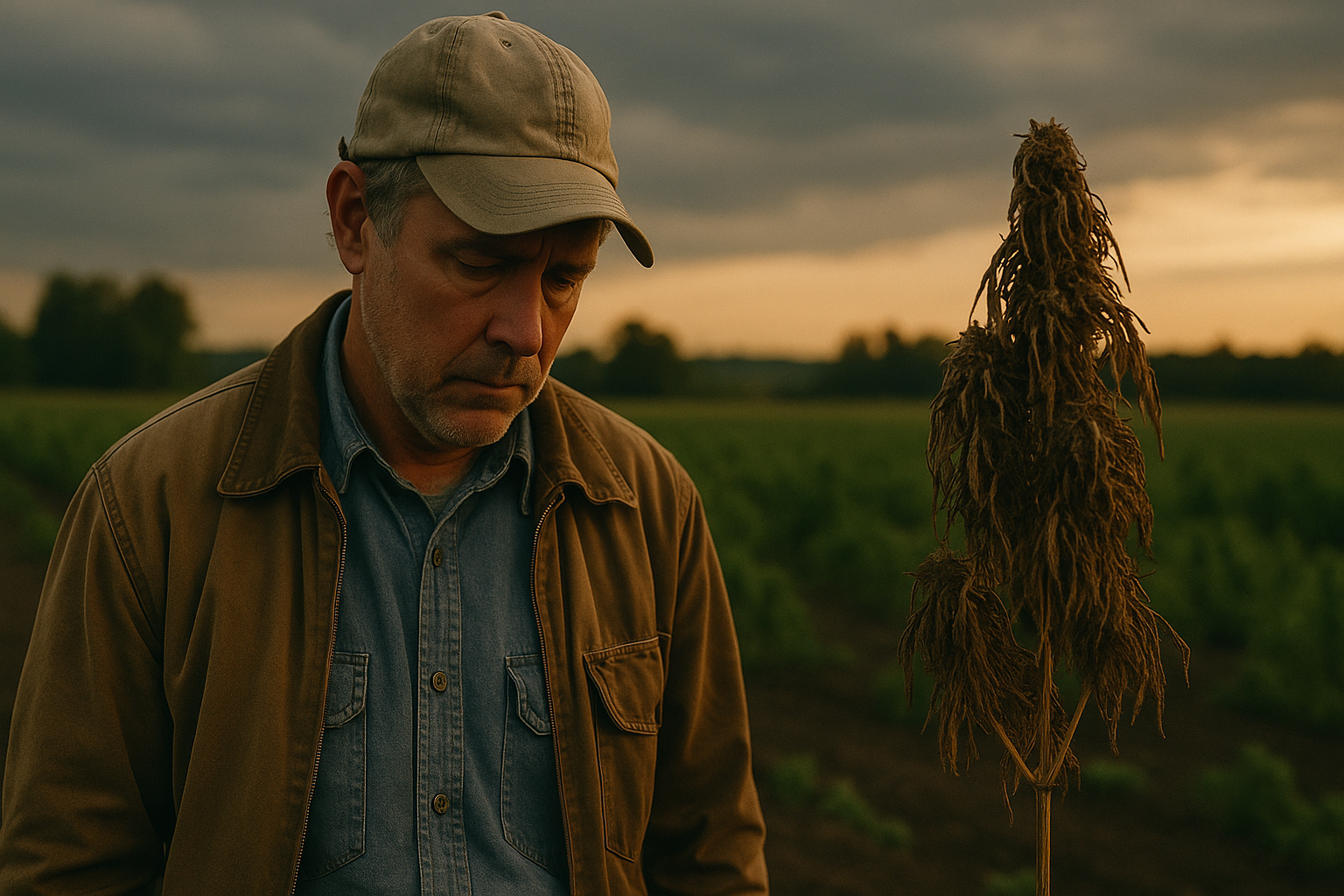
Worried Wisconsin hemp farmer standing beside a withered hemp plant at sunset, symbolizing the struggle growers face after federal legislation banned hemp-derived THC products.
Wisconsin’s hemp community is facing one of its biggest challenges since the crop was legalized. After Congress quietly passed federal legislation banning many hemp-derived THC products, growers and processors across the state are being forced to rapidly reassess their business models — or risk losing major portions of their revenue.
The ban targets intoxicating hemp products such as Delta-8, hemp-derived Delta-9, and other cannabinoids that evolved out of the 2018 Farm Bill. These products fueled explosive growth for small farmers, manufacturers, and retailers in Wisconsin. Now, the federal government has effectively shut the category down.
If your business relies on hemp-derived THC products for revenue, this is the moment to prepare. Start with our quick Cannashield intake form to understand your risk exposure, compliance gaps, and strategic pivot options.
A Market Built Overnight — Threatened Overnight
For many Wisconsin growers and processors, hemp-derived intoxicating cannabinoids became the financial anchor that kept their farms and facilities alive.
What started as a CBD-focused industry pivoted hard into THC-adjacent products when Delta-8 and similar compounds became legal under the Farm Bill’s “dry-weight THC” definition.
That loophole turned Wisconsin — and many Midwest states — into thriving hubs for:
Delta-8 gummies and beverages
Hemp-derived Delta-9 edibles
Vapes and tinctures
High-demand cannabinoid extracts
Retailers across the state saw sales skyrocket thanks to consumer demand for legal THC alternatives in a state where recreational cannabis remains illegal.
Now, with the federal ban in place, that revenue is at risk.
If you’re unsure which of your SKUs fall under the ban, Complete our Cannashield questionnaire for a full product-by-product breakdown.
What the Federal Ban Means for Wisconsin
The new federal legislation prohibits intoxicating hemp-derived products nationwide, overriding state-level allowances and definitions.
This will hit Wisconsin especially hard because the state:
Has no legal adult-use cannabis program
Relies heavily on hemp processors for rural economic stability
Has a growing hemp-beverage and edible market
Built an entire ecosystem around converted cannabinoids
Farmers who invested years into genetics, soil, infrastructure, and extraction now face the possibility of losing most of their commercial outlets.
Processors who scaled their facilities for THC-rich hemp derivatives now have to consider downsizing, reformulating, or shifting into entirely new product categories.
Retailers who built strong consumer bases around hemp-THC beverages and edibles now face empty shelves and confused customers.
Why the Industry Is Scrambling
The ban was folded into federal legislation with little advance notice — giving Wisconsin operators almost no time to prepare.
As a result, the industry is reacting in real time:
1. Retailers are pulling products
Distributors are already warning stores about inventory risks and enforcement timelines.
2. Processors are halting production
Many labs have paused extraction runs for THC-adjacent cannabinoids until they understand what formulations remain legal.
3. Farmers are reconsidering 2026 planting decisions
Without a profitable outlet for biomass, growers face serious financial strain.
4. Beverage and gummy brands face reformulation or shutdown
The ban effectively eliminates all intoxicating hemp formulations.
5. Legal and insurance exposure is rising
Businesses may face contract disputes, inventory write-offs, labeling liabilities, and regulatory penalties.
Wisconsin operators are now navigating uncertainty with no clear roadmap — and no state-level protections to soften the blow.
Now is the right time to secure insurance and compliance protections before enforcement accelerates. Fill out our Cannashield intake form for a tailored risk and transition plan.
What Wisconsin Hemp Businesses Can Do Next
The situation is challenging — but not hopeless. Businesses that adapt early will have the best chance of surviving.
Here are the steps operators should take immediately:
1. Conduct a Product Line Audit
Identify all products containing intoxicating cannabinoids and categorize risk levels.
2. Explore Non-Intoxicating Alternatives
CBG, CBN, CBC, CBD-V, and functional wellness ingredients remain viable opportunities.
3. Strengthen Documentation & SOPs
Testing, COAs, batch logs, and safety protocols will be essential in this transition.
4. Review Insurance Coverage
Many operators are underinsured for regulatory disruption, inventory losses, and contract liability.
5. Consider Entering Regulated THC Channels
Some processors may pivot toward medical or future adult-use cannabis programs in Wisconsin or nearby states.
6. Communicate Early With Retail Partners
Transparent updates help retailers plan and sustain customer trust.
The Bigger Picture
Wisconsin is not alone — hemp producers across the country are dealing with the same disruption.
But the impact here is deeper because the state had no regulated cannabis program to fall back on. The federal ban exposed just how dependent Wisconsin’s hemp economy had become on a loophole that Washington never intended to last.
What comes next will define the future of Wisconsin’s hemp sector: innovation, pivoting, and more structured compliance — or contraction and consolidation.
Conclusion
Wisconsin’s hemp growers and processors are feeling the full weight of the federal ban on intoxicating hemp-derived THC products. The change threatens to dismantle major revenue streams and reshape the state’s hemp economy overnight.
But preparation is everything. Businesses that act now — strengthening insurance coverage, tightening compliance, reformulating products, and building realistic pivot strategies — will be positioned to survive the transition and grow into the next chapter of hemp and cannabis in the Midwest.
At Cannashield, we help hemp and cannabis operators navigate regulatory shifts with tailored risk management, compliance planning, and insurance solutions built for uncertainty.
Complete our full intake form here to protect your business and prepare for the federal ban’s impact before it hits your bottom line.
Read the full article here →