
Cannabis operators are teaming up with chefs and it is bigger than a gimmick
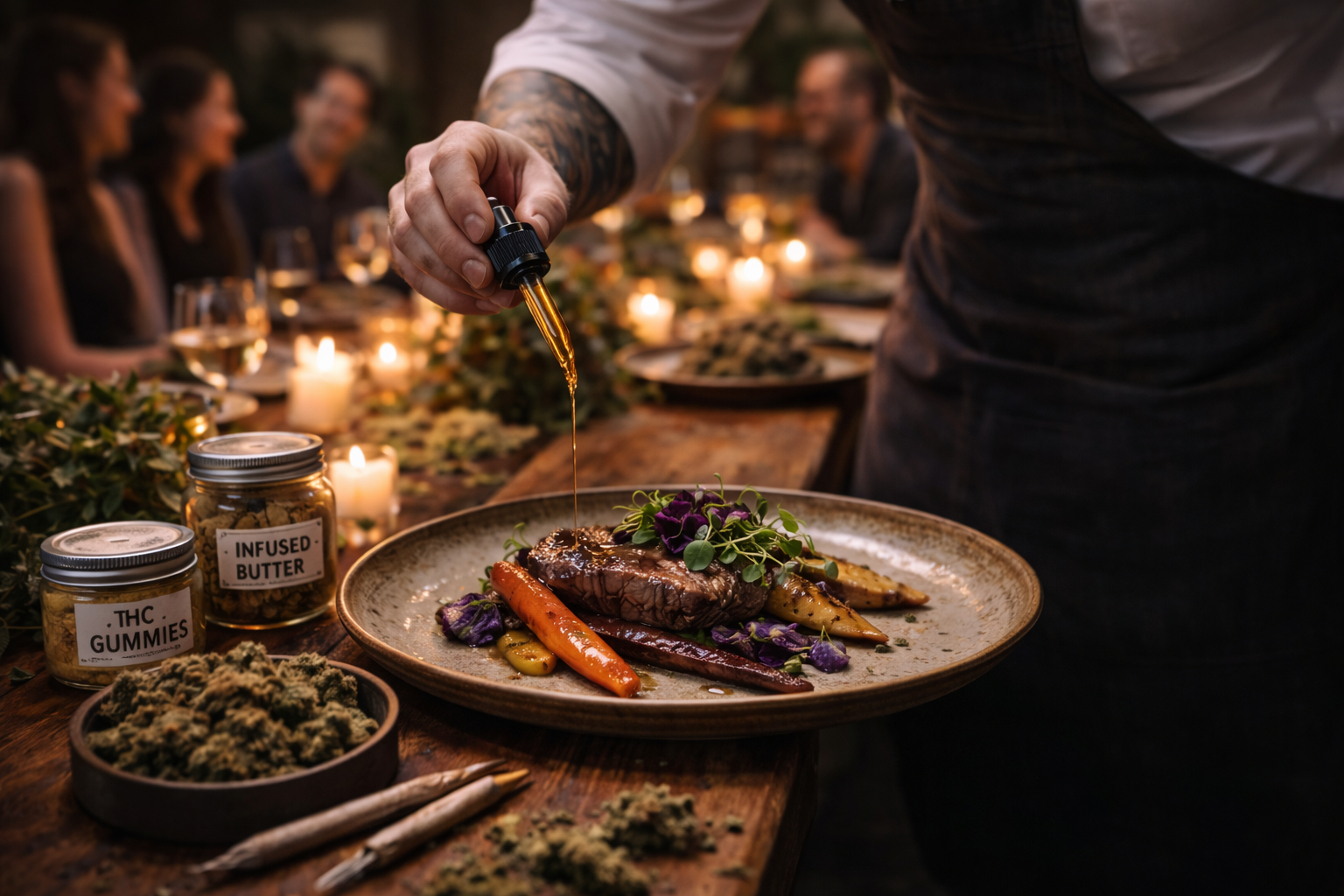
Chef drizzling cannabis infusion over a plated dish at an intimate infused dining experience.
In most markets, cannabis products can start to feel the same. A menu full of options, a race to the bottom on price, and customers who bounce to whoever has the freshest deal. That is what commoditization looks like, and it is exactly why more operators are looking for something that builds loyalty instead of just traffic.
That is where culinary collaborations come in.
The Guardian recently covered cannabis businesses partnering with chefs to create infused food experiences and creative activations. Think intimate dinners, pop ups, and limited releases that turn cannabis into a moment, not just a purchase. It is not only about getting people high. It is about creating a memory and making customers feel like they are part of something curated, thoughtful, and worth returning for.
This matters because it signals a real shift in strategy. When margins tighten and the market gets loud, operators start winning with experience, education, and community, especially in places where regulations allow culinary cannabis events.
If you are exploring activations, events, or premium experiences, make sure your operational plan and risk plan are tight. Start with our quick Cannashield intake form
Why culinary cannabis is showing up now
This trend is not happening in a vacuum. Many state legal markets have dealt with oversupply, pricing pressure, and tighter capital. When customers are trained to shop by discount, it becomes harder to keep them loyal to any one store, product line, or operator.
Culinary collaborations solve a few problems at once:
They create differentiation that is hard to copy overnight
They introduce a premium lane that does not rely on discounting
They pull in food culture, which expands the audience beyond heavy consumers
They turn marketing into an event people talk about, share, and remember
The Guardian story highlights activations like a Chicago deli and a dispensary collaborating on free pastrami sandwiches topped with cannabis infused mustard. That kind of crossover is the point. You are mixing familiar food culture with legal cannabis in a way that feels approachable, not intimidating.
Experiences build loyalty when products feel interchangeable
If you want the operator translation, here it is.
A customer who buys a gummy can easily buy that gummy somewhere else next week. A customer who attends an experience, has a good time, learns something, and feels taken care of is far more likely to come back and bring friends.
Experiential cannabis works because it creates:
1. Trust
Newer customers often want guidance, not intensity. A curated dining format can communicate safety, pacing, and education without preaching.
2. Story
A chef collab gives customers something to talk about beyond THC percentage. It becomes “I tried this amazing dinner” instead of “I bought an edible.”
3. Community
People come back for belonging. Events create familiarity. Familiarity creates repeat business.
This is the same playbook used in craft spirits, wine, and high end food. Cannabis is finally building its version of that, where allowed.
Infused food vs strain pairing and why it matters
One interesting detail in the Guardian coverage is that not every chef wants to go heavy on infusions. Some prefer pairing strains with dishes the same way wine gets paired with food. The logic is simple: edible onset time can be slow and unpredictable, while inhaled effects are more immediate and easier to pace in a guided setting.
From a business standpoint, this matters because it shapes the format of the experience. Operators and chefs are experimenting with different approaches:
Microdosed infused bites with clear serving guidance
Beverage pairings where dosing is controlled
Strain pairing menus focused on aroma, flavor, and mood
Multi sensory elements that make the experience feel premium
The bigger signal is that cannabis hospitality is becoming more thoughtful. It is moving away from novelty and toward craft.
If you are thinking about events, pop ups, or chef collaborations, do a quick reality check first on compliance, staffing, and risk controls. Complete our Cannashield questionnaire
The compliance and risk side operators cannot ignore
This lane can be powerful, but only if it is executed clean.
The risk is not just “getting in trouble.” The real risk is a poorly run event that creates a bad customer experience, a safety incident, or reputational damage that spreads fast.
Key issues to plan for:
Local rules and licensing: Some markets allow certain formats and others do not. Do not build a whole strategy on assumptions.
Dosing clarity: People need simple guidance. Start low, go slow, and clear timing expectations.
Age verification and access control: Tight entry protocols, wristband systems, and trained staff.
Food safety: Proper handling, allergen awareness, and consistent labeling for infused ingredients.
Intoxication management: A plan for pacing, water, food, and a calm approach if someone overdoes it.
Security and logistics: Crowd control, cash handling if applicable, and safe exit plans.
From a risk management perspective, events also touch multiple exposure areas like premises liability, product liability, and employee safety. The point is not to be paranoid. The point is to run it like a real business, not a party.
What smart operators take from this trend
If you are an operator watching this and thinking “we should do something like that,” you are not wrong. Just do it strategically.
Start with a simple path:
Pick one concept that fits your local rules
Keep dosing conservative and easy to explain
Make the experience feel welcoming and no stigma
Partner with a chef who understands consistency and flow
Document procedures like you plan to repeat it, because that is where the money is
Experiences are not a one off. The goal is repeatable activation that builds loyalty without burning your team out.
Conclusion
Culinary cannabis collaborations are not just a trend. They are a response to a mature market where product alone is not always enough to stand out. When operators create thoughtful experiences, they build loyalty, trust, and a premium lane that does not depend on constant discounts.
Where regulations allow it, experiential and culinary cannabis is turning into a legit marketing channel. The winners will be the ones who execute clean, educate customers, and treat hospitality like a real operational system.