
CBD still has no clear rules of the road and that is a real business problem
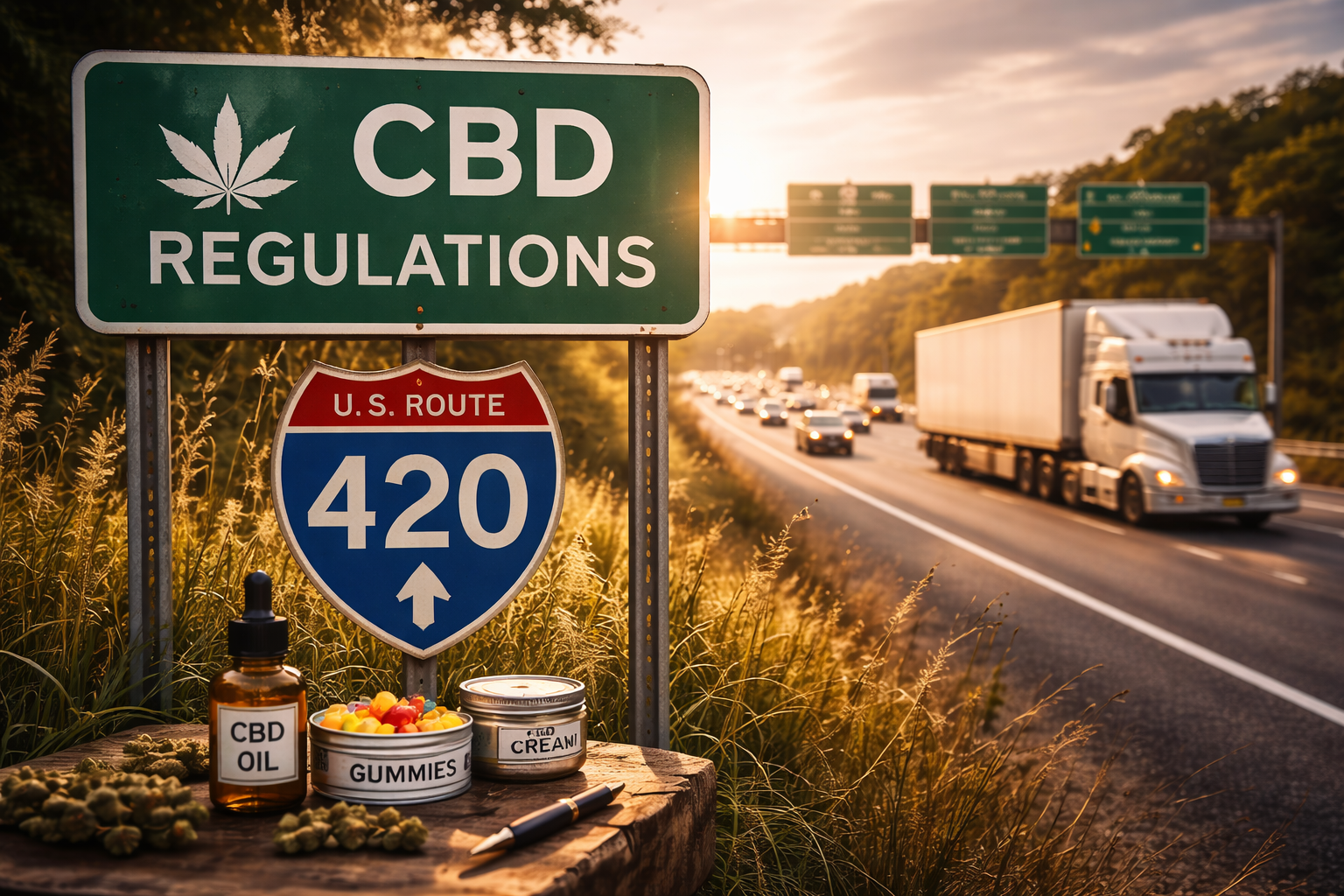
CBD regulations road sign on a highway symbolizing a national compliance framework for interstate CBD supply chains.
CBD is one of the most common hemp products in America. It shows up in tinctures, gummies, beverages, topicals, and everything in between. Consumers see it as normal. Retailers see demand. Operators see opportunity.
But behind the scenes, CBD has a giant problem: the rules are not consistent.
Right now, a CBD product can be treated one way in one state and completely differently in another. Labeling expectations change. Testing thresholds change. Serving size rules change. Some states allow certain product types and others restrict them. That patchwork creates “gotcha” risk for businesses that are trying to scale clean across state lines.
That is why the latest push in Congress matters. A national framework has been proposed that would create a clearer federal pathway for CBD and certain consumable hemp products, replacing the current patchwork with a more predictable compliance lane. For operators, this is not just policy talk. It impacts supply chains, retail expansion, and how confident mainstream partners feel carrying CBD products.
If you sell CBD or hemp derived products, or you operate licensed cannabis and compete in overlapping categories, Start with our quick Cannashield intake form
Why the patchwork hurts serious operators
The “rules of the road” issue sounds boring until you are the one paying for it.
Here is how the patchwork shows up in real business pain:
Distribution gets messy. A product that is fine in one state can trigger enforcement attention in another.
Labels become liability. If your label language, serving sizes, or cannabinoid disclosures do not match a state’s expectations, you risk pull offs and complaints.
Retailers hesitate. Big retailers hate uncertainty. If compliance is unclear, they stay away, or they demand heavy indemnities.
Supply chains get fragile. When requirements vary by state, you end up running multiple versions of the same product and packaging. That drives mistakes and waste.
Insurance and capital stay cautious. When the category feels unstable, partners assume higher risk.
This is why a federal framework matters even if you are not a policy person. It reduces randomness, and randomness is expensive.
What a national CBD framework could change
A federal pathway does not mean “anything goes.” It usually means the opposite. More clarity, more standards, more enforcement consistency.
The proposed direction includes regulated sales of certain consumable hemp products for adults, plus clearer expectations around manufacturing, packaging, and marketing. It also points toward setting maximum cannabinoid levels by product type, which is a big deal because it creates a predictable line for what is allowed. If that kind of framework sticks, operators would finally have a baseline playbook to build around.
For legit businesses, the upside is huge:
Cleaner compliance standards
Fewer cross state surprises
More confidence for mainstream retail
A stronger lane for long term investment
And for the “wild west” side of the market, it means the clock starts running out.
If you want a fast checklist of what would likely get flagged under a tighter national framework, Complete our Cannashield questionnaire
Why this matters for interstate supply chains
The biggest win of a national framework is not headlines. It is operational stability.
When rules are consistent, you can build a supply chain that scales:
One set of labeling standards instead of ten
Standard COA access and batch tracking
Cleaner vendor agreements and manufacturing specs
Less rework and fewer packaging variations
More predictable shipping and distribution planning
That is how you move from “we can sell this locally” to “we can scale this nationally without waking up to a compliance fire.”
It also changes consumer trust. When products follow consistent rules, customers get clearer dosing information, clearer cannabinoid disclosures, and fewer mystery products that make the whole category look sketchy.
What licensed cannabis operators should watch
Even if you do not sell CBD, this still hits you.
A clearer federal CBD framework can open more mainstream retail lanes for hemp products. That can increase competitive pressure in wellness adjacent categories like topicals, tinctures, and low dose formats that overlap with licensed cannabis buying behavior.
At the same time, regulation can reduce the chaos that has frustrated everyone, including licensed cannabis operators who have watched hemp products live outside the guardrails.
Operator takeaway: do not treat this as “hemp news.” Treat it as market structure news. The lines between categories get redrawn when federal rules show up.
What smart operators do right now
You do not wait for a final vote to start acting like a regulated business.
If you want to stay ahead of the curve, tighten these areas:
Label audit: Make sure cannabinoid disclosures, serving sizes, and claims match your lab results and do not overpromise.
COA workflow: Batch specific COAs should be easy to access and easy to match to the product in hand.
Packaging discipline: Aim for child resistant and tamper evident where appropriate, and avoid anything that could be interpreted as youth appeal.
Manufacturing documentation: SOPs, batch records, and corrective actions should be organized, not scattered.
Distribution mapping: Know where your product moves, who touches it, and which states create the most compliance friction.
Recall readiness: Have a basic plan. Even if you never use it, it signals seriousness.
This is how you keep “gotcha” risk from turning into expensive surprises.
Conclusion
CBD demand is real, but the patchwork rulebook has kept the category unstable for years. A national framework could replace the current gray zone with clearer standards, fewer cross state traps, and more mainstream retail confidence. For serious operators, that is a path to cleaner scaling and stronger supply chain planning.
The move is simple: tighten your compliance now, so when the rules get clearer, you are already operating like you belong in the next phase of the market.