
Washington cannabis bills are moving early and operators should care
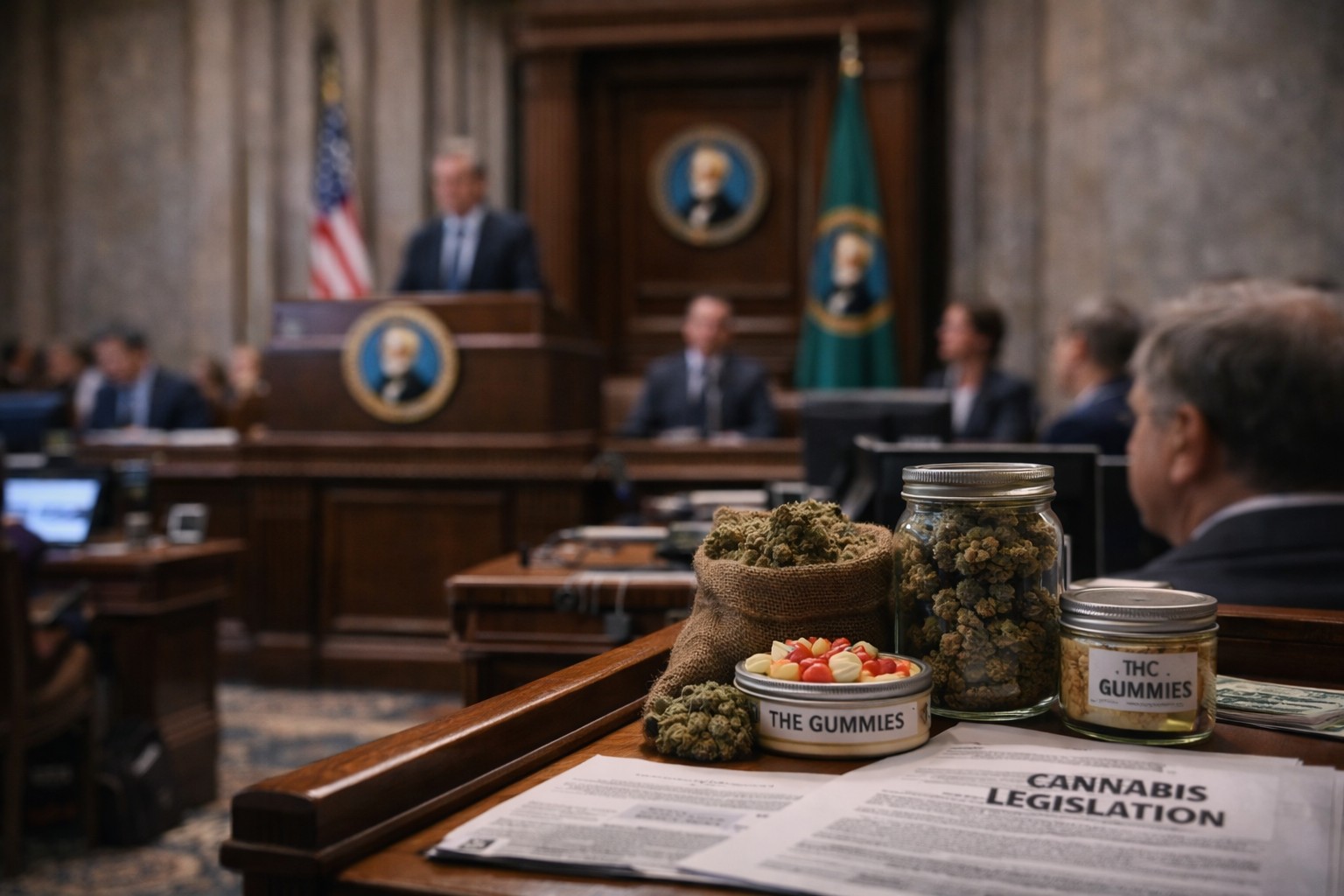
Cannabis products beside a legislative document in a government hearing room representing Washington state cannabis bill updates.
Most operators track federal headlines, but the rules that hit you fastest are usually state level. Licensing standards, testing requirements, production limits, and what you can do day to day are shaped in state capitols long before the rest of the market notices.
That is why early session movement in Washington matters. Even when a bill sounds technical, it can change how regulators enforce, how much compliance costs, and how competitive pressure shows up across the supply chain. If you operate in Washington, these updates can affect real decisions like staffing, SOPs, production planning, and expansion. If you operate across multiple states, it is an early indicator of where regulation is tightening or opening.
If you want to pressure test how policy changes could impact your compliance, operations, and risk posture,. Start with our quick Cannashield intake form
The bills moving first usually signal the direction of travel
The first bills to get traction are rarely random. They tend to fall into a few predictable lanes:
Transparency and oversight of regulators
Quality control and testing standards
Supply pressure and market stabilization
Consumer access rules, including home grow
New “experience” lanes like hospitality and tourism adjacent ideas
Equity and reinvestment funding mechanics
Washington’s early movement touches almost all of those lanes, which is exactly why this is worth watching. It is not one change. It is a pattern.
Testing and transparency are getting attention for a reason
Two bills that moved early focus on how the Washington State Liquor and Cannabis Board reports data and how cannabis testing labs are regulated.
Data dashboard requirements
One proposal would require the regulator to publish and update a public facing dashboard that tracks outcomes across regulated substances, including cannabis. The practical operator takeaway is that more reporting usually leads to more questions. When the data becomes easier to access, it becomes easier for lawmakers, media, and advocates to push for changes based on what the numbers show. That can be good for serious operators, but it also means your category gets watched more closely.
Lab certification clarity
Another bill aims to clarify the regulator’s role in oversight of private cannabis testing labs that are accredited by the state Department of Agriculture. Operators should watch this closely because testing is the backbone of product compliance, product safety, and consumer trust. When authority and standards get clarified, enforcement tends to get sharper. The upside is more consistency. The downside is less tolerance for sloppy processes.
Supply pressure is being addressed directly
One of the most operator relevant proposals is designed to prevent oversupply. This bill would apply revenue thresholds to certain producer tiers at license renewal. If a tier producer does not meet minimum gross sales thresholds, the producer could be converted to a smaller tier with a reduced production area.
Operator translation: this is an attempt to control market glut by forcing consolidation of canopy where revenue does not support current scale. If you are a cultivator, this is not abstract. It can affect renewal planning, facility footprint, and how you forecast sales. It also impacts buyers and manufacturers because supply conditions influence wholesale pricing, contract leverage, and margin pressure.
If you want a quick checklist to identify where legislative changes can create compliance or operational surprises, Complete our Cannashield questionnaire
Home grow and hospitality concepts signal shifting access expectations
Two other proposals show how the market keeps testing new access lanes.
Home cultivation
Home grow legislation is back again. The current version would allow adults 21 and older to cultivate a limited number of plants at home, with a household cap, plus restrictions related to visibility and odor. It also outlines civil penalties for certain violations and stronger penalties for higher plant counts.
Whether you support home grow or not, operators should view it as a consumer behavior issue. Home grow changes parts of the funnel. It can affect entry level flower demand, consumer education needs, and enforcement priorities. It also creates a compliance conversation around what is legal at home versus what is legal in commerce.
Short term rental complimentary pre rolls
Another bill would create an annual permit for short term rental operators to offer complimentary pre rolled cannabis products to adult guests after age verification. This is a tourism adjacent idea and it is a clear signal that some lawmakers are testing “experience” lanes beyond retail stores.
For retailers and producers, this matters because new distribution models usually come with new rules, new enforcement questions, and new competition for consumer attention. Even if it never becomes law, it shows the direction of creativity in the market.
Producer cooperatives and reinvestment updates point to structural changes
Two more items are worth watching for longer term market structure.
Producer cooperatives
Legislation to authorize cannabis producer cooperatives would treat licensed cannabis producers more like traditional agricultural producers by allowing cooperative style associations for processing, marketing, and other intrastate activities. This is aimed at giving smaller producers tools to survive, share resources, and strengthen bargaining power.
Community reinvestment program revisions
A companion bill focuses on revisions to the community reinvestment program, including plan updates, reporting, and program review. For operators, these changes matter because reinvestment and equity frameworks can influence licensing rules, grant pathways, and how the state justifies future policy decisions tied to cannabis revenue.
What multi state operators should take from this
Do not wait for final votes to start planning. Early movement tells you where attention is building.
A simple operator playbook looks like this:
Track bills that change testing, enforcement, and production economics
Assume reporting and oversight trends increase scrutiny over time
Strengthen documentation and SOPs before rules tighten
Build scenario planning for supply shifts, home grow effects, and new distribution models
The operators who win are the ones who treat policy like weather. You do not argue with it. You plan for it.
Conclusion
Culinary cannabis collaborations are not just a trend. They are a response to a mature market where product alone is not always enough to stand out. When operators create thoughtful experiences, they build loyalty, trust, and a premium lane that does not depend on constant discounts.
Where regulations allow it, experiential and culinary cannabis is turning into a legit marketing channel. The winners will be the ones who execute clean, educate customers, and treat hospitality like a real operational system.