

DEA Cannabis Rescheduling Is Still Pending In 2026 And Cannabis Remains Schedule I
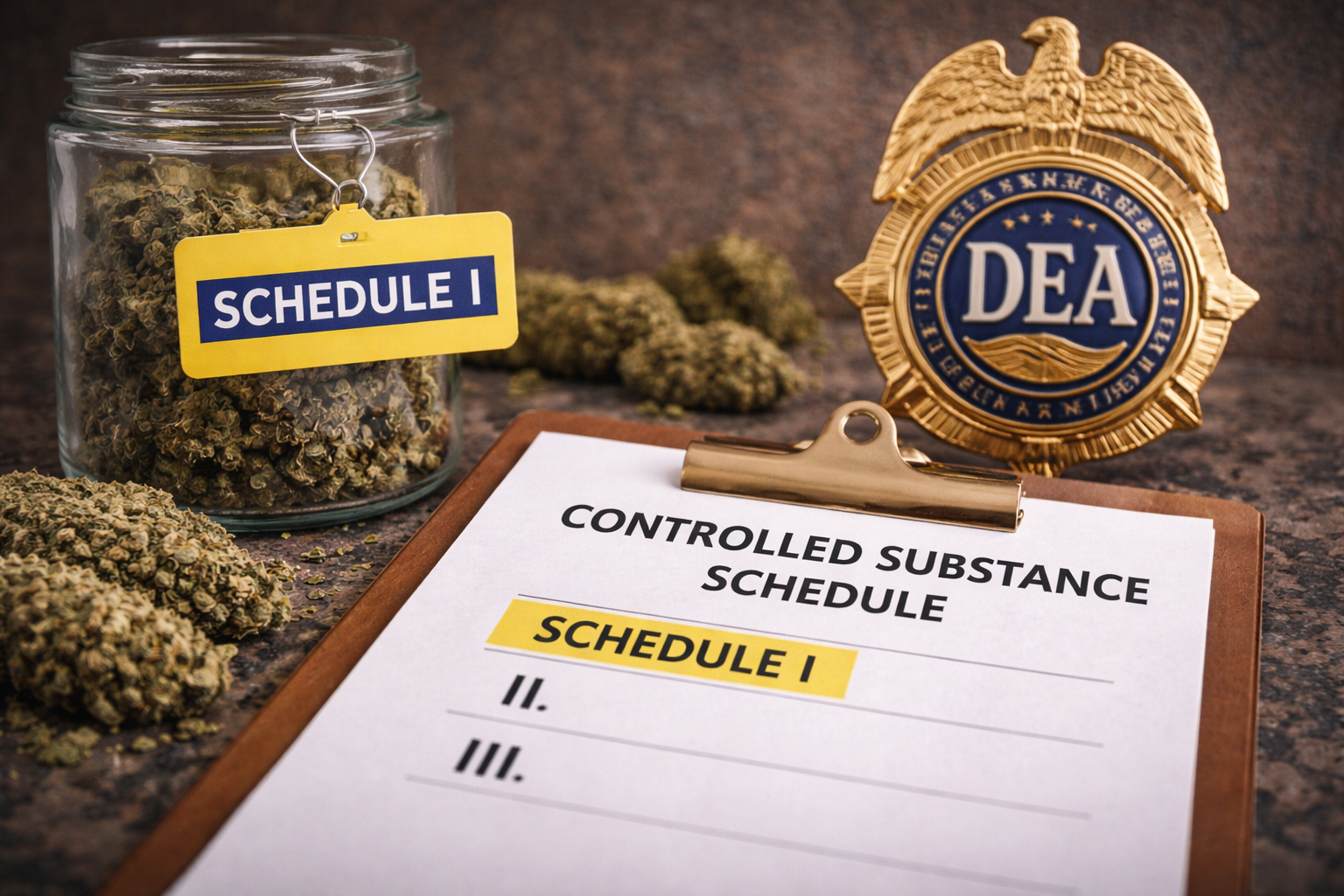
Controlled substance form next to cannabis flower and DEA badge indicating cannabis remains Schedule I in 2026
DEA rescheduling status 2026 is unchanged in the only place that counts for planning: the Federal Register. There is still no final rule moving cannabis to Schedule III, so cannabis remains Schedule I at the federal government level and nothing immediate changes for taxes, insurance workflows, or compliance expectations.
Quick facts
• The federal government published a proposed rule in May 2024 to move cannabis to Schedule III
• The DEA later published a notice of hearing tied to that proposal
• The DEA 2026 Federal Register index shows routine scheduling actions and administrative notices, but no rescheduling final rule during this window
• Until a final rule is published, cannabis stays in Schedule I and the current federal government friction remains the operating baseline
If rescheduling uncertainty is affecting how you negotiate, finance, or renew, Start with our quick Cannashield intake form so you can map exposure and plan for multiple outcomes.
What The Federal Register Is Telling You Right Now
Two things can be true at once. A rescheduling process can be real, and it can also be unfinished. The May 2024 proposed rule was the start of formal rulemaking. The August 2024 hearing notice was another process step. Neither of those documents is a final rule.
If you want to verify the current status without relying on headlines, use the DEA agency index for the current year. The 2026 index lists dozens of DEA documents like routine scheduling actions for other substances and administrative notices. It does not show a final rule for cannabis rescheduling in this window.
Universal operator lesson: do not build your plan on a rule that is not final. Build your plan on what is enforceable today.
What Stays The Same Until A Final Rule Exists
Until the schedule actually changes, the practical business environment stays the same in the areas operators care about most.
Taxes and cash planning: do not budget as if a new federal tax posture is guaranteed to land on your timeline. Treat any future change as upside, not as a required pillar of your model.
Insurance and contracts: most counterparties will continue to operate with conservative language, conservative underwriting posture, and strict documentation expectations because the federal government classification has not moved.
Banking and payments: expect continued friction and inconsistent access across providers because nothing in the schedule has changed yet.
This is not pessimism. It is survival math. When you plan conservatively, you stay stable. When you plan based on timing guesses, you get forced into ugly decisions like cutting staff, pausing inventory, or accepting bad terms.
High Impact States And Emerging Markets Still Run On State Rules
Rescheduling headlines can distract people from the real drivers of day to day performance: state taxes, local access, enforcement posture, and supply pressure.
In high impact states, the biggest swings in profitability usually come from tax structure, compliance cost, and price compression, not from federal rumor cycles. In emerging markets, the bigger determinant is still local permitting speed and how quickly licensed retail comes online.
Universal operator lesson: state rules decide your revenue, but federal government uncertainty decides how cautious your partners will be.
How To Plan Without Freezing Your Strategy
The smartest move is not to wait. The smartest move is to build optionality.
Write down the decisions you are delaying because of rescheduling. Leases, buildouts, hiring, partnerships, acquisitions.
Convert each decision into a version that works under current rules. Shorter commitments, clearer exit clauses, smaller phased spend, tighter vendor terms.
Run a simple weekly check of the Federal Register and stop there. If a final rule is published, you act. If it is not, you keep executing.
If you want a one page weekly federal watch routine and a scenario tracker your team can follow, Complete our Cannashield questionnaire and request it here.
What To Say To Clients, Partners, And Your Team
Keep the message boring and consistent.
No final rule means no automatic shift in compliance requirements, no automatic shift in taxes, and no automatic shift in insurance posture. When a final rule exists, you reassess. Until then, you run the business like the rules are unchanged, because they are.
If you want a deal room checklist that keeps you diligence ready regardless of federal timing, use the Cannashield intake form and request the documentation folder structure.
Conclusion
As of this update, the proposed move to Schedule III remains pending and there is no published final rule in the DEA 2026 Federal Register index during this window. The operator takeaway is simple: keep executing under today’s rules, keep your documentation clean, and stay ready to move if and when the federal government publishes a final rule.
What To Do This Week
• Assign one person to check the DEA Federal Register index once a week and log the result
• Rewrite your next major decision as two scenarios: status quo and rescheduling final later
• Tighten your documentation folder for COAs, invoices, tax filings, and key contracts so you can answer questions fast
• Review your top five counterparties and update your compliance proofs so renewals do not stall
• Reduce long commitments that were justified only by rescheduling timing
• Train staff on one line: nothing changes until a final rule is published
FAQ
Is cannabis rescheduled to Schedule III today
No. The May 2024 action is a proposed rule, and no rescheduling final rule appears in the DEA 2026 index during this window.What is the last confirmed federal government step in the process
The proposed rule published in May 2024 and the later hearing notice.Does a proposed rule change anything for operators
Not by itself. Schedules change when a final rule is issued and published.Why does this matter for taxes and insurance
Because many partners and workflows follow the current federal government classification until a final rule changes it.What should operators do while waiting
Plan conservatively, keep optionality, and keep documentation clean so you are ready for diligence and scrutiny.What is the universal operator lesson
Discipline beats prediction. Build for today’s rules and treat future change as upside.