
Connecticut Cannabis Potency Bill Advances With High Potency Label Plan
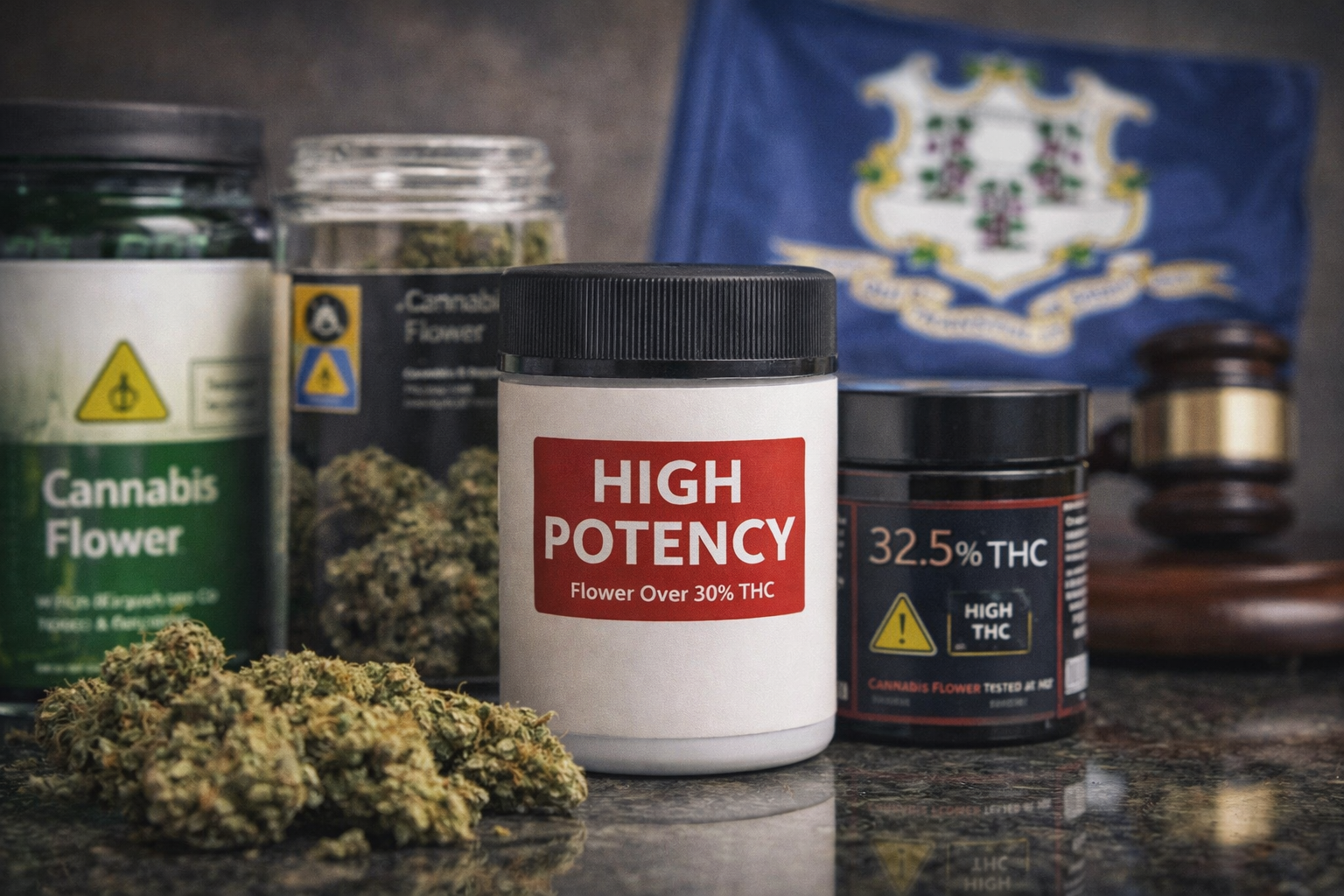
High potency cannabis packaging with a 32.5 percent THC label representing Connecticut labeling proposal
Connecticut lawmakers just moved a bill that would reshape how potency is handled in the legal market, with a new “high potency” labeling approach for stronger flower. If you sell, manufacture, insure, or finance cannabis in Connecticut, this Connecticut high potency cannabis label proposal is a real operational signal because potency rules affect product design, testing workflow, labeling, and retail education.
Quick facts
• A key legislative committee advanced the bill and it now heads to the full House for consideration
• Flower above 30 percent THC would require a “high potency” label
• The bill shifts away from hard potency caps and leans on disclosure and warning language for higher potency products
• Edible serving limits largely stay in place, with a small allowance for lab margin of error
• Proposals for on premises consumption sites and allowing alcohol venues to serve cannabis infused drinks were removed from the version that advanced.
If Connecticut rule changes affect how you stock, label, or educate customers, Start with our quick Cannashield intake form so you can pressure test your exposure and update your compliance checklist.
What The Committee Just Signaled
The most important takeaway is not whether Connecticut wants stronger products. It is how the state is trying to manage potency risk while staying competitive with neighboring markets.
According to reporting, lawmakers framed the change as a practical fix for growers who end up slightly above the current limits and do not want to destroy product. That is a real cost issue in a tight margin market. The committee also pulled back on expanding new consumption environments, removing proposals that would have allowed cannabis to be sold and consumed on site and removed the concept of alcohol venues serving cannabis infused drinks.
Universal operator lesson: when lawmakers tighten or loosen rules, they usually separate two things. Product rules they can manage through labeling and testing, and consumption settings that create wider liability and enforcement headaches.
How The High Potency Label Changes Retail Behavior
A “high potency” label at a 30 percent THC threshold does two things at once.
First, it creates a disclosure standard that retailers can operationalize. Staff can point to the label, educate customers on serving discipline, and keep conversations consistent without improvising.
Second, it changes product merchandising. The minute a state creates a high potency marker, customers start asking for it, and regulators start expecting retailers to treat it responsibly. That means you will want a consistent shelf placement strategy, consistent staff language, and a clean way to document that you are not marketing to minors or encouraging unsafe use.
The bill text also links the label to a warning concept that higher potency products may increase the risk of psychosis, which is a clear signal that public health framing is part of the regulatory intent.
Universal operator lesson: when disclosure becomes the tool, documentation becomes the defense. Keep your COAs, batch records, and label proofs organized so you can show you did it right..
If uncertainty is affecting how you plan or negotiate, Complete our Cannashield questionnaire to pressure test your labeling workflow, COA storage, and staff training approach before rules change again.
Why This Matters For Manufacturers And Product Teams
Potency rules do not just affect what is on the shelf. They affect how you manufacture and how you test.
The bill text points toward maintaining edible serving limits with a narrow allowance tied to laboratory margin of error. That means edible producers should keep serving precision tight and expect continued scrutiny.
For flower and concentrates, the bill text indicates a move away from dosage, potency, and concentration limits, paired with labeling requirements for higher potency products. That is a meaningful pivot. It shifts the compliance burden from “do not exceed” to “disclose and warn correctly.”
For operators, this is the real play: treat labeling as a production step, not a last step. If labeling is wrong, everything downstream becomes a recall, a stop sale, or a retailer relationship problem.
Universal operator lesson: mature markets stop arguing about whether products exist and start arguing about how they are labeled, tested, and sold.
Why The Removed Proposals Still Matter
Even though the committee removed on premises consumption and the alcohol venue drink concept, the fact those ideas were in the conversation tells you where policy pressure is going next. Connecticut is still in the phase where lawmakers are trying to balance competitiveness, safety, and enforcement practicality.
For operators, the lesson is to avoid building your business model on “maybe.” Build it on what the state is willing to regulate today: licensed retail, controlled products, and clear disclosures.
If you want a Connecticut specific policy watchlist template and a product rules checklist your team can update weekly, Cannashield intake form to request it.
Conclusion
Connecticut’s committee vote is a clear signal: the state is willing to modernize potency handling through high potency labeling and clearer product standards, while still declining to expand into more complex consumption settings right now. The winners will be the operators who can execute disclosure, documentation, and staff training with discipline, not the ones who chase every new policy rumor.
Educational note: This article is for education only and is not legal advice.
What To Do This Week
• Audit your current flower menu and flag every SKU that tests above 30 percent THC
• Draft a staff script for “high potency” products that focuses on responsible use and clear serving discipline
• Centralize COAs and batch records so you can retrieve proof for any SKU in minutes
• Review label layout and ensure the potency callout is consistent across packaging formats
• Update vendor intake to require lab documentation and batch identifiers on every inbound lot
• Add this Connecticut bill to your policy watchlist and track House floor movement weekly
FAQ
What would Connecticut require for flower over 30 percent THC
A “high potency” label would be required for flower above the 30 percent threshold.Does the bill only affect flower
The bill text also references warning and labeling concepts tied to higher potency products, not only flower.Are edibles getting stronger under this proposal
Edible serving limits largely remain, with a limited allowance tied to lab margin of error.What happened to consumption sites and cannabis drinks in alcohol venues
Those proposals were removed from the version that advanced out of committee.Why do these “quiet regulations” matter so much
Because labeling and potency rules can change unit economics, inventory planning, and compliance risk overnight without changing licensing.What is the universal operator lesson
When states shift from hard caps to disclosure, your compliance edge becomes documentation and consistent execution.