
EU Drugs Agency Flags Cannabis Potency Surge and Contamination Risk

Lab technician analyzing cannabis flower for EU compliance testing.
Europe’s cannabis market is facing a sharper product safety conversation. Business of Cannabis reports that the European Union Drugs Agency’s 2026 annual report warned about rising cannabis potency across Europe and flagged contaminated imported supply as an emerging public health concern. For operators, exporters, testing labs, manufacturers, compliance teams, and investors, this is more than a public health headline. It is an EU cannabis compliance signal. When potency rises and contamination concerns grow, quality control, pesticide screening, import documentation, and product testing move closer to the center of the business model.
Quick facts
• Business of Cannabis reports that the EU Drugs Agency warned about rising cannabis potency across Europe
• The report estimated that about 25 million European adults used cannabis in the past year
• Seized cannabis resin averaged 24.6 percent THC in 2024
• That resin potency level was about 66 percent higher than a decade earlier
• Business of Cannabis also reported concern around pesticide contaminated North American supply entering Europe
• Reuters reported that lower prices and overproduction in North America may be incentivizing cannabis sourcing into Europe
• The universal operator lesson is simple: when product strength and contamination concerns rise together, testing and documentation become market access tools
If Europe’s product safety pressure is affecting your growth plan, complete our quick Cannashield intake form so you can map testing, supply chain, and insurance exposure before quality control gaps become a bigger problem.
Why this matters now
The big story is not just that more people are using cannabis or that stronger products are circulating. The bigger issue is that product safety expectations are tightening at the same time supply chains are getting more complicated. That combination creates pressure for everyone in the channel.
A more potent product is not automatically a noncompliant product, but higher potency raises the stakes. Label accuracy matters more. Batch consistency matters more. Consumer safety questions matter more. If product strength rises while imported supply also faces contamination concerns, regulators and market participants will look harder at what is being sold, how it was handled, and whether the paperwork supports the product.
Why imported supply risk is a business issue
Europe has become more exposed to cross border cannabis flow, and that means imported product risk is becoming a business problem, not just a regulatory issue. Reuters reported that EUDA warned cannabis is now flowing from Canada and the United States as regulatory changes and overproduction in North America create export pressure. Business of Cannabis added that contaminated supply is part of the concern.
For exporters and manufacturers, this is a serious reminder that market access does not end when product leaves the facility. If pesticide residues, inconsistent potency, poor storage, or weak chain of custody records show up downstream, the commercial damage can spread fast. Labs, distributors, and buyers all become part of the exposure.
This is the universal operator lesson. A product is only as strong as the records, testing, and controls behind it.
If uncertainty around imported supply, lab standards, or product documentation is affecting how you plan, complete our Cannashield questionnaire to pressure test your exposure before a testing failure or shipment problem forces the issue.
Why testing labs and compliance teams matter more
Testing labs and compliance teams are likely to feel this pressure first. When authorities start talking more openly about potency drift and contamination, the market starts asking harder questions. Were the right pesticides screened. Was the sample representative. Were storage conditions controlled. Did the batch record match the final packaged product. Can the exporter support the chain of custody.
This is where disciplined operators separate themselves. Strong labs, clean certificates of analysis, consistent specifications, and documented supplier controls can help reduce friction with distributors, buyers, and regulators. Weak records do the opposite. They create delay, distrust, and possible enforcement exposure.
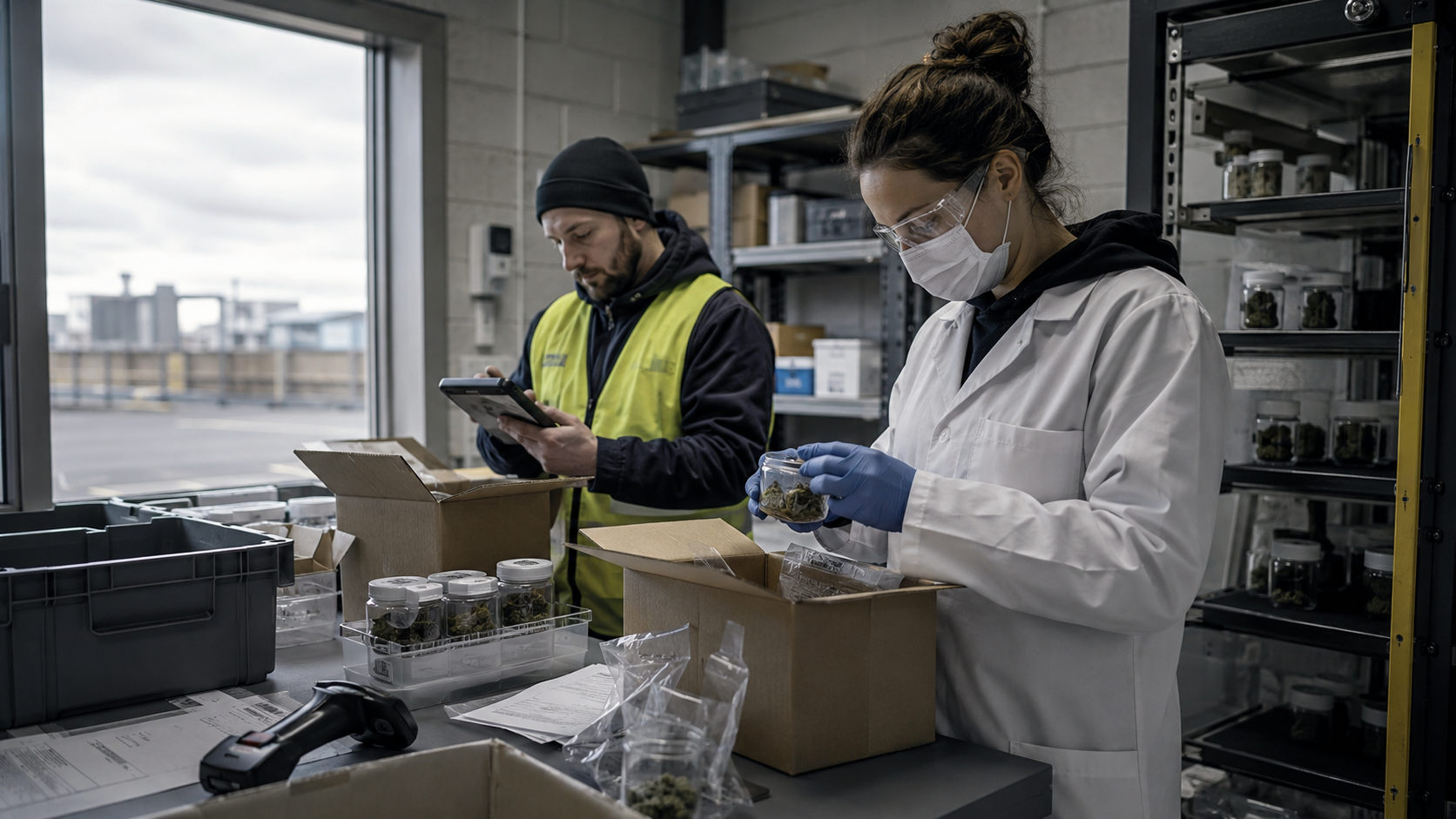
Technician verifying cannabis samples and packaging for EU compliance.
The broader operator lesson
It is tempting to read this as a narrow public health story. It is more useful to read it as a commercial warning. Europe remains an attractive cannabis market, but attractive markets usually become more demanding over time. As more product moves across borders and potency keeps rising, tolerance for sloppy compliance usually falls.
Operators should assume that future scrutiny may expand around potency statements, testing methods, pesticide screening, supplier verification, and import documentation. Investors should also pay attention. Quality control problems can damage margin, distribution, reputation, and expansion strategy all at once.
If you need to organize testing records, supplier files, import documents, and insurance materials before European scrutiny gets tighter, use the Cannashield intake form to identify weak points and build a cleaner compliance file.
You might also like


Conclusion
The EU Drugs Agency warning is a clear sign that Europe’s cannabis market is entering a more demanding phase. Rising potency, product contamination concerns, and imported supply pressure are pushing testing, documentation, and quality control into a more strategic role.
For operators, exporters, manufacturers, labs, and compliance teams, the message is simple. Do not treat product safety like a back office function. In Europe, it is becoming part of market access itself.
Educational note: This article is for education only and is not legal, regulatory, medical, financial, or insurance advice.
What To Do This Week
• Review pesticide screening protocols for all inbound and outbound cannabis products
• Check whether potency claims match current testing and packaging records
• Audit supplier qualification files and import documentation for completeness
• Confirm chain of custody and storage records are easy to retrieve
• Review certificates of analysis for batch consistency and clear reporting
• Build a short internal memo on European product safety exposure and testing readiness
FAQ
What did the EU Drugs Agency warn about?
The agency warned about rising cannabis potency in Europe and broader health risks in a fast moving drug market.
How many adults in Europe reportedly used cannabis?
Business of Cannabis reported that the annual report estimated about 25 million European adults used cannabis in the past year.
How strong was seized cannabis resin?
The reported average THC level for seized cannabis resin in 2024 was 24.6 percent.
Why are operators concerned about imported supply?
Because contamination concerns, including possible pesticide exposure, can create testing, compliance, and market access problems.
Why do testing labs matter more now?
Because stronger products and contamination risk increase the importance of accurate potency testing, pesticide screening, and reliable batch documentation.
What is the biggest operator takeaway?
Quality control, testing, and import documentation are becoming more important commercial tools as Europe increases scrutiny.
SOURCES
Business of Cannabis, Cannabis News Today Wednesday 10 June 2026
https://businessofcannabis.com/cannabis-news-today-wednesday-10-june-2026-trulieve-begins-nyse-trading-as-virginia-nears-a-deal-and-europe-sounds-potency-alarm/
The European Union Drugs Agency, European Drug Report 2026: Trends and Developments
https://www.euda.europa.eu/publications/european-drug-report/2026_en
Reuters, Europe faces growing synthetic opioids risks as drug market evolves, EU agency warns
https://www.reuters.com/legal/litigation/europe-faces-growing-synthetic-opioids-risks-drug-market-evolves-eu-agency-warns-2026-06-09/

California expanded cannabis recalls after regulators suspended a Lake County cultivation operation tied to suspected pesticide exposure and a worker death investigation. The case highlights serious operator risk around pesticide controls, worker safety, track and trace accuracy, product recalls, environmental compliance, and insurance claims.