
Fairfield Enforcement Action Shows Why Cannabis Compliance Still Matters
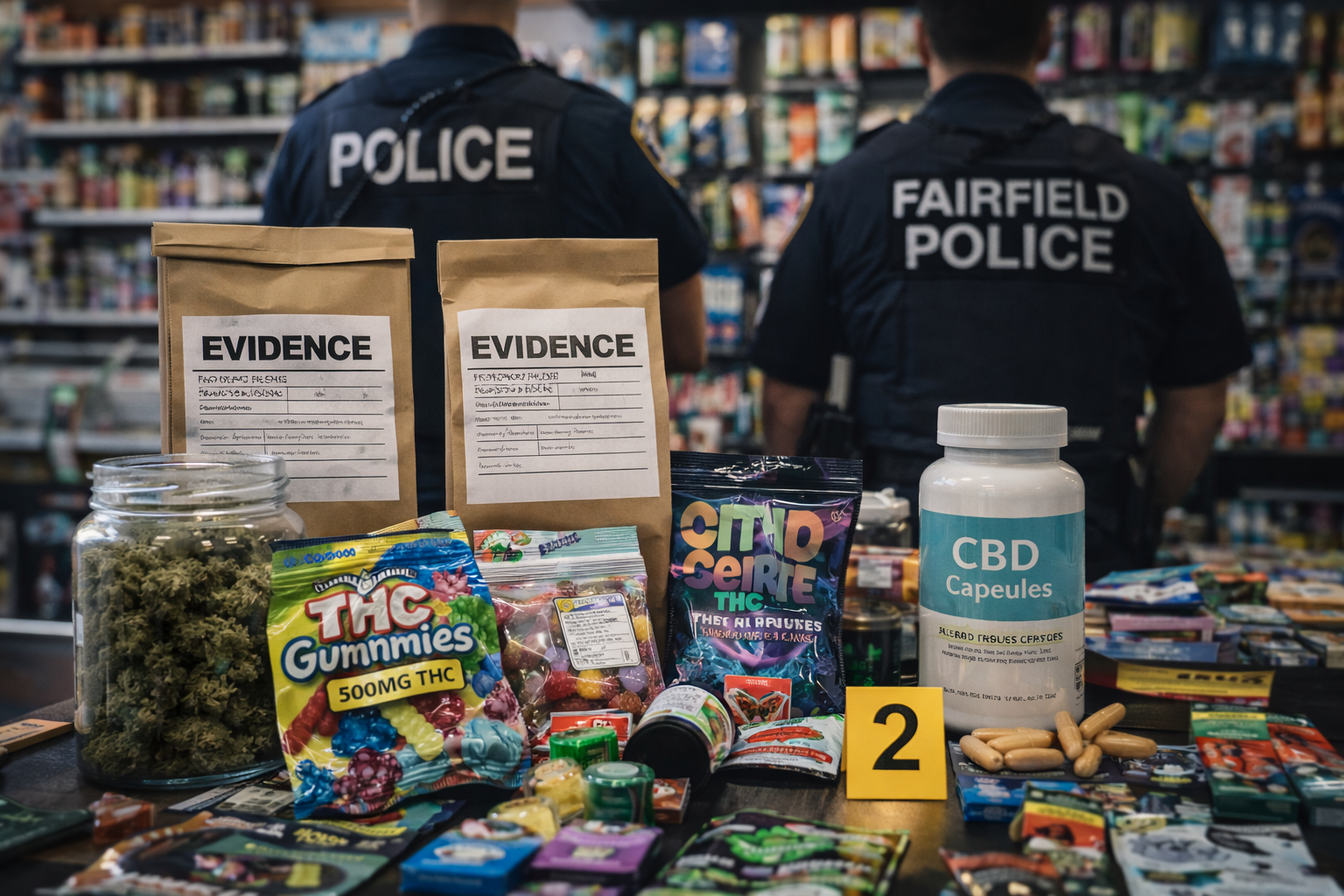
Seized cannabis products and gummies displayed by Fairfield police after smoke shop enforcement action
Fairfield, Connecticut is a clean reminder that cannabis compliance is not a vibes topic, it is market access. Police said they arrested two people tied to a local smoke shop after complaints that unlicensed cannabis products were being sold to minors, and the case also led to additional shop closures tied to compliance inspections. For operators, the signal is simple: when a community believes unlicensed sales are targeting kids, enforcement gets loud fast, and the fallout can ripple across every retailer in town.
Quick facts
• Police said the investigation led to two arrests tied to alleged unlicensed cannabis sales involving minors
• Police said a November search at US 1 Vape and Smoke Convenience resulted in 347 seized units totaling about 7.6 pounds of THC
• Police said compliance inspections helped trigger closures of other smoke shops tied to labor related violations
• Connecticut consumer guidance says high THC hemp products may only be sold by licensed dispensary facilities, cannabis retailers, and hybrid retailers
• Connecticut statute makes selling, delivering, or giving cannabis to someone under 21 by a person 23 or older a class A misdemeanor if the seller knew or should have known the age
If this kind of enforcement pressure could affect your retail plan, Start with our quick Cannashield intake form so you can map your exposure, vendors, and controls before renewal season.
Why This Matters Beyond Fairfield
This is not just a Fairfield story. It is the blueprint for how smaller markets behave when local trust gets shaken.
When unlicensed products show up in a retail environment that looks legitimate from the outside, customers do not separate “that shop” from the whole category. Parents get angry. Local officials get heat. Then enforcement becomes a public reassurance tool, not just a regulatory step.
Universal operator lesson: in small markets, one bad actor can trigger a town wide credibility problem. The operators who survive are the ones who can show, quickly, that their sourcing, age controls, and documentation are clean.
The Compliance Failure Pattern That Triggers Crackdowns
Most of these cases follow a familiar pattern.
First, the product channel is wrong. High THC items, or products presented as hemp but functioning like cannabis, end up in stores that do not have the right license to sell them. Connecticut’s own consumer guidance is clear that certain THC product categories are restricted to licensed cannabis retail channels.
Second, age controls are weak. When the allegation involves minors, the community reaction is immediate. It is not a debate about business rules. It is a safety story. Connecticut law also treats providing cannabis to people under 21 as a serious issue, which is why this is the fastest way to turn a routine inspection into charges and closures.
Third, documentation is missing or sloppy. In enforcement focused moments, nobody cares about your intent. They care about what you can prove. Vendor paperwork, testing documentation, inventory logs, employee training, and clear age verification procedures are the difference between a fast resolution and a long nightmare.
What This Means For Licensed Operators In 2026
Enforcement against unlicensed channels is a two edged sword.
On one side, it can protect the licensed market by reducing illegal competition and tightening consumer trust. On the other side, it increases scrutiny across the whole category. When a town gets rattled, inspectors, landlords, and neighboring businesses ask more questions.
That is why licensed operators should treat enforcement headlines as an opportunity to strengthen their positioning through boring excellence.
Make it easy for anyone to understand what you sell, why it is compliant, and how you prevent underage access. Train staff to be calm, consistent, and strict on ID checks. Tighten your sourcing standards so you are not relying on handshake vendors. Keep incident logs and customer complaint handling clean so you can show you operate like a real regulated business, because you are one.
If uncertainty is affecting how you plan or negotiate, Complete our Cannashield questionnaire to pressure test your age controls, documentation, and vendor setup before a local issue becomes your problem too.
The Operator Roadmap When A Town Turns Up The Heat
When enforcement ramps up, your goal is not to argue. Your goal is to stay out of the blast radius.
Build a simple compliance binder, digital or physical, that includes your license, renewal calendar, approved suppliers, product documentation, employee training checklist, and age verification policy. Keep it current.
Then run a weekly compliance sweep. It should take 30 minutes. Check the highest risk categories first, especially products that look like candy, gummies, and high potency items that draw attention.
Finally, think like a neighbor. In small markets, perception matters. If your storefront looks sloppy, if your staff sounds loose about rules, or if your signage is unclear, you get lumped into the problem even if you are doing things right.
If you want a fast checklist that your manager can run every week, use the Cannashield intake form to request our retail compliance sweep template and underage prevention checklist.
Conclusion
Fairfield is the reminder that local enforcement still drives who gets to operate with community support. When allegations involve minors and unlicensed cannabis products, the response can escalate quickly, and it can affect more than one storefront. Operators who treat compliance like a system, not a task, are the ones most likely to stay steady when the town turns up the pressure.
What To Do This Week
• Audit your age verification process and retrain staff on strict ID checks
• Review your product list and remove anything you cannot clearly document and justify
• Confirm your vendors and keep current documentation in one place
• Run a quick inventory and storage check for high risk items like gummies and vapes
• Update your incident and complaint log process so issues are captured consistently
• Align your renewal calendar for licensing, compliance, and insurance paperwork
FAQ
Why do enforcement actions like this happen in smaller markets
Because community pressure and local trust move faster in smaller towns, and officials respond quickly when minors are involved.What is the fastest way for a retailer to attract scrutiny
Weak age controls and products that appear high THC without clear compliant documentation.Can smoke shops sell high THC hemp products in Connecticut
Connecticut consumer guidance says high THC hemp products may only be sold by licensed dispensary facilities, cannabis retailers, and hybrid retailers.Why does selling to minors change the entire risk picture
It triggers stronger community backlash and can escalate legal exposure, because the state treats providing cannabis to people under 21 as a serious offense.What should licensed operators do when enforcement ramps up
Tighten documentation, run weekly compliance sweeps, and make age verification non negotiable.What is the universal operator lesson here
Local trust is an asset. Protect it with systems that prove you are compliant, consistent, and serious about underage prevention.