
Virginia Adult Use Retail Framework Signals Market Access In 2026
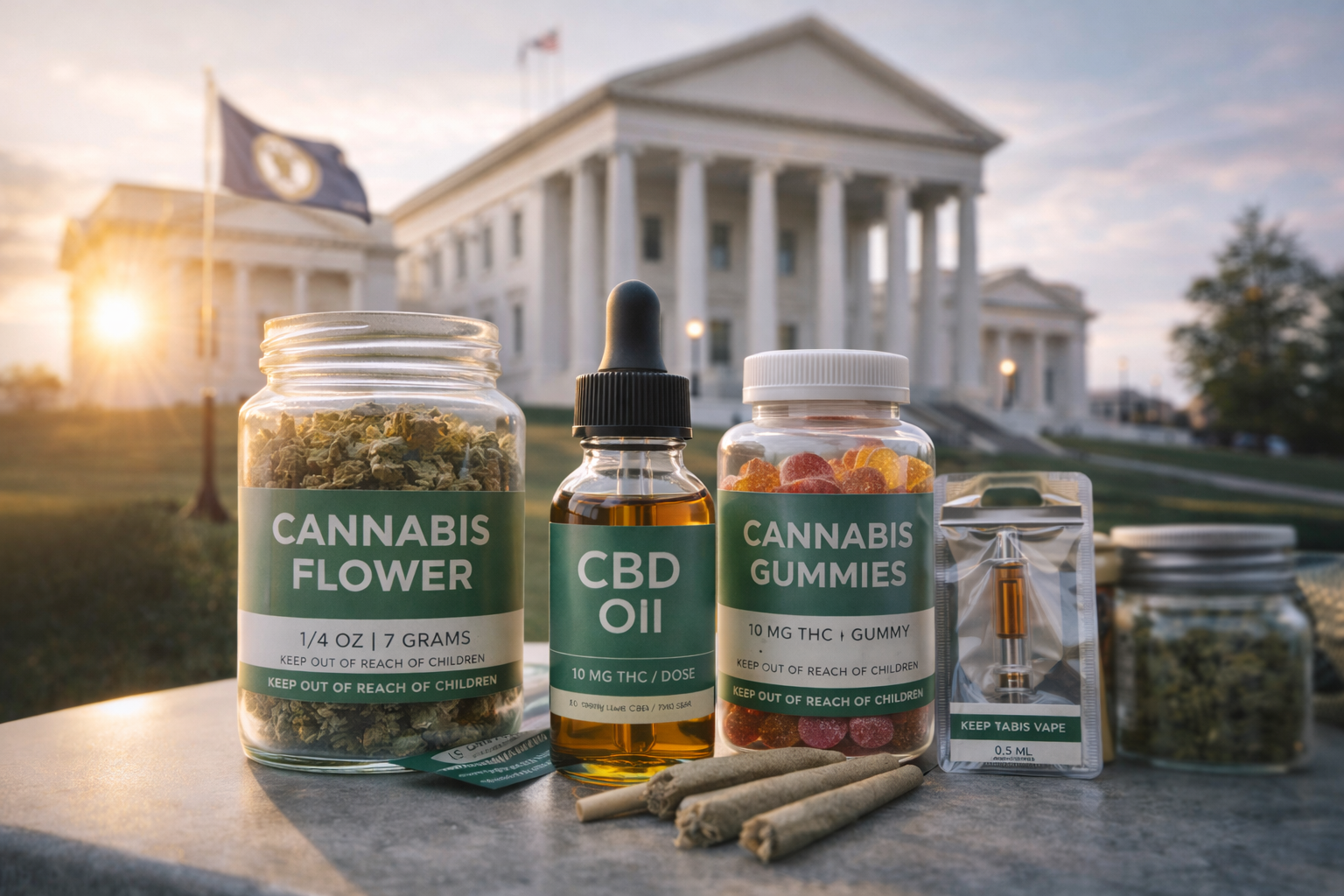
Virginia adult use cannabis retail legalization concept with cannabis products outside a government building
Virginia adult use cannabis retail licensing is finally moving from legal limbo to a real operating timeline. On February 17, 2026, the Virginia House and Senate each passed a version of a bill to create a regulated cannabis retail market, closing the long standing gap where possession is legal but sales are not. The House bill sets the earliest possible retail start date at November 1, 2026, while the Senate bill uses January 1, 2027. Either way, this is a major market access signal for operators watching licensing, distribution, and retail opportunities in 2026.
Quick facts
• Both chambers passed their own versions on February 17, 2026, and differences must be reconciled before final enactment
• House version: no retail sales allowed prior to November 1, 2026
• Senate version: later retail start date of January 1, 2027
• Taxes described in reporting: 12.875 percent state tax on retail cannabis sales plus up to a 3 percent local option tax
• Timeline described in reporting: permit applications in July 2026 and seed to sale tracking beginning September 1, 2026
• Purchase limit described in reporting: 2.5 ounces per transaction
• License caps described in reporting: up to 350 retail licenses statewide and cultivation capped at 450 through 2028
• Product standards described in reporting: testing, labeling, packaging, and THC limits for non pharmaceutical products including 10 milligrams per serving and 100 milligrams per package
• Home cultivation described in reporting: up to four plants per household with a tagging requirement
• Local control described in reporting: localities retain zoning authority over where retail stores can operate
If Virginia timing affects your growth plan, Start with our quick Cannashield intake form so you can map exposure and plan for multiple outcomes.
Why This Virginia Shift Matters
Virginia has been stuck in a possession only reality that benefits the illegal channel. People can legally possess cannabis, but retail sales are unregulated, which means less consistent consumer safety standards and fewer incentives for serious operators to invest. The 2026 framework aims to move demand into a licensed lane by attaching rules to the sale itself: testing, labeling, packaging, and enforcement mechanisms that create accountability.
Universal operator lesson: possession only legalization still feeds unregulated sales unless a state builds a licensed market people can actually access.
What The Framework Suggests About 2026 Economics
The reporting describes a state tax rate of 12.875 percent on retail cannabis sales, plus up to a 3 percent local option tax. That matters because price competition is the core battle when a new market tries to pull share away from unlicensed sellers. Taxes and local fees shape shelf price, and shelf price shapes adoption.
The same reporting describes a phased rollout that gives the Virginia Cannabis Control Authority time to implement the system, including permit applications in July 2026 and seed to sale tracking beginning September 1, 2026. Even if dates move during reconciliation, the operator lesson stays the same: compliance infrastructure will be a gate, not a suggestion.
If local zoning and permit timing could change your lease or buildout decision, Complete our Cannashield questionnaire to pressure test your path before you commit capital.
Local Zoning Is Still The Real Gatekeeper
Every state story like this has the same hidden truth: even when a state is ready, cities decide access. The framework described in reporting preserves local zoning authority over where and how retail stores can operate. That means your Virginia strategy should start with a locality map, not a statewide headline.
Operators who win new markets do the boring work early: identify jurisdictions that allow retail, understand buffer rules, pull meeting calendars, and model realistic approval timelines. This is where leases go wrong. A rushed site decision can trap cash for months while permits crawl.
Universal operator lesson: state legalization creates the lane, but local rules decide who gets on the road.
Enforcement And Standards Will Shape The Public Conversation
Virginia lawmakers are framing this as a consumer safety and market integrity fix. The reporting highlights testing, labeling, and packaging requirements, along with enforcement mechanisms and penalties aimed at keeping products away from minors. For licensed operators, this is also a positioning opportunity. Clean documentation, disciplined inventory controls, and staff training become the difference between steady operations and stressful interruptions.
If you want a readiness checklist for testing, labeling, packaging, and seed to sale tracking, use the Cannashield intake form to request it.
Conclusion
Virginia is transitioning from possession without legal sales to a regulated adult use marketplace, and the February 2026 votes are a clear momentum signal. Watch the final reconciliation details, but plan as if the market is coming: local zoning will decide access, taxes will decide price pressure, and compliance will decide who stays standing.
Universal operator lesson: legalization is only the start. The winners are the operators who treat local approvals and compliance systems as the real product.
What To Do This Week
• Build a Virginia locality map showing where retail is likely to be allowed and where it will be restricted
• Draft two timelines for your plan, one for a late 2026 start and one for an early 2027 start
• Model shelf price pressure using the state and local tax structure as described in reporting
• Create a compliance checklist for testing, labeling, packaging, and inventory controls
• Start a seed to sale readiness plan for data, staffing, and procedures
• Build a lease decision rule that requires zoning confidence before long term commitments
FAQ
What changed in Virginia this month
Both chambers passed their own versions of a regulated adult use retail framework, signaling real movement toward legal sales.When could retail sales start
The House version sets an earliest start of November 1, 2026, while the Senate version sets January 1, 2027, and the final date depends on reconciliation and enactment.Who would run the program
The framework would be administered by the Virginia Cannabis Control Authority, according to the reporting.Why does local zoning matter so much
Even with state rules in place, cities control where retail can operate, which shapes competition and timelines.What does the federal government stance change
Federal government restrictions still limit interstate commerce and influence banking and payments, so operators should plan around in state operations and tight documentation.What is the universal operator lesson
Market access is a system: taxes affect demand, zoning affects access, and enforcement affects who survives.