Federal Funding Deal Will Ban Most Hemp-Derived THC Beverages by Late 2026
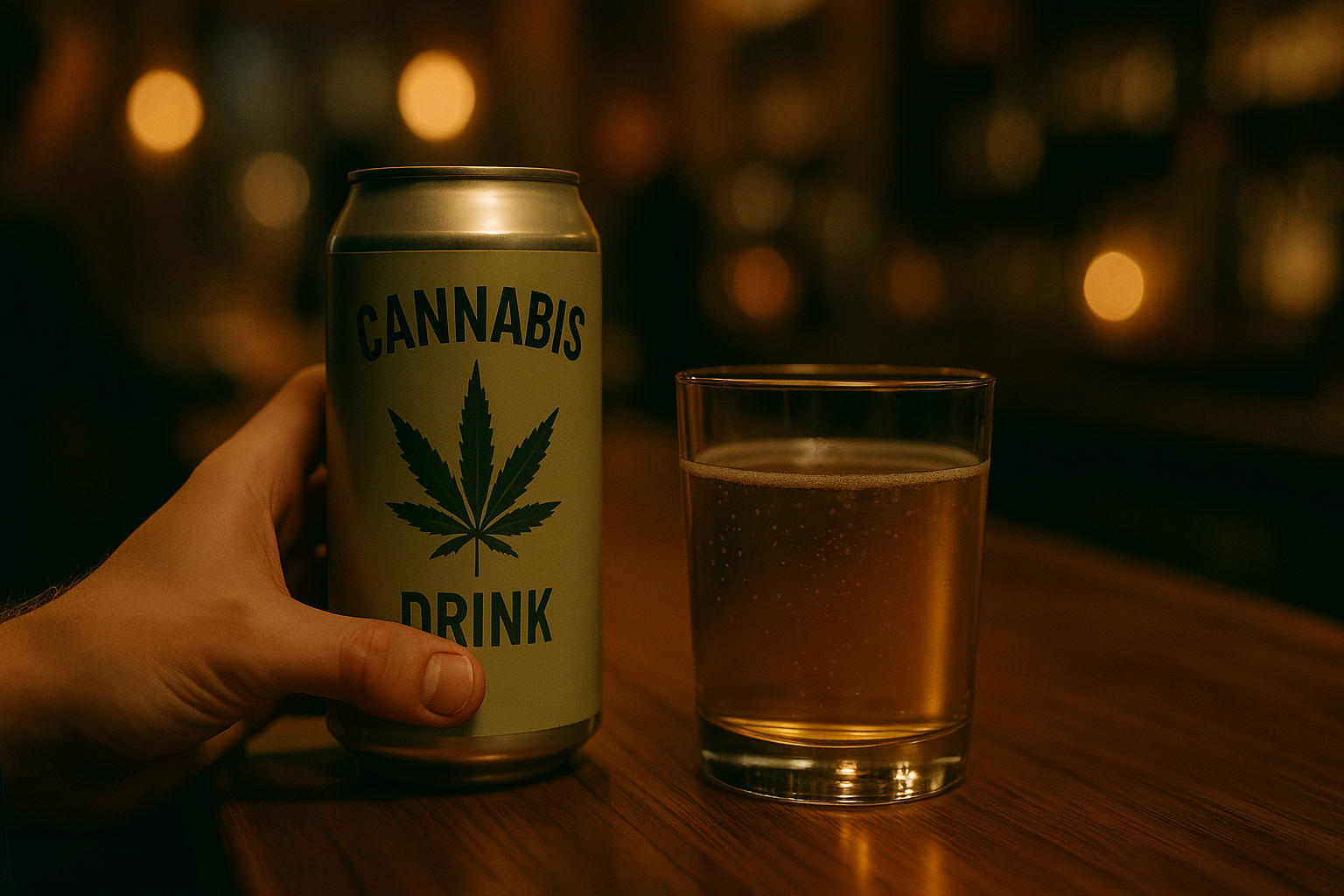
Can labeled ‘Cannabis Drink’ beside a poured glass on a bar counter, symbolizing a federal funding deal that will ban most low-dose hemp-derived THC beverages after November 2026.
A new federal funding deal signed by President Donald Trump includes provisions that will ban most low-dose, hemp-derived THC beverages after November 2026. The measure directly targets the fast-growing “cannabis drink” category — a segment that has exploded across bars, restaurants, convenience stores, and wellness markets over the last two years.
For an industry built almost entirely on a Farm Bill loophole, this legislation represents the most aggressive federal intervention yet — and it could reshape the beverage market overnight once enforcement begins.
If your business produces or sells hemp-derived THC beverages, now is the time to prepare. Start with our quick Cannashield intake form to assess compliance and protect your operation before the federal deadline arrives.
The Rise of Low-Dose THC Beverages — and Why They’re Being Targeted
Hemp-derived THC drinks became a national sensation because they delivered 2–10 mg of Delta-9 THC per serving while remaining federally legal under the 2018 Farm Bill’s “dry-weight” standard.
Consumers loved them because they offered:
A hangover-free alcohol alternative
A predictable micro-dose experience
Legal access even in non-legal cannabis states
A new social beverage category for bars and nightlife
Bars began replacing mocktails with THC seltzers. Retailers dedicated cooler space. Multi-state beverage distributors embraced hemp drinks as their next major category.
But the same qualities that made these beverages popular also made them a target. Lawmakers and regulators have raised concerns about:
Youth access in unregulated retail channels
Potency inconsistencies
Products mimicking alcoholic cans
Lack of federal testing standards
Brands exploiting the Farm Bill loophole
The new funding deal closes that loophole entirely.
Need help determining which of your SKUs will be banned? Complete our Cannashield questionnaire to get a full product-risk assessment.
What the New Federal Law Does
According to the deal signed into law, most intoxicating hemp beverages will be illegal after November 2026, including:
Delta-9 hemp drinks above trace levels
Delta-8, THC-O, or converted cannabinoid beverages
Most ingestible hemp-THC products with psychoactive effect
The law imposes two major changes:
1. A near-zero THC limit for beverages
The new threshold is so low that it eliminates functional dosing entirely. Beverages containing the typical 2–10 mg THC serving will no longer qualify as hemp products.
2. A federal ban on synthetic or chemically modified cannabinoids
This covers all beverages using converted cannabinoids — which includes the majority of hemp drinks currently on the market.
Combined, these measures dismantle the category.
How This Impacts the Hemp Beverage Industry
The hemp-THC beverage market has grown into a multi-billion-dollar category, dominated by rapidly scaling brands that relied on online direct-to-consumer sales, national distribution, and partnerships with bars, restaurants, and retailers.
This federal rule change will cause major disruption:
1. Reformulations will be required, but functionality will be lost
A 0.5 mg THC drink won’t deliver the effect consumers expect — which means many brands may lose their core audience.
2. Online and interstate shipping will collapse
Most beverages will no longer meet the legal definition of hemp, triggering federal prohibition on shipping and transport.
3. Massive inventory and supply-chain losses
Co-packers, flavor houses, ingredient manufacturers, and retailers will all face contract fallout and unsellable inventory.
4. Alcohol companies may fill the gap
Big beverage companies may pivot into regulated cannabis drinks once federal guardrails are in place — pushing out smaller hemp brands.
5. Enforcement will shift to states
Once the federal rule is active, states will tighten compliance and enforcement even faster.
Don’t wait for 2026 to hit. Fill out our Cannashield intake form to build a transition plan, secure insurance protection, and prepare for reformulation or market pivot.
What Beverage Companies Should Do Now
With a one-year runway before the restriction begins, operators have a chance to adapt instead of react. Key steps include:
1. Audit product lines
Identify which beverages will be affected by the THC cap or cannabinoid ban.
2. Strengthen compliance documentation
COAs, batch testing, SOPs, and labeling will all become critical during the transition.
3. Review insurance policies
Expect increased liability exposure, contract disputes, and regulatory risk.
4. Prepare a reformulation or pivot strategy
This may include moving into:
CBD-only functional beverages
Non-psychoactive hemp drinks
State-regulated cannabis drinks
Adaptogenic or wellness beverages
5. Communicate early with retailers and distributors
Transparency protects relationships and shelf positioning.
Conclusion
The federal funding deal signed by President Trump marks a turning point for the hemp-THC beverage industry. With most low-dose THC drinks banned after November 2026, brands must prepare for major operational and financial changes.
This isn’t the end of cannabis beverages — it’s the end of an unregulated chapter. Companies that invest now in compliance, risk management, insurance, and strategic pivots will be ready for the next evolution of cannabis-infused drinks.
At Cannashield, we help beverage operators navigate regulatory shifts with insurance and compliance strategies tailored to hemp and cannabis markets.
Complete our full intake form here to safeguard your business and plan your transition before federal THC limits go into effect.
Read the full article here →