
Federal Amendment to Close the Hemp Loophole Will Reshape a $28 Billion Industry
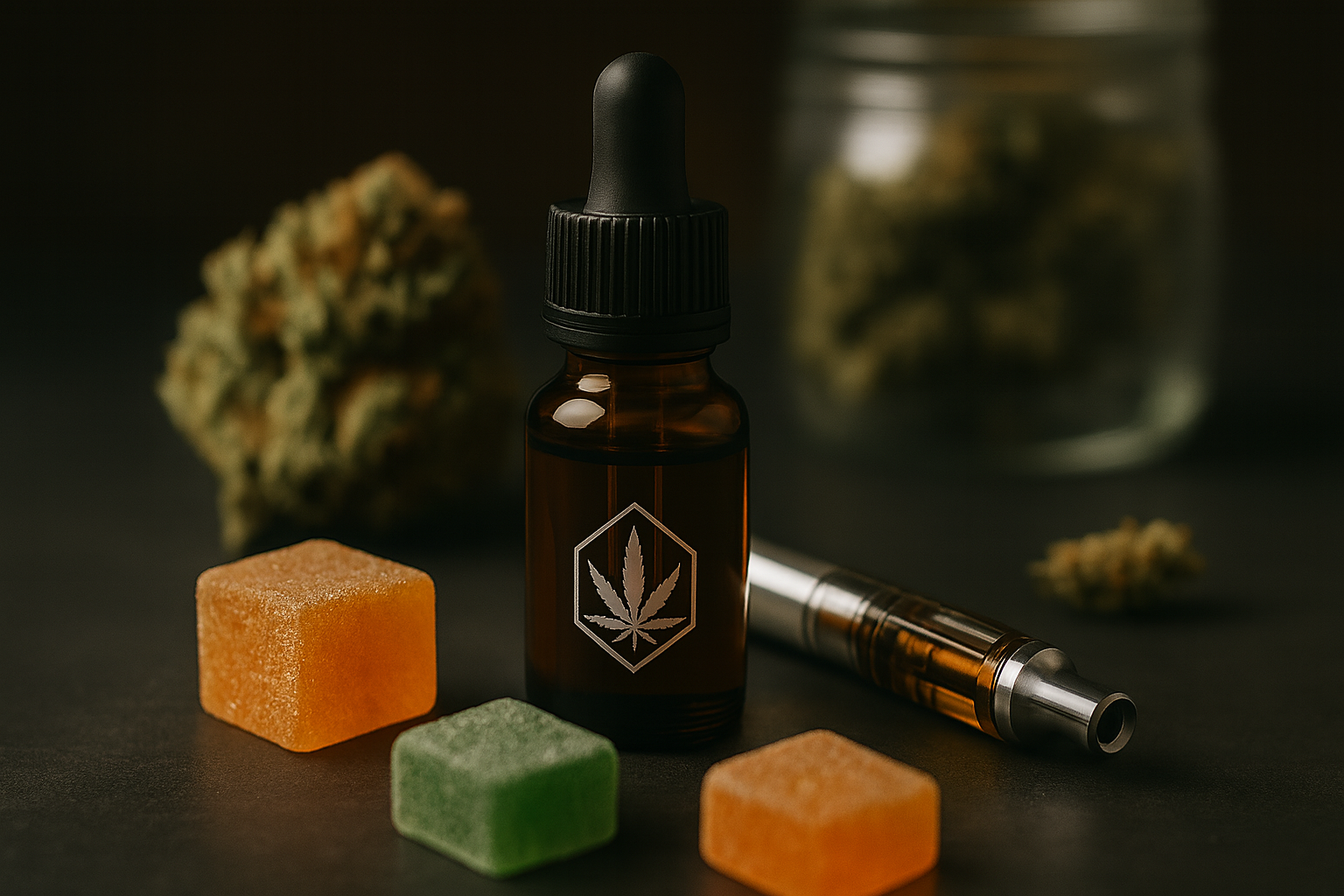
Cannabis gummies, tincture, vape cartridge, and flower on a table, symbolizing the federal amendment banning hemp-derived products with more than 0.4 mg THC per container.
A new federal amendment aimed at closing the hemp loophole is set to ban nearly all hemp-derived THC products containing more than 0.4 mg per container — a threshold so low it effectively wipes out the entire intoxicating hemp category. Gummies, beverages, tinctures, and vape products currently dominating the market all fall well above that limit.
This single amendment is about to disrupt a $28 billion industry, create major economic shockwaves across multiple states, and force thousands of operators to rethink their entire business model.
If your business sells or manufactures hemp-derived THC products, now is the time to create a compliance and transition plan. Start with our quick Cannashield intake form to protect your business before enforcement begins.
The “Hemp Loophole” — and Why Congress Is Finally Closing It
Since the 2018 Farm Bill legalized hemp with less than 0.3% Delta-9 THC by dry weight, manufacturers quickly learned how to convert CBD into cannabinoids like Delta-8, Delta-10, THCP, THC-O, and even hemp-derived Delta-9 — all technically legal under federal law.
These intoxicating products exploded nationwide with:
No age restrictions
No potency caps
No federal testing requirements
No retail limitations
Full interstate commerce
The result was a booming national marketplace that looked and felt like cannabis — but wasn’t regulated like cannabis at all.
Regulators, health officials, and traditional cannabis operators have been raising concerns for years. Now, with the new amendment, Congress is drawing a hard line:
If a product gets you high, it doesn’t qualify as hemp.
Not sure which of your SKUs exceed the 0.4 mg threshold? Complete our Cannashield questionnaire for a full product-line risk assessment.
What the 0.4 mg THC Cap Really Means
The new rule caps hemp products at 0.4 mg THC per container, not per serving.
To put this in perspective:
A typical hemp-THC gummy → 2–10 mg THC
A common Delta-9 hemp beverage → 2–5 mg THC
A tincture dose → 5–20 mg THC
A vape cart → hundreds of milligrams of THC analogues
Under the new cap, almost every hemp-derived intoxicating product becomes illegal.
Even a “microdose” beverage that claims to contain only 1 mg THC — still too high.
A “mild” gummy with 2 mg THC — banned.
A tincture with trace psychoactivity — banned.
This amendment doesn’t just tighten the rules on intoxicating hemp — it eliminates the category entirely.
The Economic Impact on the Hemp Industry
The intoxicating hemp space has become a lifeline for:
Beverage brands
Hemp farms
CBD processors
Manufacturers
Flavor houses
Co-packers
Vape and gummy labs
Retailers and convenience stores
Online marketplaces
The industry now accounts for tens of thousands of jobs and billions in revenue. By banning >0.4 mg THC, Congress is essentially shutting down:
95% of hemp edible products
100% of hemp-derived THC beverages
Nearly all hemp vape products
Most online hemp-THC sales
This disruption is bigger than the Delta-8 bans of 2022–2024. This is a federal reset of an entire sector.
Businesses facing regulatory disruption need insurance and compliance stability. Fill out our Cannashield intake form to safeguard your operation before federal enforcement begins.
State Markets Will Feel the Shock
Many states have embraced hemp-THC products as legal alternatives to traditional cannabis — especially in places where marijuana remains illegal or tightly restricted.
This amendment will hit hardest in states like:
Texas
Florida
Tennessee
Georgia
Minnesota (legal, but with big hemp-beverage markets)
South Carolina
Wisconsin
Kentucky
These states rely on hemp-derived THC to supply consumer demand with no licensed cannabis infrastructure to replace it.
Once the amendment takes effect, states with no recreational cannabis system will see:
Demand shift to illicit markets
Retail closures
Farm-level economic damage
Cross-border gray market activity
Loss of tax revenue
Increased enforcement pressure
State regulators may try to create stopgap programs, but the federal restriction will override anything outside marijuana’s state-licensed channels.
What Businesses Must Do Now
Operators in the hemp-THC space have less than a year to prepare. The companies that act early will survive. The ones that delay will not.
Here’s what needs to happen immediately:
1. Audit all product formulations
Determine which products exceed 0.4 mg THC (almost all intoxicating hemp products).
2. Strengthen documentation and testing records
Federal crackdowns increase liability exposure.
3. Build a pivot strategy
This may include:
CBD wellness
Minor cannabinoids (CBG, CBN, CBC)
Functional beverages (mushrooms, adaptogens)
Entering state-regulated THC markets
4. Review insurance coverage
Expect claims, contract disputes, inventory losses, and regulatory penalties.
5. Prepare retail and distributor communication
You’ll need transparency to protect accounts and shelf visibility.
Conclusion
The federal amendment banning hemp-derived THC products above 0.4 mg per container represents the most significant regulatory shift since the 2018 Farm Bill. It closes the intoxicating hemp loophole entirely — reshaping national markets, eliminating thousands of product lines, and forcing businesses into a new regulatory era.
The operators who prepare early — with documentation, insurance, compliance planning, and product-line pivots — will survive. Those who ignore this moment will lose entire categories overnight.
At Cannashield, we help hemp and cannabis operators navigate disruptive regulation through insurance, compliance strategies, and risk management tailored to fast-changing markets.
Complete our full intake form here to protect your business before the federal amendment takes effect.
Read the full article here →