
Florida Supreme Court Cancels Hearing and Adult Use Timing Stays Uncertain
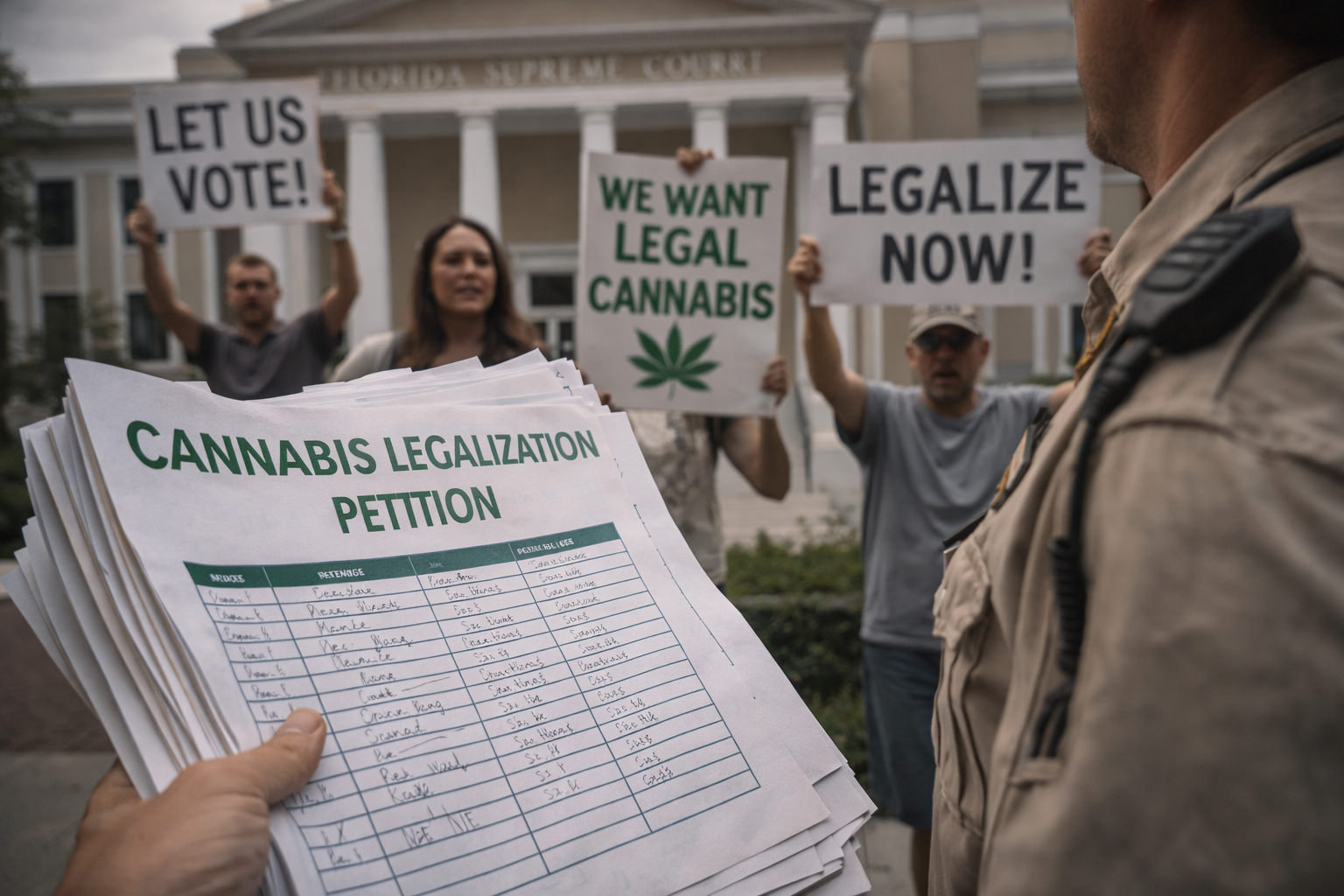
Cannabis legalization petition at the Florida Supreme Court as the state drops a hearing over verified signatures, keeping adult use timing uncertain
In early February 2026, Florida’s adult use cannabis timeline got less predictable. The Florida Supreme Court canceled a scheduled hearing after the state attorney general withdrew his request for review, pointing to a reported shortfall in verified petition signatures. The campaign disputes that count and says verification issues are still being challenged, so the fight may continue in lower courts.
For operators, Florida is too big to ignore. When legalization timing turns into a court dispute, planning gets harder, especially around leases, hiring, and capital.
If Florida timing affects your growth plan, Start with our quick Cannashield intake form so you can map exposure and plan for multiple outcomes
What happened in plain English
The attorney general asked the Florida Supreme Court to review the proposed adult use cannabis initiative. He later moved to withdraw that request after state election officials reported the campaign did not meet the required number of verified signatures. The court accepted the dismissal and canceled the oral argument that had been scheduled.
The campaign says it submitted far more petitions than the threshold requires and argues disputed invalidations and delayed verification are the real issue. Their position is that if contested petitions are counted, the initiative can still qualify.
The numbers behind the dispute
Florida’s ballot threshold is 880,062 verified signatures statewide. State records showed 783,592 currently valid at the time of the withdrawal. The campaign has said it submitted more than 1.4 million petitions and argued that contested invalidations could add enough verified signatures to clear the line.
This matters because the market does not wait for perfect certainty. It reacts to perceived momentum. When numbers look close, stakeholders start preparing. When numbers look short, everyone slows down and asks for more proof.
Why signatures decide opportunity windows
Ballot initiatives are decided by valid signature counts and deadlines, not momentum. In Florida, a campaign can collect a massive number of petitions and still miss the ballot if too many are rejected, not processed, or flagged as invalid.
For cannabis businesses, signatures are a gate. When the gate looks open, partners get confident. When the gate looks shaky, money tightens and timelines slip.
How court process changes market timing
Court fights change the calendar. A case can delay review, compress decision windows, or push disputes into tracks that take months. Even if adult use returns later, the route matters because it changes when stakeholders can act with confidence.
Operators tend to fall into two bad moves:
• Pausing everything and losing momentum
• Over committing and assuming the calendar will cooperate
The smarter play is optionality. Build plans that work if adult use arrives fast and still work if it slips.
What uncertainty does to deals and capital
When Florida’s adult use path gets cloudy, investors and lenders price in risk. Landlords get selective. Vendors add buffers.
Common ripple effects include:
• Slower capital deployment or tougher terms
• More documentation requests from lenders and payment partners
• Real estate negotiations that demand more deposits or shorter commitments
None of that means the opportunity disappears. It means timing is not guaranteed.
If uncertainty is affecting how you plan or negotiate, Complete our Cannashield questionnaire to pressure test your exposure.
What operators should do right now
Treat this moment like a checkpoint. Stay ready without being reckless.
Moves that hold up in any scenario:
• Keep compliance documentation clean and current
• Review contracts for termination, extension, and change in law language
• Stress test your runway for delayed timelines
• Align your insurance program with current operations and planned activities
If you are building a Florida pipeline, set your plan up in phases. Commit in layers so you can scale up quickly without betting the company on one date. Phase planning is not fear, it is discipline.
What to watch next
Track the signals that change risk and timing:
• Updated verified signature counts posted by election officials
• Court rulings tied to signature validation disputes
• Any filing that resets ballot eligibility timelines
• Public statements from regulators that signal priorities
Conclusion
Florida’s canceled Supreme Court hearing is a reminder that adult use cannabis expansion is a process story. Verified signatures, court procedure, and deadlines shape when markets open and when capital gets comfortable.
For operators, this is a watch list moment. Early positioning, strong relationships, and compliance readiness can put businesses ahead when timelines accelerate.
At Cannashield, we help cannabis operators prepare for emerging markets with insurance solutions, compliance guidance, and risk strategies built for real world transitions.