
THC Drinks Are Scaling Fast and Operators Should Plan Ahead
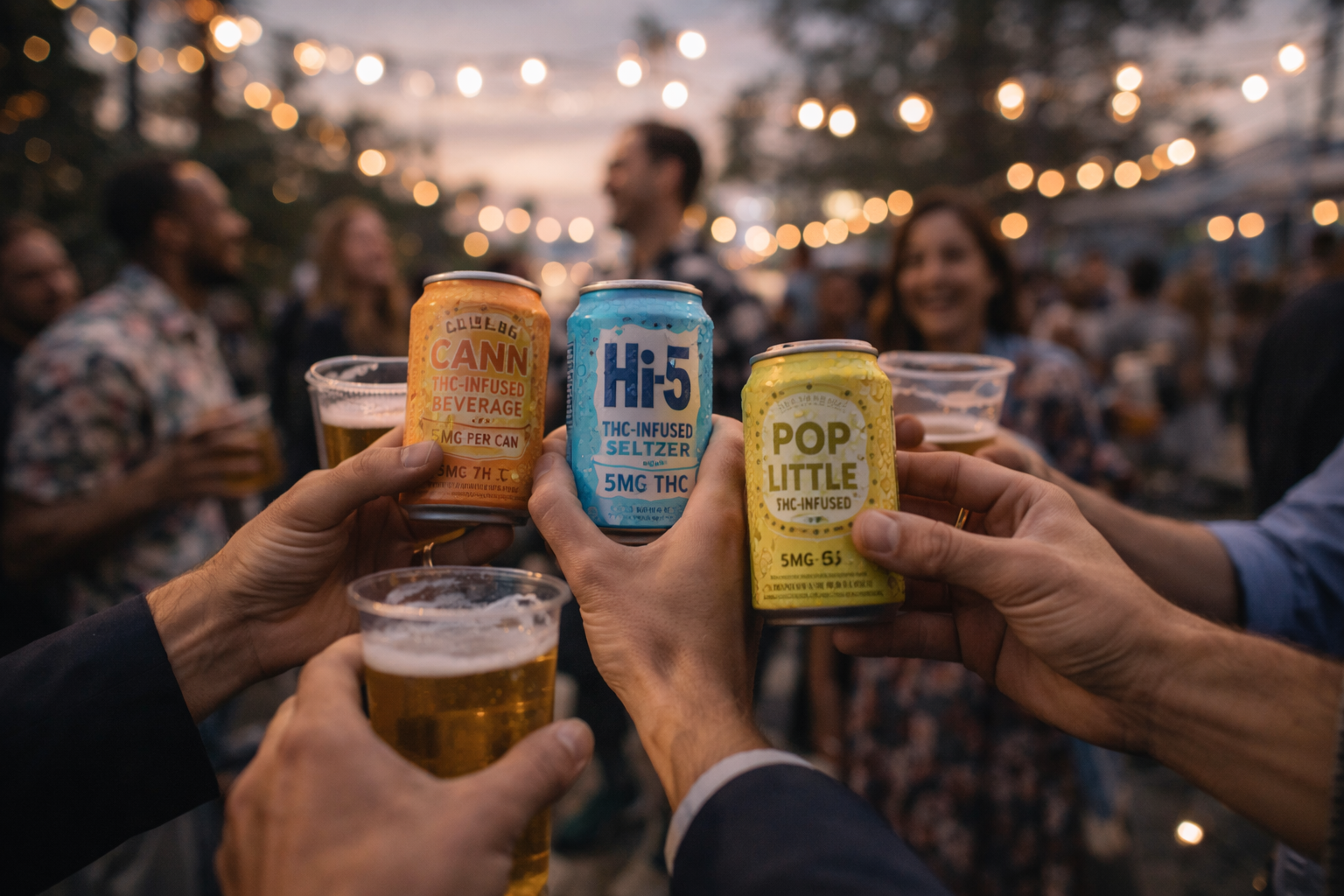
Hands clinking THC infused seltzer cans at a social gathering highlighting low dose cannabis drinks for hospitality venues and event distribution
Forbes recently highlighted THC infused beverages as one of the fastest growing product categories in cannabis. The momentum is coming from a simple shift in consumer behavior. People want lower dose options that feel social, familiar, and easier to fit into mainstream settings. A drink looks like a drink. That matters when you are trying to enter hospitality venues, private events, and environments where smoking is restricted.
For operators, this is not just a product trend. It is a distribution and risk shift. Drinks bring new partners, new expectations, and new liability questions. If you treat it like a novelty category, you will run into grown up problems at grown up speed.
If you are building or expanding THC drinks, Start with our quick Cannashield intake form so you can spot risk gaps early.
Why Consumers Like Low Dose Cannabis Drinks
Low dose is doing two important jobs at once.
First, it creates a smoother experience. Many adults want control. They want the option to sip, pause, and decide, instead of committing to a single edible dose and hoping for the best.
Second, it matches how social settings actually work. People do not want to feel out of place at a dinner, an event, or a lounge. A THC seltzer or mocktail style beverage fits the room. It also makes it easier for venues to offer a cannabis option without turning the whole experience into a cannabis moment.
This is why you are seeing companies position beverages as alcohol alternatives for modern, social occasions. The product fits new habits, and the packaging fits the environment.
Distribution Is Expanding Into Hospitality and Events
The big opportunity is not just more dispensary shelf space. It is access to places that already know how to sell beverages at scale.
That includes:
• Hospitality venues that want curated, compliant adult options
• Events that want premium guest experiences
• Partnerships with beverage style distributors and retail channels where allowed
• Mainstream settings where smoke is not welcome
You are also seeing major venues test THC drinks for concerts and live events, which tells you where the cultural tide is going. When a venue is willing to put a THC beverage next to beer, they are betting consumers will buy, and that operations can manage it responsibly.
That does not mean it is easy. It means the bar is higher. Venues and large partners care about consistency, documentation, age controls, and low drama execution.
If you are pursuing distribution partnerships or venue placements, Complete our Cannashield questionnaire to pressure test readiness.
The Risk Map Most Operators Underestimate
THC drinks change the risk profile because the product is consumed like a beverage, often in social settings, sometimes in public facing environments.
Here are the exposure buckets that tend to show up fast:
• Product liability: Allegations of improper labeling, unexpected effects, contamination, or dose inconsistency
• General liability: Incidents tied to consumption in venues, tastings, demos, or events
• Contracts and additional insured requests: Venues and partners often require specific insurance documentation and wording
• Age gating and serving controls: Your partners will want proof you can support compliant sales practices
• Reputation risk: One bad incident can travel faster than your best marketing
The reality is simple. The more mainstream the channel, the less forgiveness you get for sloppy execution.
Insurance can help, but only if your program matches how you operate. Not every policy treats every cannabinoid product, distribution model, or event activity the same. Coverage is always subject to policy language and carrier underwriting.
A Practical Readiness Checklist Before You Scale
If you want the upside without the chaos, tighten the basics before you chase volume.
Focus on:
• Dose accuracy and batch consistency with clean testing records
• Label clarity that makes serving size and expectations obvious to an average consumer
• Packaging and storage standards that reduce leakage, spoilage, and compliance issues
• Partner agreements that define handling, returns, and responsibilities
• Event and sampling controls if you activate in hospitality environments
• Documentation discipline so you can respond quickly if complaints arise
One more point that matters for planning. Rules around hemp derived THC products have been shifting, and some proposals could materially change allowable THC thresholds in certain channels. If your growth plan relies on hemp derived distribution, build flexibility into your product design, packaging, and partnerships.
If you want a clean risk plan for THC drinks, Complete our Cannashield questionnaire so we can map exposures and identify what to tighten next.
Conclusion
THC infused beverages are moving into mainstream behavior because they fit how adults actually socialize. Lower dose formats, familiar packaging, and smoke restricted settings are pushing demand forward. At the same time, expanded distribution brings new partners and new liability realities.
Operators who win in this category will treat it like a serious beverage business. That means compliance discipline, clean documentation, and a risk strategy that matches how and where the product is sold.
Complete our full intake form here.