

GLP 1 Boom Is Changing Edible Cannabis Advice
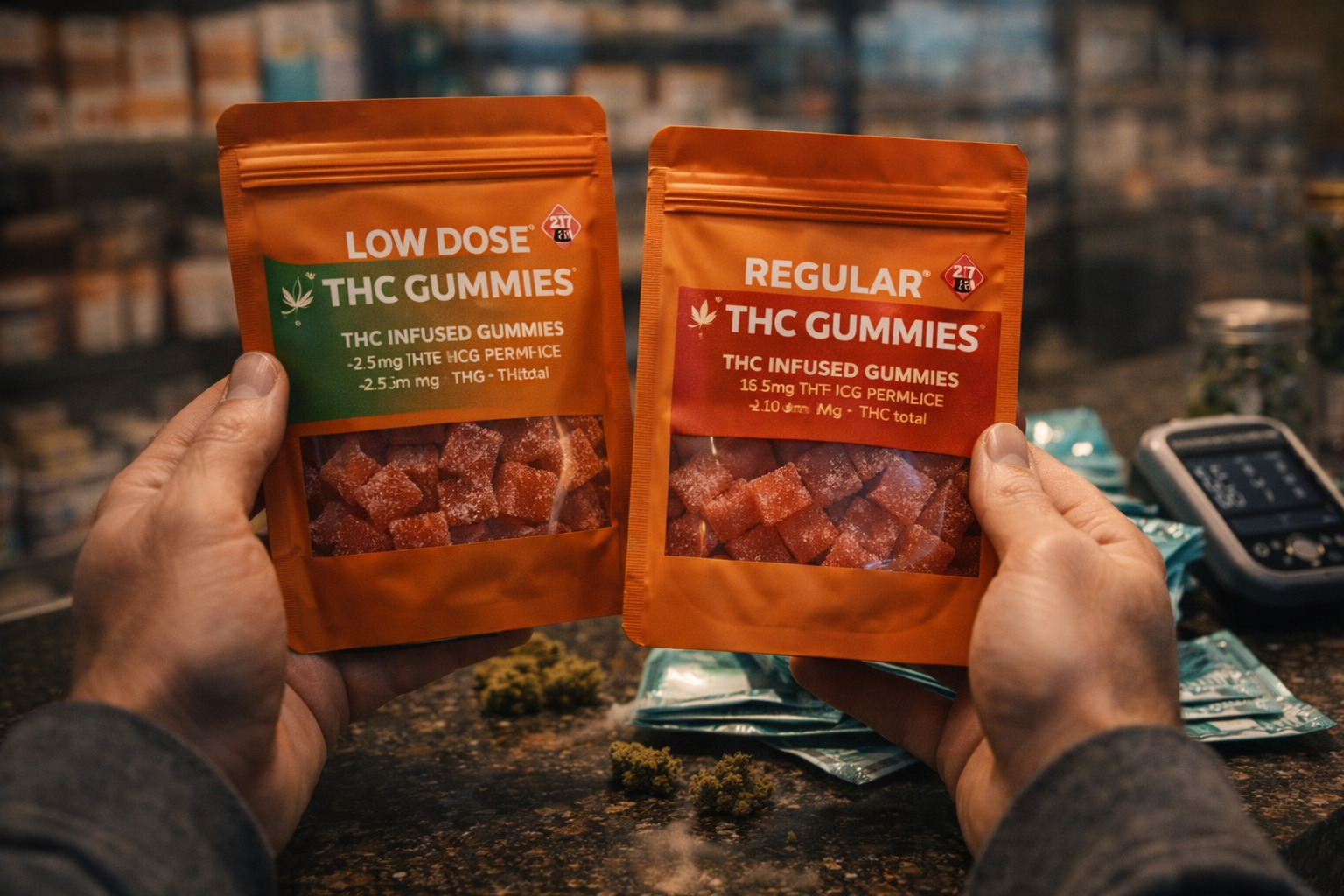
Dispensary counter with low dose and regular THC gummies showing how GLP 1 related delayed digestion may change edible guidance and redosing decisions.
The GLP 1 wave is starting to change cannabis retail in a very practical way. Reuters reported that some dispensaries are already steering customers on GLP 1 drugs toward lower dose edibles, vapes, or tinctures because delayed digestion can slow edible onset and increase the risk of taking more too soon. That concern is not coming out of nowhere. FDA labeling for tirzepatide and semaglutide says those drugs delay gastric emptying.
Quick facts
• Reuters reported that some dispensaries are recommending lower dose products to customers using GLP 1 medications.
• FDA labeling for tirzepatide says it delays gastric emptying, with the biggest delay after the first dose.
• FDA labeling for semaglutide also says it delays gastric emptying.
• Reuters reported that delayed digestion may slow the onset of edible cannabis effects and raise the risk of redosing too soon.
• Reuters also reported that NIDA is sponsoring research on tirzepatide’s potential in cannabis dependence, and ClinicalTrials.gov lists a Brigham and Women’s Hospital pilot trial of tirzepatide for cannabis use disorder as not yet recruiting.
If GLP 1 use is changing how your customers shop, Start with our quick Cannashield intake form so you can map product, labeling, and education exposure before confusion turns into liability.
Why edibles are the first pressure point
Edibles are where this gets real fastest. If stomach emptying slows, onset may take longer. That does not automatically mean every GLP 1 user will have the same cannabis experience, but it does mean the standard edible timing conversation gets less predictable. Reuters noted that industry insiders are worried some customers may redose before the first serving fully hits, which can lead to a stronger than expected high later. FDA drug labeling gives that concern a clear medical basis by confirming delayed gastric emptying with both tirzepatide and semaglutide.
The smart takeaway is not fear. It is timing discipline. In a normal edible sale, staff usually talk about dose, tolerance, and waiting long enough. With GLP 1 customers, that waiting period may matter even more. The stores that explain this clearly will likely look safer and more trustworthy than the ones still treating every edible customer the same. This is an inference based on the FDA labeling and Reuters reporting about retailer concern and redosing risk.
Why retailers are adjusting now instead of waiting
Reuters reported that the evidence is still limited and that responses vary by metabolism, dose, tolerance, and which GLP 1 drug a person is using. But retailers are not waiting for a perfect clinical playbook. They are adjusting now because this is already showing up at the counter. Some operators are guiding customers toward lower dose products, while others are thinking harder about how to give clearer point of sale education.
That is a useful business lesson. Retail advice does not need to be medical advice to be better advice. A dispensary does not need to diagnose anyone to say something simple and responsible like start lower, wait longer, and avoid stacking doses too fast if digestion may be delayed. The point is not to sound clinical. The point is to reduce confusion and cut down on the avoidable bad experience that turns a customer off the category. This is an inference based on the retailer behavior Reuters described.
If you want to pressure test your edible menu and staff guidance, Complete our quick Cannashield intake form and request a dose and messaging review.
Why researchers are paying attention
The research side matters because this may become bigger than a retail training issue. Reuters reported that NIDA is sponsoring a clinical trial on tirzepatide’s potential in cannabis dependence. ClinicalTrials.gov also lists a Brigham and Women’s Hospital pilot study of tirzepatide for cannabis use disorder that is not yet recruiting. That means the federal research conversation is moving beyond anecdote and into structured testing.
That does not mean operators should start making claims about GLP 1 drugs reducing cannabis cravings or helping with dependence. That would be reckless. The evidence is still early, and Reuters was clear that much of the current market discussion remains anecdotal. But it does mean this topic is likely to grow, not fade. Once research, retail behavior, and customer questions all start moving in the same direction, public health messaging and product guidance usually get stricter, not looser. This is an inference based on the Reuters report and the live trial listing.
What smart operators do next
This is one of those moments where clear guidance beats clever marketing. Operators should not lean into weight loss language, appetite suppression hype, or broad promises about how cannabis and GLP 1 drugs interact. Reuters reported growing consumer curiosity about cannabis, metabolism, and appetite, but also emphasized that the evidence is still limited and highly variable. That means the safe play is simple education, lower dose options, cleaner edible timing guidance, and tighter staff training.
The businesses that win this phase are not the ones shouting the loudest. They are the ones that make the category easier to use responsibly. That is the real opportunity here. As GLP 1 adoption grows, lower dose gummies, more precise tinctures, and clearer wait time education may become not just safer choices, but smarter retail choices too. This is an inference based on the Reuters reporting and the FDA labeling on delayed gastric emptying.
If you need a cleaner way to guide customers on lower dose products, delayed onset, and responsible, Complete our quick Cannashield intake form and request a retail messaging review.
You might also like

Conclusion
This is not a signal that cannabis demand is disappearing. It is a signal that the customer conversation is changing. As GLP 1 use rises, dispensaries will need to get sharper about edible timing, dose education, and responsible guidance. The operators that adjust first will look more credible when the rest of the market catches up.
Educational note: This article is for education only and is not legal, medical, regulatory, tax, or insurance advice.
What To Do This Week
• Review your edible menu and identify where lower dose options are thin or missing. This is practical guidance based on Reuters reporting about retailer shifts.
• Train staff to talk about waiting longer before redosing when a customer mentions GLP 1 use or delayed digestion. This is practical guidance based on Reuters and FDA labeling.
• Tighten point of sale messaging so it focuses on timing, dose, and responsible use rather than hype. This is practical guidance inferred from the current evidence gap and retailer response.
• Review product descriptions and marketing language for anything that sounds like weight loss or appetite claims. This is practical guidance based on growing customer curiosity and still limited evidence.
• Build one simple internal memo on how your team should guide edible customers who use GLP 1 drugs. This is practical guidance inferred from the Reuters report and FDA labeling.
• Track the tirzepatide cannabis use disorder research so your guidance evolves with better evidence, not rumor.
FAQ
Why are dispensaries talking differently to GLP 1 customers?
Reuters reported that some retailers are already steering GLP 1 customers toward lower dose products because edible onset may be delayed and redosing risk may rise.
Why do edibles matter more than other product types here?
Because FDA labeling for tirzepatide and semaglutide says they delay gastric emptying, which can affect how quickly orally consumed products are felt.
Does this mean every GLP 1 user will react the same way to cannabis?
No. Reuters reported that evidence is still limited and responses vary based on metabolism, dose, tolerance, and the specific drug involved.
Are researchers studying whether GLP 1 drugs affect cannabis use itself?
Yes. Reuters reported that NIDA is sponsoring research on tirzepatide for cannabis dependence, and ClinicalTrials.gov lists a Brigham and Women’s Hospital pilot study of tirzepatide for cannabis use disorder.
Should dispensaries market cannabis as a weight loss tool because of this trend?
No. That would run ahead of the evidence. Reuters was clear that much of the current discussion remains anecdotal.
What is the operator lesson here?
When digestion timing gets less predictable, lower dose options and clearer wait time guidance become stronger retail tools. This is an inference based on the Reuters reporting and FDA labeling.

San Francisco has proposed cannabis cafe rules allowing approved businesses to combine onsite cannabis consumption with food, nonalcoholic drinks, and live entertainment. The hospitality opportunity also creates new pressure around permits, food service, employee safety, security, inventory, medical patient access, and neighborhood compliance.