
Hawaii cannabis legalization is being framed as economic development
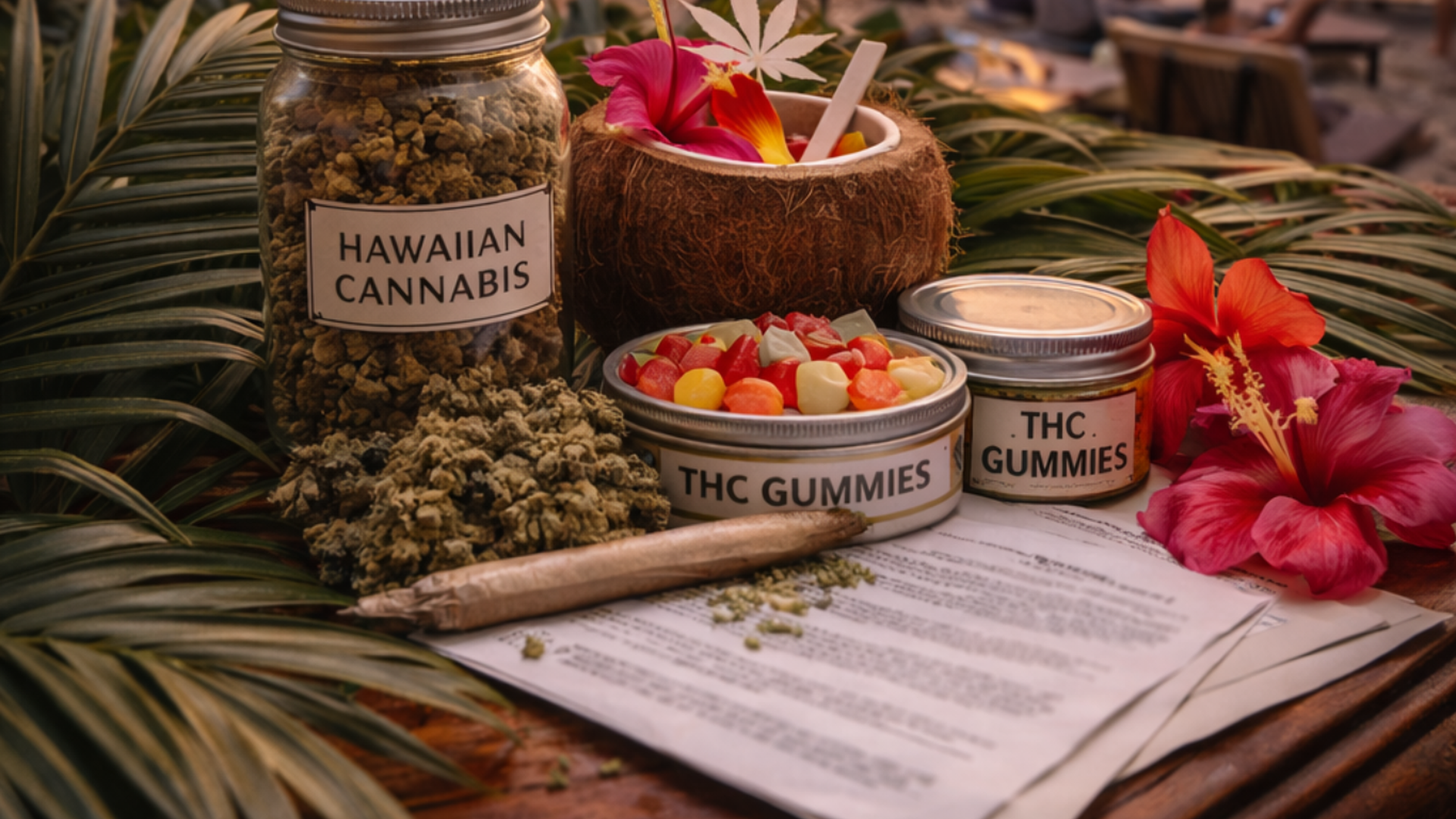
Hawaii beach scene with cannabis gummies and packaged products representing tourism driven demand and adult use legalization sales projections.
Hawaii is not just another state looking at adult use cannabis. It is a global tourism economy with a tight local supply chain, limited land, high logistics costs, and a constant flow of visitors who influence what sells and how fast demand spikes.
That is why a new commissioned report matters. State officials released an analysis projecting that adult use legalization could generate $46M to $90M in monthly cannabis sales by year five, with tourists expected to drive a meaningful share of that demand. The big takeaway is not only the sales number. It is the framing. Legalization is being positioned as economic development, not just a social debate.
If Hawaii moves forward, the opportunity is bigger than retail. It includes tourism driven product strategy, hospitality compliance, and building a durable local supply chain across multiple islands. For operators and investors, this is the kind of early signal that tells you where a future market could open and what the competitive advantage will look like when it does.
If you want to evaluate your readiness for new market opportunities and the risk side that comes with them, Start with our quick Cannashield intake form
What the report is really telling operators
When a state commissions a full economic study, it usually means the conversation is shifting from “should we” to “how would we.”
This report is doing two important things at once.
First, it is setting expectations around market size, demand sources, and how much revenue could shift from informal channels into a regulated system. That matters for planning licensing volume, retail coverage, and supply capacity.
Second, it is showing lawmakers a playbook for how legalization could support jobs, agriculture, and consumer spending in a controlled way. That is the economic development angle. Hawaii is looking at how to capture dollars that are already being spent, while adding a new stream tied to visitors.
Operators should read this as a signal that policy design will matter more than hype. The winners will be the groups that can run clean operations, stay compliant, and handle scale without turning the market into a free for all.
Tourism demand changes the strategy
Most markets can focus on local consumers first. Hawaii cannot. Visitors influence product mix, packaging needs, and how education is delivered at the point of sale.
Tourism driven demand creates unique requirements:
Products that are approachable for newer consumers
Clear dosing options and effects guidance
Packaging that travels well in heat and humidity
A stronger focus on “no stigma” retail experience
Education around where consumption is allowed and where it is not
It also creates a real need for hospitality and compliance planning. Even if the law does not allow consumption lounges immediately, tourists will still ask the same questions: where can I use this, how do I dose safely, what is the local rule, what happens if I get caught in the wrong place.
That is why cannabis hospitality is not a gimmick in Hawaii. It is a practical lane. If a future framework allows regulated experiences, events, or designated consumption settings, that becomes a major point of differentiation and customer loyalty.
The opportunity is a full supply chain, not just storefronts
Retail is the visible part of legalization. The real economic engine is the supply chain behind it.
If Hawaii moves forward, the market will need:
Cultivation capacity that is built for island conditions
Manufacturing that can produce consistent, compliant products
Testing infrastructure and quality control systems
Distribution and secure transport that works across islands
Retail coverage that matches demand and tourism flow
The report’s projection that Hawaii would need a meaningful number of retail outlets to meet demand is a reminder that access planning is a big part of market success. Too few outlets creates bottlenecks and keeps informal channels alive. Too many outlets can trigger price compression and instability if licensing is not paced properly.
For serious operators, this is the real window. Build systems that scale. Build documentation that holds up. Build partnerships that strengthen local supply instead of relying on fragile outside inputs.
Hawaii specific realities operators should plan for
Hawaii will not operate like mainland markets. Island logistics changes everything.
A few realities to plan around:
Supply chain fragility: weather, shipping delays, and limited vendor redundancy
Cost structure: higher labor and operating costs mean efficiency matters more
Compliance visibility: tourism markets get more public attention, faster
Community sensitivity: local politics and neighborhood concerns can shape zoning and licensing speed
Consistency expectations: visitors want predictable experiences, not surprises
If you are an operator thinking ahead, your advantage is not being first. Your advantage is being prepared.
A simple operator checklist before the market opens
If Hawaii moves toward adult use, the groups that move clean and fast will win. Here is what to tighten early:
Clean SOPs for inventory control, security, and staff training
Product strategy that includes low dose options and clear labeling discipline
Customer education scripts that reduce overconsumption incidents
Vendor and logistics planning that accounts for island constraints
A compliance first culture that can survive inspections and media attention
Risk planning that anticipates theft exposure, product liability issues, and event related scenarios
If you want help pressure testing these exposures before you expand or invest, Complete our Cannashield questionnaire
Conclusion
The projected sales numbers are attention grabbing, but the real story is what Hawaii is signaling. Adult use legalization is being discussed as a long term economic development strategy tied to both local demand and tourism demand.
If Hawaii moves forward, the opportunity will reward operators who can build a compliant supply chain, design products for visitors and locals, and execute cleanly in a market where public visibility is high. In other words, it will not just be about selling cannabis. It will be about running a serious operation that lasts.