
Hemp Based Plastic Could Open A New Future For Packaging
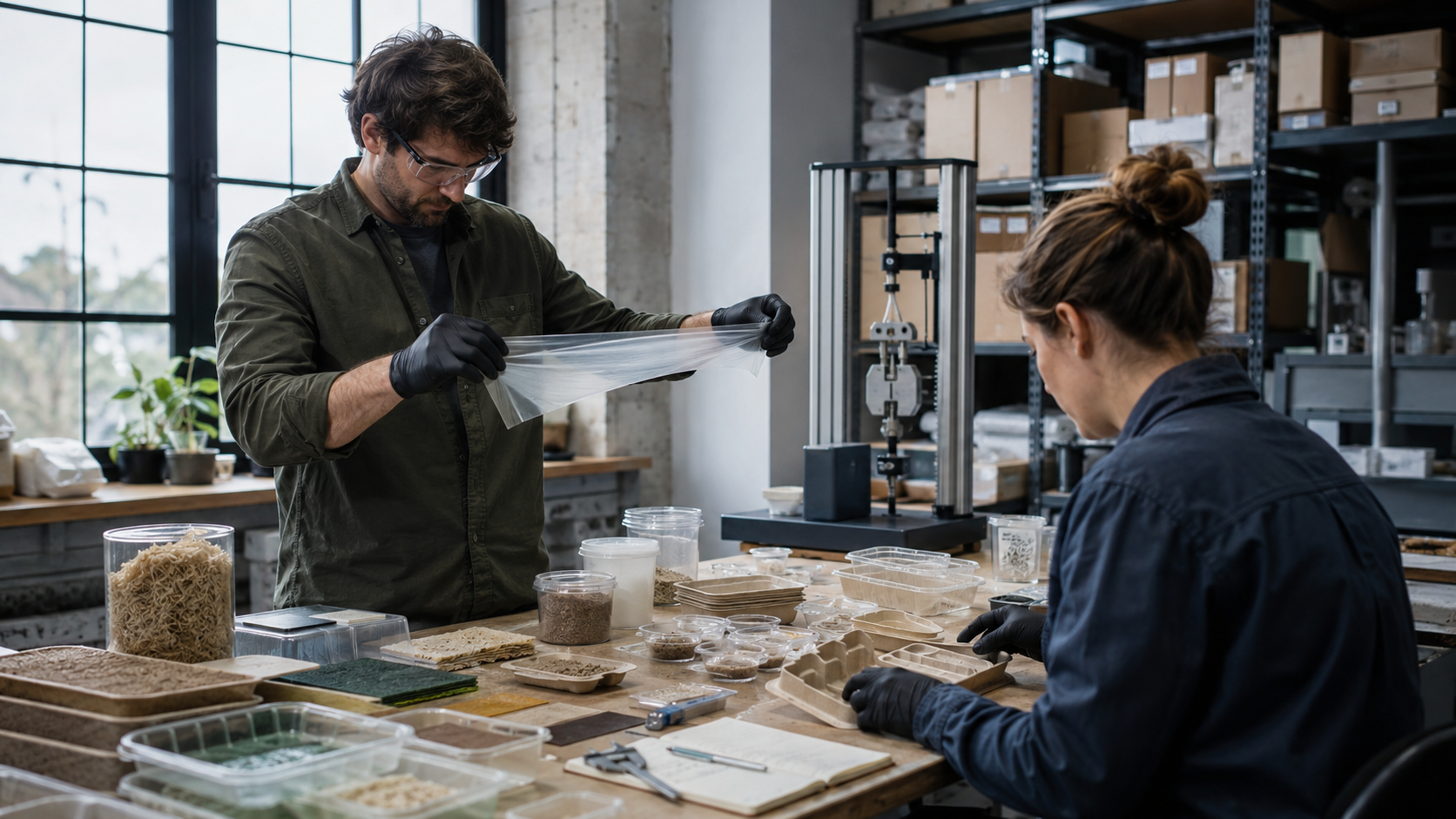
Lab team testing hemp based plastic film and packaging tray samples.
Hemp based plastic packaging may become one of the most interesting industrial use cases in the hemp space. Marijuana Moment, citing reporting from The American Hemp Monitor, highlighted new research showing that CBD derived material could be used to create recyclable hemp based thermoplastics with performance traits that may compete with petroleum based plastics used in packaging and other industrial applications. For hemp operators, manufacturers, investors, cultivators, and supply chain teams, the bigger signal is clear. Hemp may have a larger future in industrial materials, not just wellness products and intoxicating hemp.
Quick facts
• Researchers reported that CBD derived material could be used to create hemp based thermoplastics
• The material reportedly stretched up to 16 times its original length
• Researchers said the material showed strong heat durability
• The study suggests the material may compete with petroleum based plastics such as PET in some applications
• Researchers also said the material may be chemically recyclable to recover CBD
• If scalable, this could create new demand channels for hemp cultivation, packaging innovation, and industrial partnerships
• The universal operator lesson is simple: hemp innovation may create value far beyond retail cannabinoid products
If sustainable packaging or industrial hemp growth is affecting your strategy, complete our quick Cannashield intake form so you can map supply chain, operational, and insurance exposure before new commercial opportunities start moving faster.
Why the material performance gets attention
The reported performance details are what make this story more than a sustainability headline. According to the research summarized in the article, the material stretched up to 16 times its original length and showed strong heat durability. That matters because industrial packaging materials have to do more than sound environmentally friendly. They have to survive real use.
The study also points to a high glass transition temperature, which is important when materials are exposed to heat and moisture. If a hemp derived plastic can stay durable around boiling water and still be shaped and processed at scale, that starts to answer the question every manufacturer asks first. Does it actually work.
This is the universal operator lesson. Innovation only becomes a business opportunity when performance and process can meet real world conditions.
If your company is exploring packaging, manufacturing, or alternative materials, complete our Cannashield questionnaire to pressure test your supply chain and operational exposure before pilot projects turn into larger commitments.
Why recyclability could matter just as much
One of the strongest long term angles in the story is recyclability. Researchers said the material may be chemically recycled so the CBD can be recovered. That is important because sustainable packaging is not only about replacing a petroleum based input. It is also about what happens after the product is used.
If a material can be recycled in a meaningful way, the commercial value gets wider. Packaging companies may care. Consumer goods companies may care. Industrial buyers may care. Investors looking for a cleaner materials story may care. That does not guarantee adoption, but it strengthens the business case if scale and cost eventually line up.
It also gives hemp operators a reason to think more broadly about the crop. A future hemp market may involve more industrial buyers and fewer assumptions that all value has to come from finished consumer products.
What could slow this down
The article also makes an important point about scale. There is not currently enough CBD being produced worldwide to fully replace PET for plastics. That does not kill the idea, but it does show the gap between promising research and broad commercial use.
That gap includes cost, manufacturing scale, raw material availability, equipment compatibility, customer acceptance, and commercial partnerships. A material can perform well in a research setting and still take years to find its way into widespread industrial use. Operators should treat this as a promising innovation signal, not a guaranteed immediate market shift.
That said, early signals matter. The companies that watch new industrial uses early are usually better positioned when pilot projects, licensing deals, or supply agreements finally appear.
If you want to assess how industrial hemp innovation could affect your supply chain, partnerships, or risk planning, use the Cannashield intake form to identify weak points and build a clearer strategy.
You might also like


Conclusion
This hemp based plastic research matters because it expands the conversation around what hemp can become. It suggests a future where hemp is not only a source of cannabinoids, fiber, or seed products, but also a raw material for packaging and industrial plastics.
For operators, manufacturers, investors, and cultivators, the message is simple. Watch this category closely. If the science continues to hold up and scale improves, hemp based plastics could become one of the more important non consumer growth lanes in the industry.
Educational note: This article is for education only and is not legal, regulatory, financial, scientific, or insurance advice.
What To Do This Week
• Review whether your business has any exposure to packaging innovation or sustainable materials
• Identify potential industrial partners that may care about hemp based inputs
• Track whether pilot projects or licensing activity emerge from this research
• Review supply chain readiness if demand for CBD as an industrial input grows
• Compare hemp derived material opportunities with your current product strategy
• Build a short internal memo on where industrial hemp could fit your growth plan
FAQ
What did the study find?
The research suggests CBD derived material could be used to create recyclable hemp based thermoplastics for packaging and industrial use.
Why is this important?
Because it could create a new commercial lane for hemp beyond wellness products and intoxicating hemp.
What performance traits stood out?
The article says the material stretched up to 16 times its original length and showed strong heat durability.
Can the material be recycled?
Researchers said it may be chemically recycled to recover CBD.
Does this mean hemp plastic is ready to replace all traditional plastics?
No. The research is promising, but commercial scale, cost, and supply still need to be worked through.
What is the biggest operator takeaway?
Hemp may have a bigger industrial future, so operators should watch packaging and materials innovation closely.
SOURCES
Marijuana Moment, Hemp Based Plastic Shows Promise As Environmentally Friendly Alternative To Traditional Packaging Materials, Study Finds
https://www.marijuanamoment.net/hemp-based-plastic-shows-promise-as-environmentally-friendly-alternative-to-traditional-packaging-materials-study-finds/
Chem Circularity, CBD based polycarbonates as sustainable replacements for PET thermoplastics
https://www.cell.com/chem-circularity/fulltext/S3051-2948(26)00014-9
UConn Today, A Hemp based Plastic Offers a Greener Alternative to Plastic Packaging
https://today.uconn.edu/2026/05/a-hemp-based-plastic-offers-a-greener-alternative-to-plastic-packaging/

Trulieve and Cronos have each gained roughly 27 percent in 2026 while reporting stronger operating results. The broader signal is that public market attention is increasingly rewarding cash generation, improving margins, liquidity, and measurable revenue growth.