
California Cannabis Local Bans Expose Market Risk
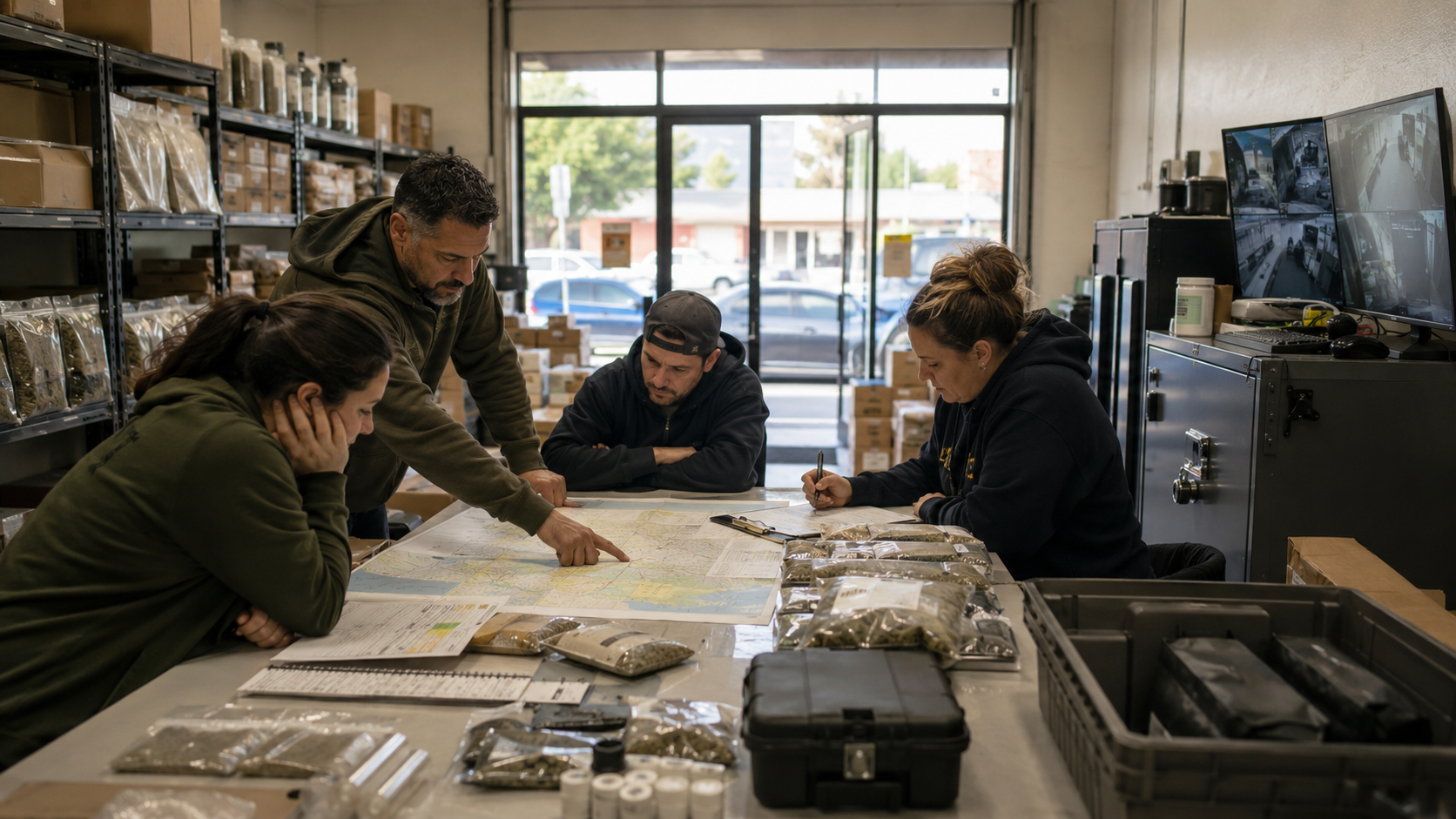
Cannabis staff review compliance records and security footage amid California local ban pressure.
California cannabis local bans are not eliminating demand. New state data suggests they may be leaving more room for unlicensed activity to operate.
Marijuana Moment reported July 14 that 96.6 percent of illicit cannabis seized by California’s Unified Cannabis Enforcement Taskforce in unincorporated areas came from eight counties, almost all of which prohibit licensed cultivation. The data covered enforcement activity from October 2022 through August 2025.
The broader access problem is not limited to cultivation. The California Department of Cannabis Control currently reports that 53 percent of cities and counties allow no cannabis business activity, while 56 percent do not allow any retail cannabis business.
The bigger lesson is not that every local ban directly causes illegal activity. The bigger lesson is that demand does not disappear when licensed access does. It moves into a less visible market where testing, taxes, worker protections, product tracking, and insurance requirements may not exist.
Operating in a market surrounded by local bans, unlicensed competition, or limited retail access? Start a Cannabis Risk Review with Cannashield before market pressure creates gaps across your security, transportation, revenue, property, and insurance files.
Quick facts box
Story classification: California
What happened: DCC data reported July 14 showed that 96.6 percent of illicit cannabis seized in unincorporated areas was found in eight counties, almost all of which prohibit licensed cultivation.
Local access: DCC reports that 284 of California’s 540 cities and counties allow no cannabis business activity. Another 302 do not allow any retail cannabis business.
Recent enforcement: California reported that coordinated operations between April and June 2026 destroyed 63,204 pounds of illicit cannabis, eradicated 89,257 plants, confiscated 17 firearms, and resulted in 24 arrests across 10 counties.
Market mechanism: DCC says tax evading sellers can undercut licensed operators and destabilize the regulated market. The agency also connects illicit operations to unsafe products, worker exploitation, and environmental damage.
Insurance angle: Local access restrictions and unlicensed competition can affect site selection, revenue projections, delivery routes, cash controls, security, vendor verification, transportation, property exposure, and cannabis renewal review.
Universal operator lesson: Local policy can change the risk around a licensed business even when the operator remains fully compliant.
What California cannabis local bans mean for operators
The universal operator lesson is simple: your license does not operate in a vacuum.
A compliant cultivator may still compete against unlicensed supply that avoids testing, taxes, track and trace requirements, environmental controls, worker protections, and insurance costs. A licensed retailer may serve customers from surrounding jurisdictions that prohibit storefronts. A delivery operator may travel farther because legal access is concentrated in fewer locations.
Each condition creates an operational mechanism that belongs in the risk file.
Longer routes can increase vehicle time, employee exposure, product in transit, delivery scheduling pressure, and incident opportunities. Concentrated retail access can create heavier customer traffic, more cash movement, larger inventory needs, and greater reliance on security systems.
Limited cultivation access can also affect supplier concentration. If an operator depends heavily on a small group of licensed vendors, one closure, recall, regulatory interruption, or contract dispute may have a larger effect on inventory and revenue.
Unlicensed competition creates another problem. A licensed operator may respond to pricing pressure by reducing staffing, delaying maintenance, carrying leaner inventory, changing vendors, increasing promotions, or expanding into unfamiliar markets. Those decisions can affect the operation long before they appear on an insurance renewal application.
This is why cannabis risk management cannot be reduced to whether the business has an active license.
The file should explain where customers come from, how products move, which vendors are approved, what transportation controls exist, how inventory is protected, how cash is handled, and whether the revenue forecast reflects actual local market access.
Insurance does not solve an illicit market. It also does not replace licensing, enforcement, product testing, or legal advice.
It can, however, be reviewed against the real operation. Property values should reflect current inventory and equipment. Commercial auto information should match actual delivery activity. Crime controls should match cash and product exposure. General liability and product liability submissions should accurately describe distribution, customer traffic, vendor controls, and incident procedures.
If the business changes because surrounding jurisdictions restrict legal access, the insurance file may need to change with it.
What to do this week checklist
☐ Review the DCC local access map for every jurisdiction surrounding your operation.
☐ Confirm which nearby cities and counties allow cultivation, retail, manufacturing, distribution, testing, and delivery activity.
☐ Map where customers, employees, vendors, and deliveries are actually coming from.
☐ Compare actual delivery mileage and vehicle use against the commercial auto application.
☐ Review product in transit limits, driver procedures, route controls, vehicle security, and incident reporting.
☐ Verify every supplier’s current license, location, product category, insurance requirements, and contract status.
☐ Compare inventory values, cash levels, customer traffic, and property schedules against current operating data.
☐ Review camera coverage, alarms, access controls, safe procedures, closing procedures, and robbery response training.
☐ Stress test revenue projections against pricing pressure, supplier interruption, local enforcement changes, and slower customer traffic.
☐ Add local market access, vendor concentration, delivery activity, and security changes to the cannabis renewal review file.
FAQ
1. Can California cities and counties prohibit cannabis businesses?
Yes. California allows local governments to prohibit some or all cannabis business activity. DCC currently reports that 53 percent of cities and counties allow no cannabis business activity.
2. Do local bans eliminate cannabis demand?
DCC’s position is that local restrictions do not eliminate consumer demand. The newly reported enforcement data suggests that significant unlicensed activity remains concentrated in counties that prohibit licensed cultivation.
3. Why does this matter to a licensed operator?
Unlicensed competition can affect pricing, revenue, staffing, inventory, expansion, transportation, and security decisions. Those changes may alter the exposures described in the insurance file.
4. What should operators review if delivery activity increases?
Review driver records, vehicle use, delivery mileage, route procedures, product in transit, employee training, cash handling, customer handoffs, commercial auto, and incident reporting.
5. Can enforcement activity create direct coverage automatically?
No. Coverage depends on the policy language, facts, exclusions, conditions, and reporting requirements. Operators should not assume that any enforcement related loss or interruption is automatically covered.
6. What is the practical takeaway for smaller operators?
Know the legal access map around your business. Local restrictions can change where customers come from, how far products travel, which vendors remain available, and how much pressure the operation carries.
Conclusion
California’s local cannabis rules create more than a licensing map. They shape where legal businesses can operate, how customers reach them, how products move, and where unlicensed competition can remain active.
Operators should not wait for an enforcement headline or difficult renewal to document those conditions.
Review the surrounding jurisdictions, customer movement, delivery activity, supplier concentration, security controls, inventory values, and revenue assumptions now. A compliant license is essential, but the stronger file also explains the market operating around it.
Cannashield helps cannabis operators review the insurance details behind local access, delivery activity, vendor concentration, property values, security, cash controls, transportation, and renewal documentation.
Start a Cannabis Risk Review before outside market pressure creates internal insurance gaps.
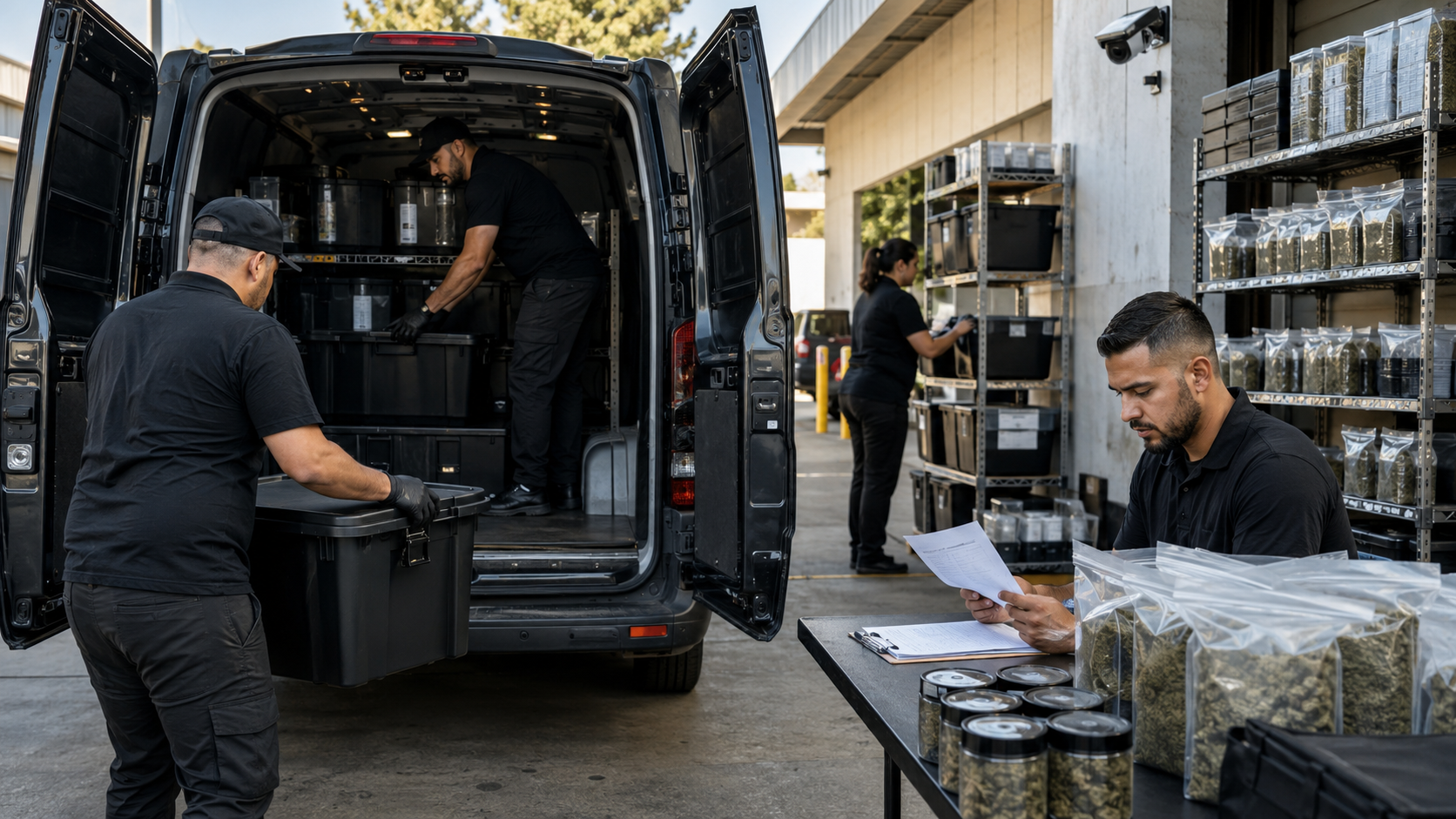
Cannabis team reviews delivery inventory and security records in California.
Educational note
This article is for educational purposes only. It is not legal, regulatory, tax, financial, security, law enforcement, or insurance coverage advice. Cannabis operators should consult qualified professionals before making licensing, operational, financial, security, or insurance decisions.
You might also like


SOURCES
Primary source: California Department of Cannabis Control, Where Cannabis Businesses Are Allowed
https://www.cannabis.ca.gov/cannabis-laws/where-cannabis-businesses-are-allowed/
Primary enforcement source: Governor of California, July 8, 2026
https://www.gov.ca.gov/2026/07/08/california-continues-illegal-cannabis-crackdown-seizing-more-than-63000-pounds-of-illegal-cannabis-in-three-months/
Supporting source: Marijuana Moment, July 14, 2026
https://www.marijuanamoment.net/californias-top-marijuana-regulator-says-local-bans-benefit-illicit-market-with-97-of-busts-in-counties-without-legal-growers/

Trulieve and Cronos have each gained roughly 27 percent in 2026 while reporting stronger operating results. The broader signal is that public market attention is increasingly rewarding cash generation, improving margins, liquidity, and measurable revenue growth.