
Kansas Hemp THC Raids Expose Retail Enforcement Risk
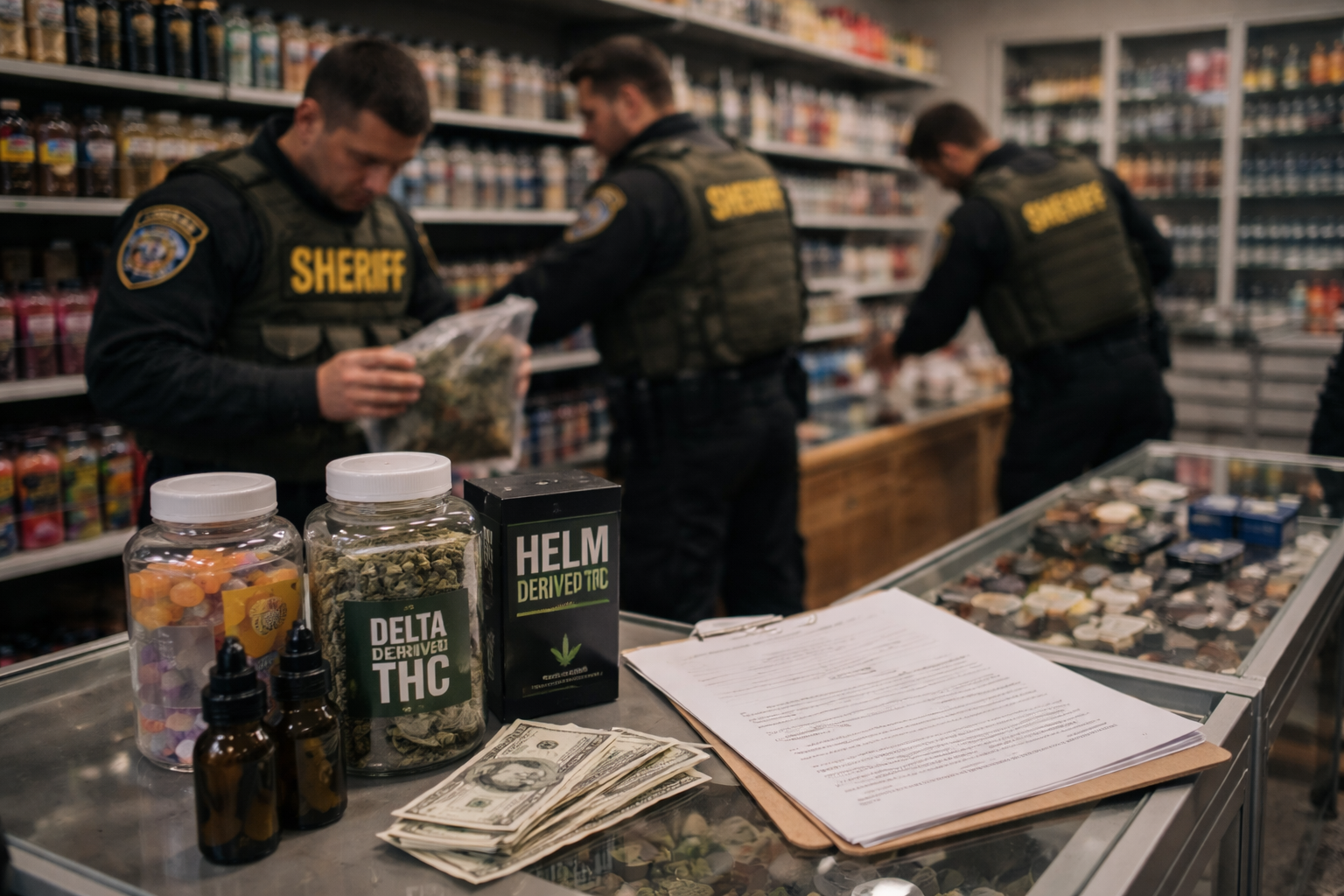
Kansas retail enforcement scene showing hemp THC products, shop records, cash, and officers reviewing suspected violations.
Kansas hemp THC retail enforcement risk is no longer theoretical. Three smoke and vape shops are suing Kansas officials over October 2025 raids, alleging illegal search and seizure and arguing that the warrants failed to distinguish between legal and illegal hemp derived products under Kansas law. The case matters far beyond one lawsuit because it shows how quickly a retail category built around legal gray zones can turn into a fight over warrants, inventory, and whether a product ever belonged on the shelf in the first place.
Quick facts
• Kansas Attorney General Kris Kobach and KBI Director Tony Mattivi announced a statewide enforcement operation on October 1, 2025 targeting vape shops and CBD dispensaries in multiple cities.
• Kansas Reflector reported that three smoke and vape shops later sued the state, alleging Fourth Amendment violations, illegal search and seizure, and defective warrants.
• Kansas law defines final hemp products as products that may contain no more than 0.3 percent tetrahydrocannabinol concentration, and the controlled substances law excludes industrial hemp and hemp products unless they are otherwise unlawful under a separate hemp statute.
• Kansas law also separately makes certain hemp products unlawful, including liquids, solids, or gases containing industrial hemp for use in vaporizing devices.
If Kansas style hemp THC enforcement risk is affecting your retail plan, Start with our quick Cannashield intake form so you can map product, labeling, and inventory exposure before it becomes a legal problem.
Why This Lawsuit Matters Beyond Kansas
The lawsuit is important because it is not just arguing that officers took product. It is arguing that the state used warrants that treated hemp derived THC products too broadly, without separating lawful products from unlawful ones. Kansas Reflector reported that the plaintiffs say the warrants failed to acknowledge that some hemp derived products are legal in Kansas, and that one warrant stated all derivatives of THC were contraband. That claim goes right to the heart of the issue for retailers across the country. When state law draws a narrow line, broad assumptions by either side can get expensive fast.
The universal operator lesson is simple. A gray area revenue stream is only as strong as the file behind it. If your team cannot show why a product is lawful in that specific state, in that specific form, under that specific statute, then you do not really have clean revenue. You have exposed revenue. [Hemp Product File Review] [Retail Search Response Checklist] This is an inference based on the lawsuit allegations and the Kansas enforcement posture.
Kansas Law Is More Nuanced Than Many Retailers Think
A lot of shops treat hemp law like a simple math test. Under Kansas law, that is not enough. The state defines hemp products and allows final hemp products with no more than 0.3 percent tetrahydrocannabinol concentration. Kansas controlled substances law also says tetrahydrocannabinols do not include industrial hemp or hemp products as defined by the hemp statute, unless those products are otherwise deemed unlawful under K.S.A. 2 3908.
That last part is the trap. Kansas also says certain hemp products are unlawful to manufacture, market, sell, or distribute, including liquids, solids, or gases containing industrial hemp for use in vaporizing devices, along with certain other products intended for human or animal consumption. In other words, the legal line in Kansas is not just about whether something comes from hemp. It is also about product form, use case, and how state law treats that category. [Kansas Hemp Product Risk Map] This is why a retailer can feel protected by one part of the law while still being exposed under another.
If your store carries any hemp THC products that sit near a state line like this, use our Cannashield questionnaire to pressure test your product forms, paperwork, and shelf decisions before regulators do it for you.
The State And Retailers Are Telling Very Different Stories
Kansas officials framed the October operation as a statewide enforcement action against products being sold illegally in Kansas. The attorney general’s office said KBI and partner agencies were seizing marijuana vegetation, THC vape cartridges, and other items containing suspected illegal concentrations of THC. Kansas Reflector also reported that KBI said the warrants were reviewed and signed by a judge and gave agents authority to seize illegal products and contraband.
The retailers are telling a very different story. According to Kansas Reflector, the lawsuit says officers seized hemp derived products without distinguishing legal from illegal items under Kansas law. The report also says the shops claim they lost thousands of dollars in inventory and that officers told employees not to film, covered windows, and unplugged internet and in store security cameras. Those are still allegations, not findings, but they show how fast an enforcement dispute can become a search, seizure, and civil rights fight instead of a simple compliance conversation. [Inventory Seizure Readiness Guide] [Retail Documentation Controls]
What Smart Retailers Should Fix Now
The safest move is not to argue with the market after the raid. It is to tighten the file before the knock comes. Retailers should know which products are lawful under their state’s actual statutes, which forms create extra risk, what supplier documents they have on hand, and whether each SKU can be defended with one clean paper trail. This is especially true in states where hemp legality and intoxicating product enforcement are pulling against each other at the same time. That is an inference based on the Kansas statutes and the enforcement pattern described in the cited sources.
If uncertainty around hemp THC product legality, paperwork, or enforcement exposure is affecting how you plan or negotiate, Complete our quick Cannashield intake form so you can identify weak spots before your next move gets forced on you.
Conclusion
The Kansas lawsuit is a reminder that hemp THC retail is not protected just because a product sounds legal in conversation. State law, product form, warrant language, and enforcement posture all matter. Operators in any state should take the same lesson from this fight: if your product file cannot explain exactly why an item belongs on the shelf, you may be more exposed than you think.
Educational note: This article is for education only and is not legal, regulatory, or insurance advice.
What To Do This Week
• Pull every hemp THC SKU and sort it by product form, not just cannabinoid label.
• Review whether any products could fall into a category Kansas style laws specifically restrict.
• Confirm you have supplier paperwork, test records, and product descriptions for every item.
• Build a one page legal and compliance file for each high risk product.
• Train staff on what to do if officers arrive with a warrant or demand inventory.
• Remove anything your team cannot defend with one clean explanation and one clean file.
FAQ
What is the Kansas lawsuit about?
Three smoke and vape shops sued Kansas officials over October 2025 raids, alleging illegal search and seizure and defective warrants.
Why are the warrants such a big issue?
The plaintiffs say the warrants failed to distinguish legal hemp derived products from illegal products under Kansas law.
Does Kansas law allow any hemp products?
Yes. Kansas law defines hemp products and allows final hemp products with no more than 0.3 percent tetrahydrocannabinol concentration, while also excluding certain hemp products from the tetrahydrocannabinol controlled substances listing unless otherwise unlawful.
Does Kansas also ban some hemp product categories?
Yes. Kansas law specifically makes some hemp products unlawful, including liquids, solids, or gases containing industrial hemp for use in vaporizing devices.
What was the state’s position during the raids?
Kansas officials said they were conducting a statewide enforcement operation to seize products being sold illegally in Kansas, including THC vape cartridges and items with suspected illegal concentrations of THC.
What is the operator lesson here?
Do not confuse product popularity with legal clarity. If your files do not show why a product is lawful in your state and in that exact form, enforcement risk is higher than it looks. This is an inference based on the Kansas statutes and the lawsuit allegations.