
Maryland Cannabis Tax Revenue Shows Adult Use Market Strength

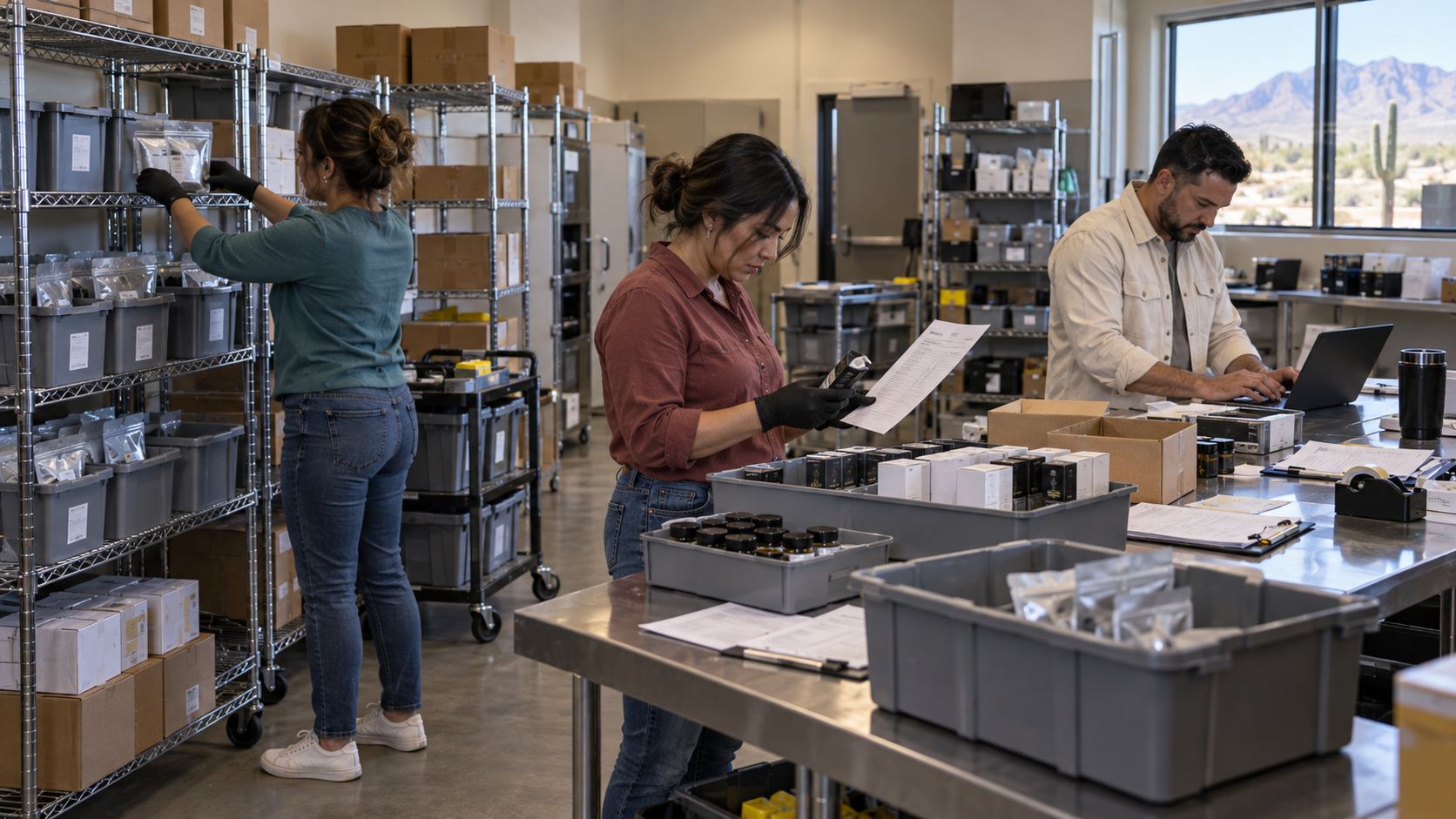
Cannabis staff checking inventory and sales reports in Maryland
Maryland’s adult use cannabis market is now producing meaningful public revenue less than two years after retail sales began. The Outlaw Report covers newly released Maryland Comptroller data showing the state generated more than $17.5 million in adult use cannabis tax revenue during Q1 2025. The report says about $3.76 million went to the Community Reinvestment and Repair Fund, about $5.37 million went to the general fund, and the Central region led statewide collections with nearly $7.92 million. For operators, retailers, investors, lenders, compliance teams, and local governments, this is a clear sign that Maryland cannabis sales are becoming part of the state’s public finance story.
Quick facts
• Maryland generated $17,510,109 in adult use cannabis tax revenue during Q1 2025
• The quarter covered January through March 2025
• Maryland applies a 9 percent sales and use tax to adult use cannabis and cannabis products
• About $6.78 million was allocated to the Maryland Cannabis Administration
• About $3.76 million went to the Community Reinvestment and Repair Fund
• About $536,500 went to counties and municipalities
• About $536,500 went to the Cannabis Public Health Fund
• About $536,500 went to the Cannabis Business Assistance Fund
• About $5.37 million went to Maryland’s general fund
• The universal operator lesson is simple: once cannabis tax revenue becomes visible public money, future expectations usually rise
If Maryland tax revenue trends are affecting your growth plan, complete our quick Cannashield intake form so you can map tax, retail, compliance, and insurance exposure before public revenue expectations create new pressure.
Why this revenue report matters
This report matters because it shows Maryland’s adult use market is no longer just a launch story. Retail sales began on July 1, 2023, after voters approved legalization in 2022 and lawmakers passed the Cannabis Reform Act of 2023. By Q1 2025, the state was already collecting enough revenue to fund public programs, local distributions, cannabis administration, and the general fund.
That matters for operators because public revenue can change the political conversation. When a cannabis market starts generating consistent money, lawmakers and agencies often become more focused on revenue stability, compliance, local distributions, and whether licensed sales are capturing enough demand. That can help protect the legal market, but it can also raise expectations on licensed retailers.
Why allocation matters more than the headline number
The $17.5 million total is important, but the allocation tells the real story. The Comptroller report shows that after the Maryland Cannabis Administration allocation, more than $10.73 million remained for distribution across several state directed uses. The Community Reinvestment and Repair Fund received the largest share of eligible distributed revenue at about $3.76 million.
That allocation matters because Maryland’s cannabis framework was built around more than simple legalization. The state created revenue channels tied to reinvestment, public health, business assistance, local governments, and the general fund. Operators should understand that tax collections are being watched not only as a business metric, but also as a policy outcome.
This is the universal operator lesson. Cannabis taxes are not just a cost of doing business. They are part of the public argument for the legal market.
If uncertainty around tax obligations, regional sales strength, or local funding expectations is affecting how you plan, complete our Cannashield questionnaire to pressure test your exposure before tax pressure becomes a bigger operating issue.
Why regional performance deserves attention
Maryland’s Central region led the state in Q1 2025 cannabis tax collections with about $7.92 million. The Capital region followed with about $3.86 million, while the Southern region generated about $2.73 million. Western Maryland accounted for about $2.17 million, and the Eastern region produced about $831,000.
Those regional gaps matter for operators and investors. They can signal where consumer demand, retail density, tourism patterns, population concentration, and store access are strongest. They can also influence local government expectations. A region that generates more tax revenue may see more political attention, more scrutiny, and more competition for retail positioning.
For lenders and landlords, regional tax performance can help shape market assumptions. A strong revenue region may support better retail demand, but operators still need to account for rent, payroll, security, inventory costs, tax remittance, and price pressure.

Cannabis shop sales floor and back office operations in Maryland
Why future tax expectations could rise
Maryland’s cannabis tax structure currently uses a 9 percent sales and use tax on adult use cannabis and cannabis products. That rate may look moderate compared with heavier tax markets, but operators should not assume it will stay politically quiet forever. As public revenue becomes more visible, future budget conversations may include pressure to protect, expand, or redirect cannabis tax dollars.
This is why operators need clean financial controls. Tax remittance, point of sale reporting, reconciliation, inventory controls, and monthly cash planning all matter. A retailer can have strong sales and still get into trouble if tax cash is not separated, tracked, and paid on time.
If you need to organize tax, sales, inventory, and insurance records before Maryland’s market gets more competitive, use the Cannashield intake form to identify weak points and build a cleaner operating file.
You might also like

Conclusion
Maryland’s Q1 2025 cannabis tax report shows a legal adult use market that is already producing meaningful public revenue. The state collected more than $17.5 million in one quarter, with money flowing to reinvestment, public health, business assistance, local governments, cannabis administration, and the general fund.
For operators, retailers, investors, lenders, compliance teams, and local governments, the message is simple. Maryland’s market is becoming financially important. That creates opportunity, but it also means tax compliance, regional performance, and public revenue expectations will matter more as the market matures.
Educational note: This article is for education only and is not legal, regulatory, tax, financial, investment, or insurance advice.
What To Do This Week
• Review cannabis tax remittance procedures and confirm Q1 reporting accuracy
• Compare store performance against Maryland’s regional revenue patterns
• Track Community Reinvestment and Repair Fund allocations and local funding expectations
• Review whether sales growth assumptions still work after taxes, rent, payroll, and inventory costs
• Confirm point of sale, accounting, and inventory records match tax filings
• Build a short internal memo on Maryland tax exposure, regional demand, and public revenue pressure
FAQ
How much adult use cannabis tax revenue did Maryland collect in Q1 2025?
Maryland collected $17,510,109 in adult use cannabis tax revenue during January through March 2025.
How much went to the Community Reinvestment and Repair Fund?
About $3.76 million went to the Community Reinvestment and Repair Fund.
How much went to Maryland’s general fund?
About $5.37 million was transferred to Maryland’s general fund.
Which region generated the most cannabis tax revenue?
The Central region led statewide collections with nearly $7.92 million.
What is Maryland’s adult use cannabis tax rate?
Maryland applies a 9 percent sales and use tax to adult use cannabis and cannabis products.
What is the biggest operator takeaway?
Maryland cannabis tax revenue is now meaningful public money, so operators need strong tax controls, clean records, and realistic margin planning.
SOURCES
The Outlaw Report, Maryland cannabis tax revenue reaches $17.5 million in first quarter of 2025
https://outlawreport.com/maryland-cannabis-tax-revenue-reaches-17-5-million-in-first-quarter-of-2025/
Comptroller of Maryland, Maryland Quarterly Cannabis Update Q1 2025
https://www.marylandcomptroller.gov/content/dam/mdcomp/md/cannabis/reports/cannabis-update-q1-2025.pdf
Comptroller of Maryland
https://www.marylandcomptroller.gov/

A federal crackdown could reshape an estimated $28 billion hemp THC market as businesses prepare for product restrictions, stranded inventory, reformulation costs, and major revenue disruption. Tennessee offers an early example of how quickly farmers, manufacturers, and retailers may need to pivot.