
Delaware Cannabis Sales Show First Year Execution Gap

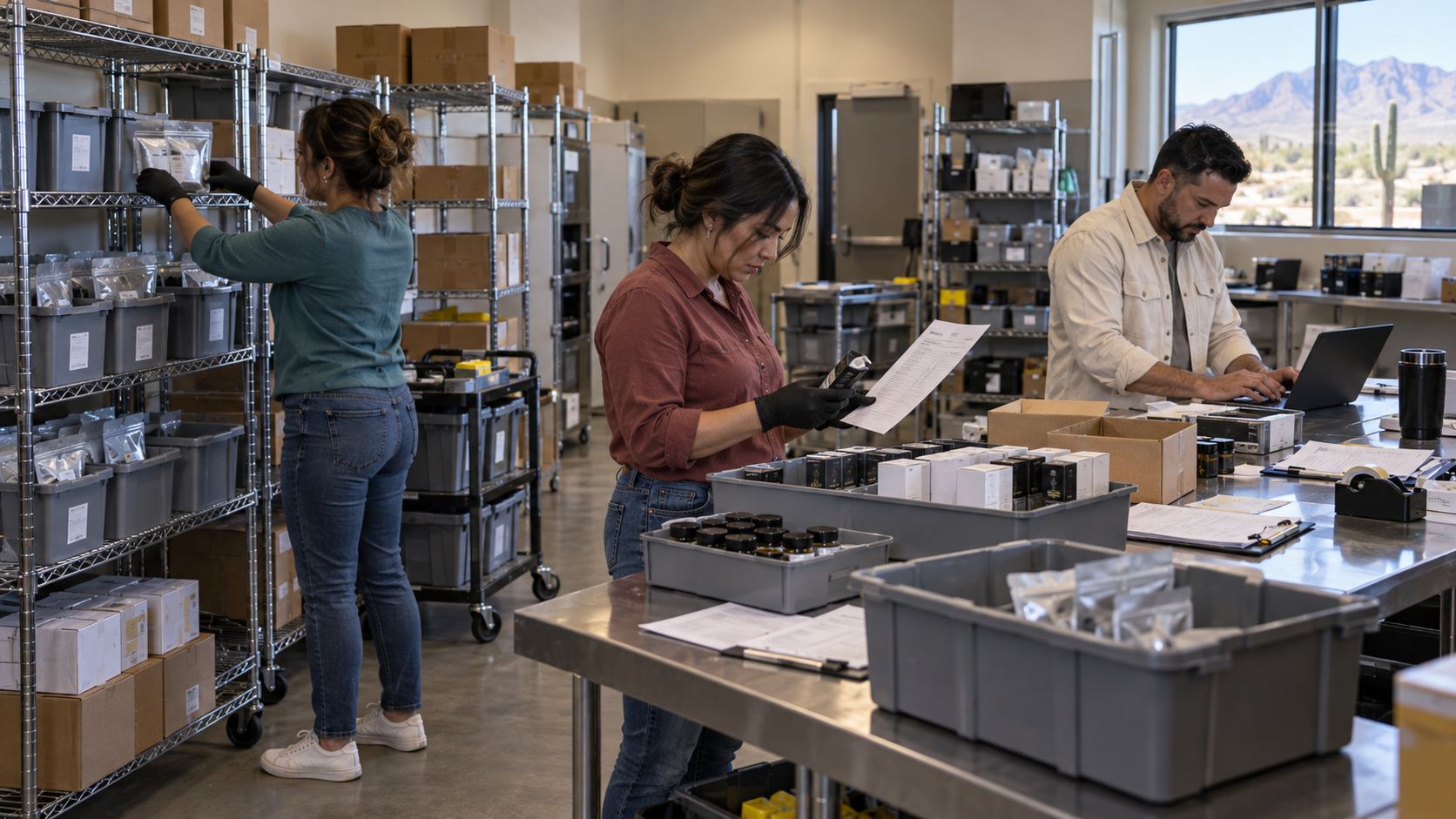
Delaware cannabis staff preparing a new retail location
Delaware cannabis sales hit $53.4 million during the state’s first year of adult use retail, with $8 million collected in sales tax since the market launched on August 1, 2025. MJBizDaily reported the first year total through Bay to Bay News, while also noting that the market is still far below the earlier $281 million annual sales projection. The bigger lesson is not that Delaware failed. It is that legalization headlines and actual market execution are two very different things.
Quick facts
• Delaware adult use cannabis sales totaled $53.4 million during the market’s first year
• Delaware collected $8 million in sales tax during that period
• Adult use retail sales launched on August 1, 2025
• Sales began through existing medical cannabis operators that paid conversion fees for adult use permits
• Adult use cannabis sales are subject to a 15 percent excise tax
• Delaware is pacing far below the earlier $281 million annual sales projection
• The state reported $7.35 million in first month adult use retail sales
• OMC said 38 cannabis business licenses are active or preparing to open
• Senate Bill 75 became law after a veto override and limits county restrictions on certain cannabis businesses
• The universal operator lesson is simple: market projections only matter if licensing, zoning, supply, retail access, and capital all move together
If Delaware market timing is affecting your business plan, complete our quick Cannashield intake form so you can map licensing, zoning, tax, capital, real estate, and insurance exposure before a slow rollout turns into a larger operating problem.
Why Delaware’s first year matters
Delaware’s first year matters because the market shows how much can happen between legalization and real commercial performance. The state legalized adult use cannabis in 2023, but retail sales did not begin until August 1, 2025. State officials said medical cannabis conversion licensees were allowed to begin adult use sales first, while the broader licensing system continued to develop.
That created a market that was technically open, but not fully built. Sales could begin, tax revenue could flow, and consumers could buy regulated products. But the first year still depended heavily on converted medical operators, limited retail access, developing supply, and the slow work of getting lottery selected businesses operational.
For operators and investors, this is the important distinction. Legalization creates the legal framework. Execution creates the market.
Why the $281 million projection matters
The gap between $53.4 million in actual first year sales and the earlier $281 million annual projection is the core business signal. Projections often assume enough retail access, enough supply, enough customer conversion from the illicit market, enough zoning access, and enough capital to get operators open. If any of those pieces move slowly, the market misses its model.
That does not mean Delaware has no demand. It means the state is still in an early execution phase. New markets often take time to move from legal permission to real consumer access. If stores are not open, shelves are limited, locations are restricted, or prices remain too high, customers may keep buying elsewhere.
This is the universal operator lesson. A legal market can underperform even when consumer interest is real.
Why licensing and supply are the next test
Delaware officials are looking to add more operators. CoastTV reported that OMC said 38 cannabis business licenses are active or preparing to open, including cultivation, manufacturing, retail, and lab operations. The same report said Delaware approved nine Social Equity Financial Assistance Grant awards totaling more than $1 million, with $341,250 already distributed.
That matters because a small market cannot scale on retail alone. Cultivators need to produce enough consistent product. Manufacturers need to create enough variety. Labs need to support testing. Retailers need viable locations and reliable shelves. If one part of the chain lags, the rest of the market feels it.
More businesses entering the market may help drive competition, improve product selection, reduce prices, and create better consumer access. But new operators also need capital, real estate, insurance, staff, vendors, banking relationships, and clean compliance files before they can open.
Why zoning became a market access problem
Zoning has been one of Delaware’s biggest execution problems. Earlier local restrictions limited where cannabis businesses could operate, creating a bottleneck for license holders trying to secure viable real estate. In 2026, Delaware’s General Assembly overrode Gov. Matt Meyer’s veto of Senate Bill 75, making the bill law. The official bill page shows the veto was overridden on July 1, 2026, with an effective date of July 1, 2026.
SB 75 limits the restrictions counties can impose. The law says counties may only prohibit retail cannabis stores in certain commercial or industrial zones if they are within a half mile of another retail cannabis store or within 500 feet of specified sensitive uses such as schools, child care facilities, treatment facilities, parks, or libraries.
For landlords and retailers, this changes the real estate conversation. A license is not enough. Operators still need zoning, permits, construction approval, lease terms, security plans, and local acceptance. But clearer limits on county restrictions can reduce one of the biggest barriers to opening.
If you need to organize licensing, zoning, lease, permit, and insurance records before entering Delaware, use the Cannashield intake form to identify weak points and build a cleaner market entry file.
Conclusion
Delaware’s $53.4 million first year sales total is not just a revenue number. It is a market execution report card. The state opened adult use sales, collected $8 million in sales tax, and created a path for more lottery selected businesses to enter. But the market remains far below the earlier $281 million projection, showing how delays, zoning, limited retail access, supply constraints, and capital pressure can slow a new program.
For operators, retailers, investors, lenders, landlords, and compliance teams, the message is simple. Do not underwrite a cannabis market based only on legalization. Underwrite the actual path to opening, including zoning, permits, supply, taxes, pricing, capital, and insurance.
Educational note: This article is for education only and is not legal, regulatory, tax, financial, licensing, real estate, investment, lending, or insurance advice.
What to do this week
• Compare Delaware sales projections against actual retail access and store count
• Review zoning and county rules before assuming a license can become an operating business
• Confirm whether supply, testing, manufacturing, and retail capacity are developing together
• Model tax revenue expectations using slower rollout assumptions
• Review leases, permit timelines, capital needs, buildout costs, and insurance requirements before opening
• Build a short internal memo on Delaware market timing, zoning risk, licensing delays, and first year sales performance
FAQ
How much did Delaware’s adult use cannabis market sell in its first year?
Delaware adult use cannabis sales totaled $53.4 million during the market’s first year.
How much cannabis tax revenue did Delaware collect?
Delaware collected $8 million in sales tax during the first year of adult use sales.
When did Delaware adult use retail sales begin?
Adult use retail sales launched on August 1, 2025.
Why are Delaware sales below the earlier projection?
The market has been slowed by licensing delays, zoning limits, supply chain buildout, limited retail access, and the time required to move lottery selected businesses into active operations.
How many new businesses are preparing to enter?
OMC said 38 cannabis business licenses are active or preparing to open.
What is the biggest operator takeaway?
Delaware shows that legalization does not automatically create a full market. Operators need licensing, zoning, capital, real estate, supply, and compliance to align before projections become real revenue.
What this means for operators
Cannabis business news can quickly become an insurance, compliance, contract, renewal, or claims issue. If this topic could affect your operation, review your insurance setup before pressure shows up from a landlord, lender, carrier, contract partner, regulator, or claim.

Delaware cannabis operators reviewing sales and tax performance
You might also like

SOURCES
MJBizDaily, Delaware cannabis sales hit $53.4 million in market’s first year
https://mjbizdaily.com/news/delaware-cannabis-sales-hit-53-4-million-in-markets-first-year/617260/
State of Delaware News, Delaware to Launch Adult Use Marijuana on August 1
https://news.delaware.gov/2025/07/01/delaware-to-launch-adult-use-marijuana-on-august-1/
Delaware General Assembly, Senate Bill 75
https://legis.delaware.gov/BillDetail/141969

The bipartisan CLAIM Act would protect insurers, brokers, and agents from federal penalties solely for serving state legal cannabis businesses. The proposal could encourage greater carrier participation while leaving underwriting decisions, state regulation, pricing, exclusions, and coverage terms in the hands of insurers.