Mature cannabis markets can still get dragged into rollback fights
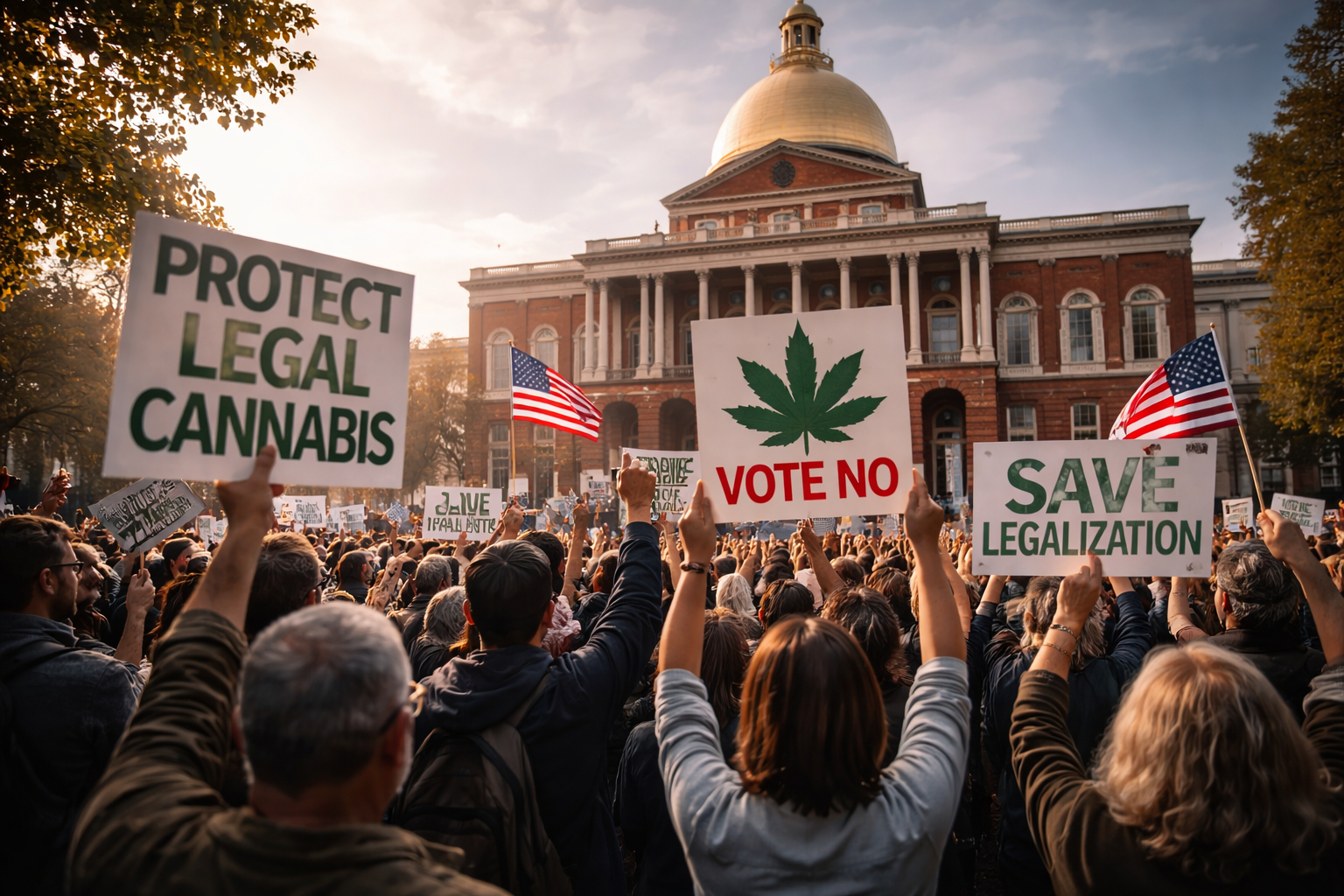
Crowd rallies outside the Massachusetts State House urging “Vote No” to stop an adult use cannabis repeal ballot effort.
When people talk about cannabis risk, they usually jump straight to the federal stuff. Scheduling, enforcement, banking, interstate commerce, all the big national headlines.
But some of the most disruptive risk shows up way closer to home.
Massachusetts is a good example. A state commission recently dismissed a challenge aimed at stopping a ballot question effort that would repeal adult use cannabis legalization. The objection targeted how signatures were gathered, and the commission’s decision cleared the procedural hurdle. The repeal question is now still alive in the process, which is the point operators should pay attention to.
Not because repeal is guaranteed. It is not. But because it proves a bigger truth: even “established” legal markets can face local political rollback attempts that create uncertainty for retail footprints, investment terms, expansion plans, and valuation expectations.
This is the kind of policy risk that does not come with a warning label. It just shows up as a ballot fight, a campaign wave, and a lot of noise that makes lenders, investors, landlords, and partners pause.
If you operate in a state where ballot questions can reshape the rules, it is smart to pressure test your exposure early. Start with our quick Cannashield intake form
What actually happened and why it matters
Here’s the simple breakdown.
An objection was filed against the repeal initiative, claiming issues with how signatures were collected. The State Ballot Law Commission reviewed it and dismissed the objection, largely because there was not admissible evidence presented that would invalidate enough signatures to knock the petition out.
Procedurally, that matters because initiative campaigns live and die by deadlines, signature thresholds, and technical compliance. If you survive the challenge stage, you stay in the game.
The petition has already cleared an early signature certification step. From there, Massachusetts uses a multi stage process that moves certified petitions to lawmakers for consideration. If lawmakers do not enact the proposal, petitioners can be allowed to collect a final round of signatures to qualify for the statewide ballot.
Operator translation: even if you never see a press release, the market can get forced into a high stakes question that creates uncertainty around the rules of the road.
Why rollback attempts are a real business risk, not just politics
A repeal effort is not just a cultural debate. It’s a financial risk event.
Even if the market ultimately votes to keep adult use legal, the campaign period can still create damage through uncertainty.
Here is where that uncertainty hits first:
Capex freezes. Expansion slows because nobody wants to build into an unclear future.
Financing pressure. Lenders tighten terms when regulatory stability looks shaky.
Valuation swings. Buyers and investors price in risk, which can drag down deal multiples.
Retail hesitation. Landlords and municipalities get more cautious when the headlines get loud.
Customer confusion. Mixed messaging creates friction at the point of sale and can impact demand.
This is why local policy risk belongs on the same risk board as compliance, security, and insurance. It affects the entire operating environment.
Where operators and investors get exposed during ballot fights
Ballot questions create a unique type of operational stress because they introduce risk without changing the rules immediately.
You are still expected to operate normally, while everyone around you starts thinking in “what if” scenarios.
Common exposure points include:
Retail footprint and lease decisions
If you are signing a long lease, building out a location, or negotiating renewals, political uncertainty changes leverage. A landlord may want stronger guarantees. You may want exit options.
Inventory and supply commitments
Rollback noise can impact demand forecasts, wholesale relationships, and purchasing plans. Getting stuck with product you cannot move is a real cash flow problem.
Hiring and growth planning
Scaling headcount while policy is being questioned can make operators overextend. On the other hand, freezing hiring too long can weaken execution. You need a plan, not a panic response.
M&A and partnership terms
Deal terms get tighter in uncertain environments. More contingencies. More holdbacks. More “wait and see.”
If you want a quick checklist that flags the most common policy risk weak spots in your business, Complete our Cannashield questionnaire
How to protect your business while the rules are being debated
You cannot control campaigns. You can control readiness.
Here are practical moves that help operators stay steady while the political climate swings:
Build a simple scenario plan. What changes if the market stays the same, tightens, or reverses? Tie each scenario to actions on staffing, inventory, capex, and partnerships.
Strengthen contracts and documentation. Clean records, clean compliance, and clear agreements reduce surprises when partners get nervous.
Review lease flexibility. Talk to your broker or legal counsel about clauses that matter during regulatory uncertainty, especially termination, assignment, and default triggers.
Stay plugged into local politics. Not emotionally. Operationally. Track what is moving, who is funding it, and how municipalities are reacting.
Tighten your risk posture. When outside stakeholders get cautious, operators with strong controls, training, and documentation look safer. That impacts everything from partnerships to insurance conversations.
This is not about fear. It is about running your business like you expect volatility, because cannabis markets are still young enough to produce it.
Conclusion
Massachusetts is a clear reminder that policy risk is not only federal. It can show up locally, through ballots, campaigns, and procedural fights that keep markets in flux even after years of legal operation.
For operators and investors, the smartest move is to treat local stability as a real part of business planning. Protect the footprint, keep terms clean, and build scenarios that let you move without guessing.
At Cannashield, we help cannabis businesses pressure test risk and tighten the operational side so politics does not become a surprise expense.