
Missouri Cracks Down on Hemp-Derived THC Beverages as Market Booms
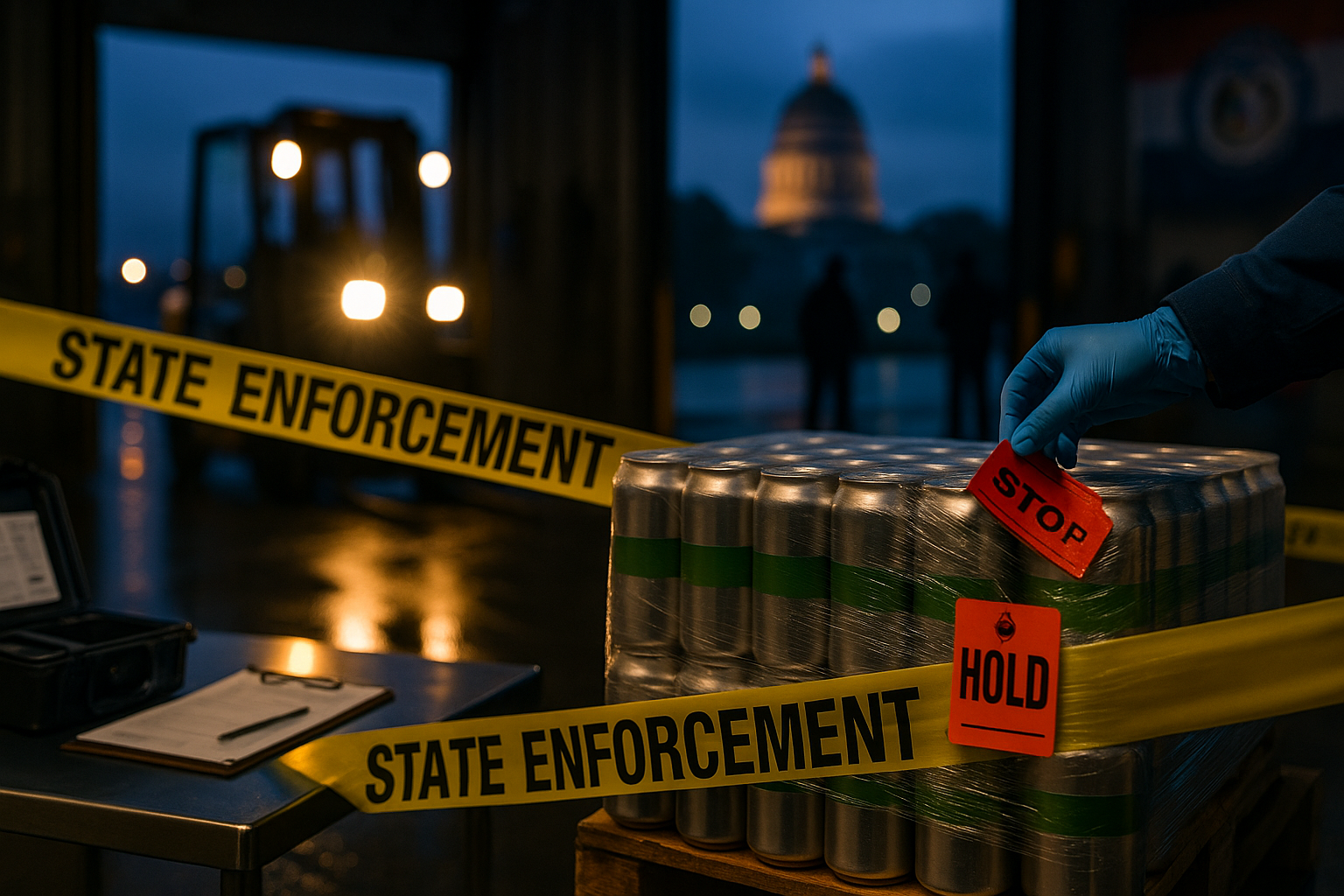
Missouri enforcement tape surrounding a pallet of hemp-derived THC beverages, symbolizing the state’s regulatory crackdown on untested products and compliance violations.
Missouri’s rapidly growing hemp-derived THC beverage market is facing new scrutiny from regulators. As sales of these drinks surge — with analysts projecting nearly 25% market growth in 2025 — state officials are preparing a wave of enforcement actions targeting unregistered manufacturers and mislabeled products.

The Missouri Division of Cannabis Regulation (DCR) has signaled that hemp-derived THC beverages, many of which are sold outside the state’s licensed cannabis program, could soon face tighter oversight, product seizures, and penalties. It’s a move that reflects growing tension nationwide between entrepreneurial innovation and regulatory uncertainty.
If your business sells or distributes hemp-derived products, now’s the time to ensure you’re protected. Start with our quick Cannashield intake form to assess compliance, coverage, and risk exposure before new enforcement hits.
A Growing Market — and a Growing Gray Area
Hemp-derived THC beverages have become one of the fastest-growing categories in the U.S. cannabis and hemp industries. These drinks typically contain Delta-8 or hemp-derived Delta-9 THC, extracted from federally legal hemp under the 2018 Farm Bill. Because they fall under hemp classification, many producers and retailers operate outside traditional cannabis licensing frameworks.

That loophole has fueled explosive growth — especially in states like Missouri, where full adult-use cannabis is legal but hemp-derived products can be sold in convenience stores, bars, and grocery chains.

However, that same gray area is now drawing the attention of regulators. Missouri officials warn that many hemp THC beverages are mislabeled, improperly tested, or sold without state registration, raising concerns over consumer safety and market fairness.

The DCR’s enforcement plan, expected to roll out in late 2025, would tighten definitions around what qualifies as a “hemp product” and potentially require producers to register under the state’s cannabis regulatory framework.
The Bigger Picture: Federal Uncertainty Fuels State Action
Missouri’s enforcement effort mirrors a larger trend across the country as federal inaction on hemp-derived intoxicants forces states to step in.

The 2018 Farm Bill legalized hemp and its derivatives but failed to anticipate the rise of intoxicating hemp compounds like Delta-8, Delta-10, and hemp-derived Delta-9 THC. With no federal standards for testing, potency limits, or labeling, the marketplace has become fragmented — and in some cases, unsafe.

States including Colorado, Minnesota, Florida, and Kentucky have already implemented varying restrictions, from outright bans to regulated sales within licensed dispensaries. Missouri now joins that list, positioning itself as one of the next major battlegrounds for hemp beverage regulation.

For operators, this underscores a critical reality: state compliance now determines survival. Even as federal clarity lags, businesses that fail to align with evolving state policies risk fines, product seizures, or license jeopardy.
If your business is expanding into beverages or hemp-derived THC, Complete our Cannashield questionnaire to identify coverage gaps and stay compliant as new laws take shape.
What Enforcement Means for Operators
Missouri regulators have made clear that enforcement won’t target hemp producers indiscriminately — but rather focus on non-compliant manufacturing practices and public safety violations.
Key areas of focus are expected to include:

•   Mislabeling and inaccurate potency claims on hemp-derived products.
•   Lack of third-party testing for contaminants or heavy metals.
•   Unlicensed sales channels, including bars, restaurants, and online vendors.
•   Advertising violations, especially products marketed toward minors.

For responsible operators, this enforcement wave can actually be an opportunity. Businesses that proactively ensure transparency, accurate labeling, and insurance-backed safety protocols will stand out in a crowded, uncertain market.

In the long term, stronger regulation could bring legitimacy to hemp-derived beverages — transforming a loosely defined niche into a trusted, mainstream category within the cannabis industry.
A Crossroads for the Hemp Industry
The clash between innovation and regulation is nothing new for the cannabis sector. Hemp-derived beverages are simply the latest example of how entrepreneurs often outpace policymakers.

But this moment feels different. As states like Missouri tighten oversight, the hemp industry faces a defining choice: evolve into a mature, regulated ecosystem — or risk losing public trust and long-term viability.

For cannabis and hemp operators alike, this period of transition requires strategic planning, compliance audits, and insurance coverage tailored to regulatory volatility. A single enforcement action could disrupt operations, seize inventory, or trigger lawsuits.

By taking proactive steps — from documenting supply chain integrity to implementing clear product testing standards — businesses can turn compliance from a cost into a competitive advantage.
Protect your business before enforcement begins. Fill out our Cannashield intake form to build a risk and compliance strategy that keeps your operation secure.
Conclusion
Missouri’s decision to target hemp-derived THC beverages highlights the shifting regulatory landscape surrounding cannabinoids. As state regulators move to fill federal gaps, businesses in the hemp and cannabis sectors must adapt quickly to stay compliant.

The next phase of the hemp beverage boom will favor operators who prioritize transparency, testing, and proactive compliance — not just profit. Those who prepare now will emerge as leaders when the dust settles.

At Cannashield, we help cannabis and hemp businesses protect themselves from regulatory risk through insurance, compliance guidance, and operational strategy.
Complete our full intake form here to safeguard your business against enforcement risks and build long-term resilience in a changing industry.
Read the full article here →